





























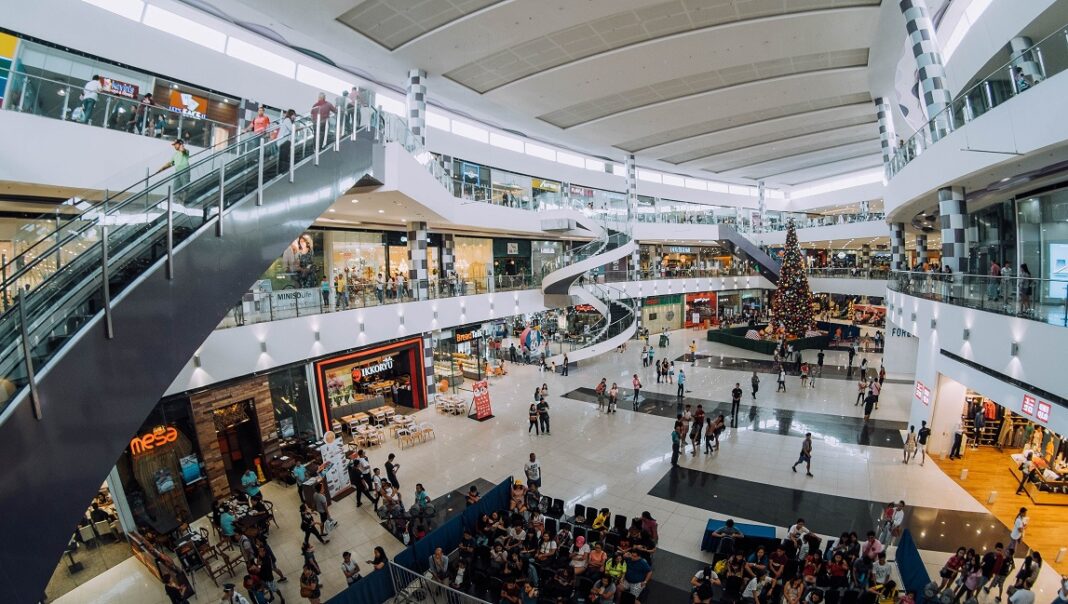
Fitness clusters are growing at shopping centers and malls. / Marco Verch
Fitness clusters are hot. Malls were cold. You know how this story begins. A little something called the internet came along and, slowly and then all at once, retail stores and even entire shopping malls emptied out, relics of a bygone era before one-click buying and two-day shipping. Simultaneously, we’ve witnessed the rise of boutique fitness: CrossFit, SoulCycle, Everybody Fights, Barry’s Bootcamp, et al., many such gyms moving into spaces that used to house Radio Shacks or Waldenbooks. Increasingly, fit businesses are clustering near each other in malls and shopping districts, hawking exercise and healthy eating options. Let’s investigate fitness clusters.
MALL GYMS
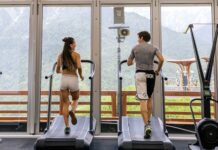
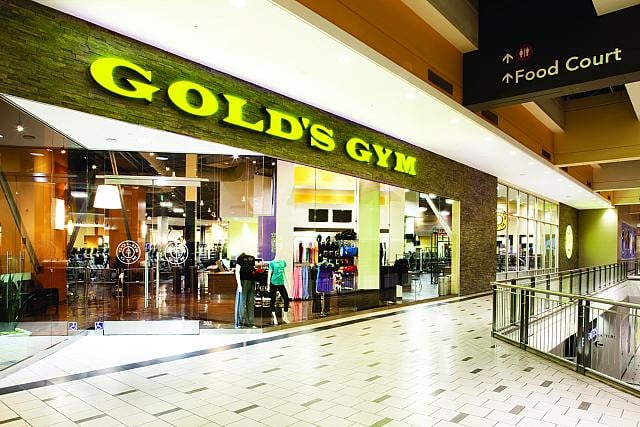
In an age when you can get just about everything—from clothes to food to movies—delivered via smartphone taps, we’ll still routinely leave home to workout. That’s why gyms have become desirable tenets in shopping centers. Malls have long depended on anchor department stores, like Macy’s, to bring in customers who’ll then graze in the smaller shops and eateries. Increasingly, as anchors have pulled up, malls have courted gyms. CNBC reported in 2018 that the number of gym leases in malls doubled over the previous five years. Makes sense. You probably go to the gym a lot more frequently than a department store, and if that gym is in a mall, maybe you’ll check out the deals at Old Navy next door or Sunglass Hut across the way.
FITNESS CLUSTERS
But you might be more likely to buy if those businesses near the gym were gym-centric. That’s the concept behind fitness clusters. Increasingly, boutique gyms like SLT and Row House, as well as Pilates and yoga studios, organic eateries and similar businesses are congregating in the same city blocks or shopping centers. Think of restaurant rows where the pizzeria benefits from the Mexican joint on one side and the sushi place on the other because multiple eateries attract a hungry abundance of eager diners. Fitness clusters are for people who want to train, recover, and eat healthy. A person may want to try different approaches or combine approaches (for example, Pilates before spinning followed by a massage and then a vegan burger), and some people will develop a mixed routine of, say, SoulCycle on Monday, Orangetheory on Wednesday, and Pure Barre on Friday. Some fitness clusters offer passes that can be used at any of the nearby workout businesses, encouraging experimentation and variety.
We don’t yet know how this story ends. Troubled retailer JCPenney reopened a reimagined franchises in a suburban Dallas mall, and it includes a fitness studio (with group exercise and yoga classes) in its active wear department, lifestyle workshops in other departments, a spa, “styling rooms,” a barbershop, a kid’s clubhouse, 11 lounges, and on and on. It’s all about creating experiences you can’t get by simply staying home and clicking buy buttons. That’s one strategy. If brick-and-mortar stores keep dying (or morphing into experience-spaces), it’s possible some malls will be converted entirely to fitness.
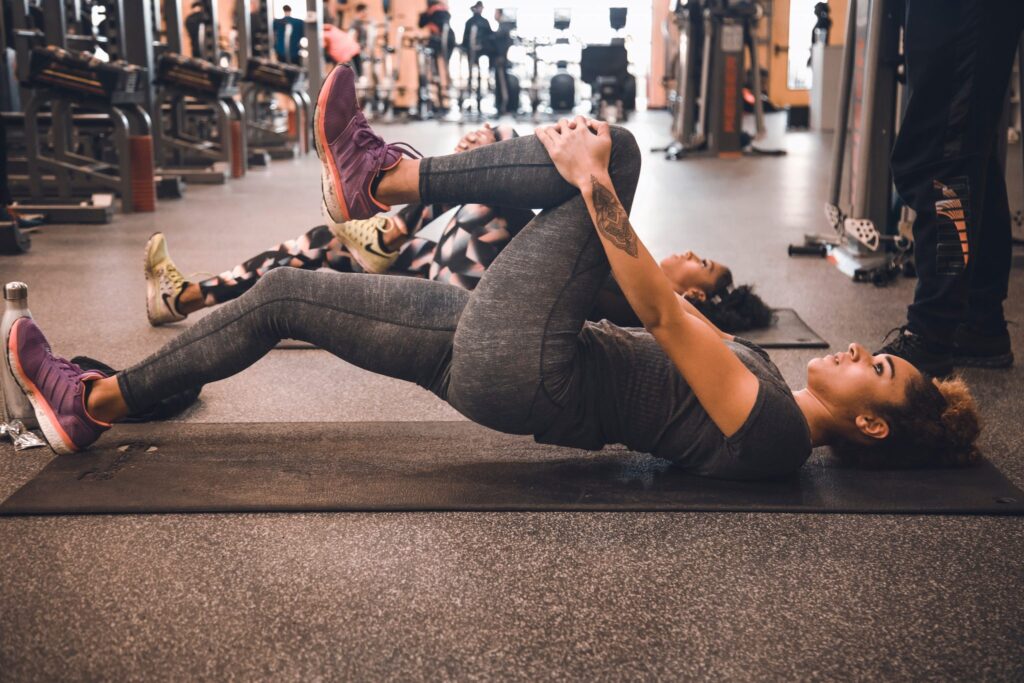
Picture an Equinox where the Nordstrom’s used to be, a Planet Fitness where there was a JCPenney’s, and a Gold’s Gym in the space that was once a multiplex. Maybe there’s an REI or Whole Foods Market. The Foot Locker, Vitamin Shoppe, GNC, and Lululemon stay put, but other spaces transform into boutique gyms of all types (HITT, boxing, football skills, kids, spinning, etc.), as well as yoga and Pilates studios, workout apparel emporiums, bike shops, massage parlors, stretching, cryotherapy, life extension, chiropractic, waxing, everything devoted to bettering your body. The food court has only healthy eateries. Kiosks promote products like moisture-wicking socks and protein bars. The center stage, near the rock-climbing walls, is for seminars on training, diet, and wellness.
One day soon, “I’m going to the mall” might be another way of saying “I’m going to go get fitter.”