



































photo: marcuschanmedia
Gyms are experiencing a growth spurt. More and more Americans are working out in commercial gyms, both in real numbers and in terms of the percentage of the U.S. population, according to the 2026 U.S. Health and Fitness Consumer Report from the Health & Fitness Association. Let’s explore the numbers.
GYM GROWTH SPURT
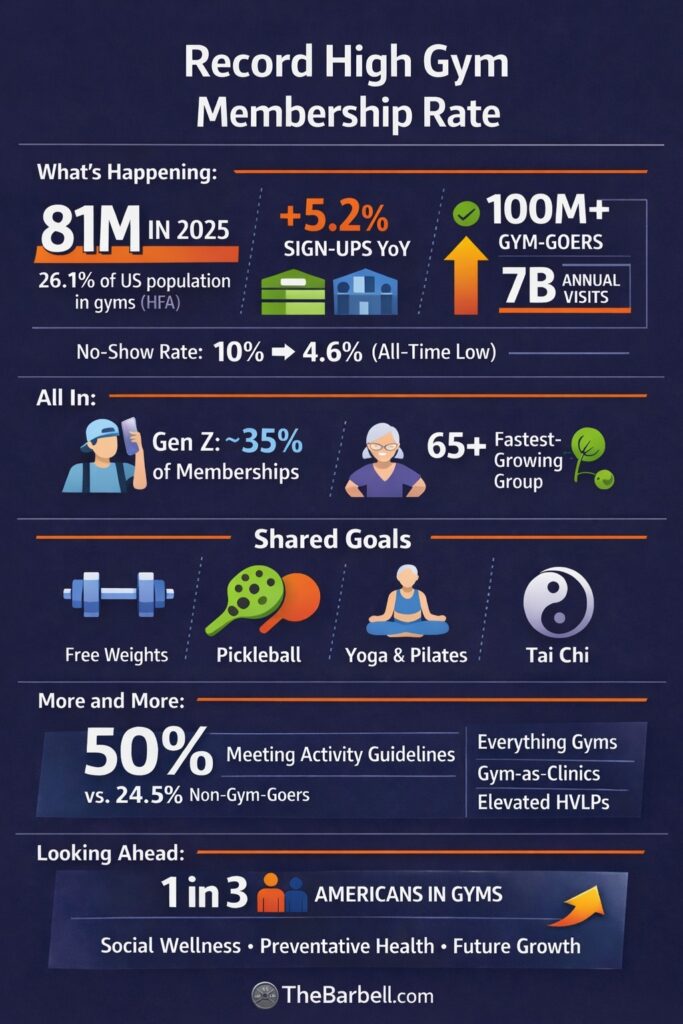
USA gym membership hit a record 81 million people in 2025. That means 26.1% of the population (aged six and older) now belong to a gym, health studio, or other fitness facility, and that’s also a record. High-value, low price (HVLP) gyms, like Planet Fitness, and doing especially well.
Gym sign-ups surged 5.2% from 2024. What’s more, total participation topped 100 million unique gym-goers (including “drop-in” gym goers) and 7 billion visits, both of which are also records. Scheduled classes and training numbers also improved, with no-show rates falling from 10% in 2024 to 4.6% in 2025. Yep, that’s another record. Americans aren’t just joining gyms, they’re going to those gyms regularly, and keeping their fitness commitments better than ever before.
YOUNG AND OLD
Gen Z (those currently in their 20s or late teens) drive membership rates, accounting for approximately 35% of gym goers. But those over 65 are the fastest growing gym demographic. Across all ages, shared goals—spanning aesthetics, longevity, medical, and social needs—are fueling the increase in resistance training, pickleball, and group activities like Pilates, yoga, and tai chi. All in all, it’s a win for public health. Approximately half of gym members meet or exceed federal aerobic activity guidelines, which is more than double the 24.5% among non-gym-goers.
KEEP GROWING
With a greater emphasis on a lean, muscular appearance for both men and women of all ages as well as a greater focus on longevity and health spans, we look for the positive trend to continue. It’s not just weight-loss drugs that are experiencing growth, gyms are too. And we’re here for it. We look forward to the 1 in 4 Americans who are gym members today growing to 1 in 3 by decade’s end.