

































Healthy snacking is hot. / Tuğba ÖZTÜRK
Don’t snack, so they say. But that advice only applies to unhealthy snacking: the chips and cookies, all the salty, sweet, and fat-saturated nibbles that can ruin not just your waistline but also your blood pressure and glucose levels. When the snacking is high-protein and lower-carb, fat, and sodium, snacking can be a positive. Bodybuilders have long known this, as they divide their daily meals into five or more, eating clean in all of them. The good news is the general public has caught on, too. High-protein is in; empty calories are out, and this is transforming what used to be the junk food industry.
PROTEIN UP, JUNK FOOD DOWN
Here’s a few recent developments in the packaged food biz:
◾️Hershey, the candy conglomerate, is acquiring the organic, lower-calorie snack company Lesser Evil. It already bought Skinny Pop (name self-explanatory) among other healthier packaged food brands.
◾️Another candy giant, Feddero, the world’s largest sweet packaged food company, is acquiring the protein bar powerhouse Power Crunch after buying another protein bar powerhouse, FulFil, three years ago.
◾️PepsiCo has been especially busy, quietly remaking some of its brand. The massive soda and snack conglomerate just acquired the pribiotic soda company Poppi; as well as Siete, maker of lower calorie tortillas and chips; and the hummas companies Obela and Sabra (hummas is a good high-protein snack). Meanwhile, its Garorade division is always expanding its lines of healthier drinks and protein bars.
All of these transactions and more only occurred within the past few months. Why? The packaged food industry can see the trend, and the higher protein, lower calorie arrow is pointing up while the old junk food arrow is aiming down.
The Wall Street Journal recently illustrated this with a graph of snack industry sales:
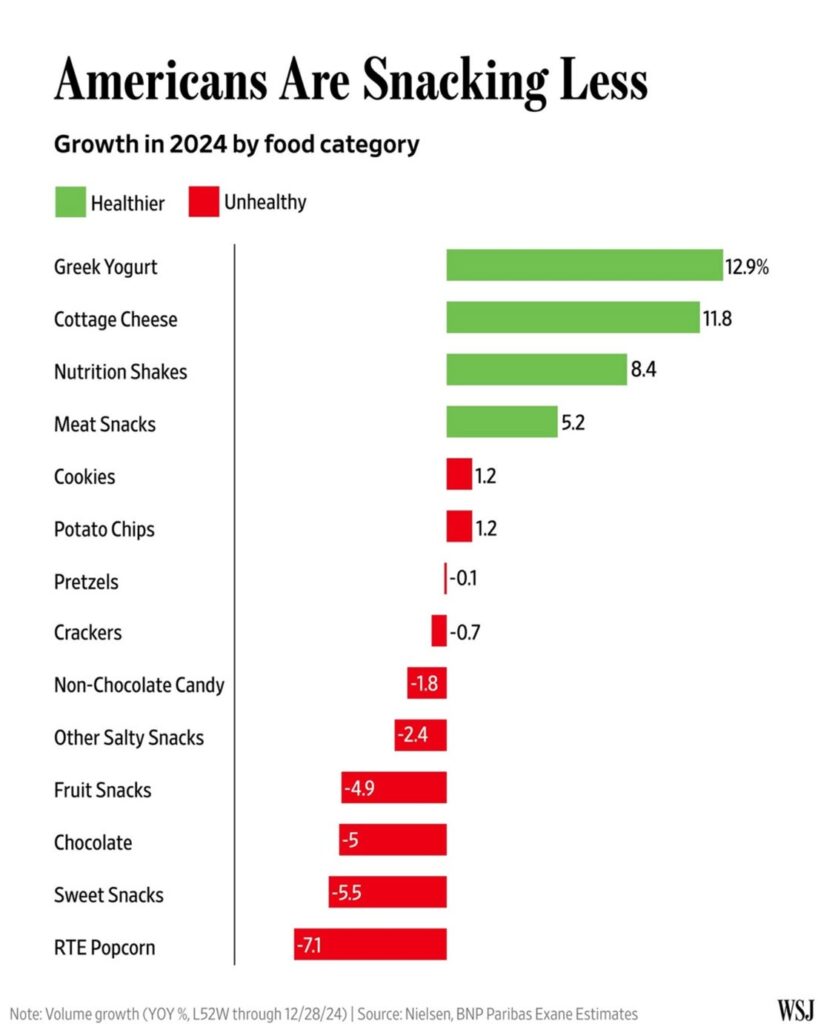
The WSJ labeled their chart: “Americans Are Snacking Less.” We prefer: “Americans Are Snacking Better.” As you can clearly see, the top four growers were all high-protein alternatives to other snacks. (We would’ve liked to see where nuts, another healthier, higher-protein choice, rated.) On the unhealthier side, cookies and crackers grew but only very slightly, and there are healthier versions of both (baked chips and sugar-free cookies, for examples).
The WSJ wrote:
Snacking—not long ago the fastest growing category in packaged foods—is losing steam, even as consumers bulk up on protein shakes and bars. If the trend holds, it could signal a fundamental shift in how Americans eat, and a serious challenge for food giants that spent the past decade gorging on decadent snack acquisitions. It remains too soon to say whether this is a just a temporary slowdown or the start of something bigger, perhaps related to the rise of weight-loss drugs and healthier diets. But the cracks are showing….The decline could reflect multiple trends at once. Lower-income consumers could be cutting back primarily for financial reasons, while wealthier households may be gradually shifting their eating habits for health-related reasons.
4 HIGH-PROTEIN HEALTHY SNACKS
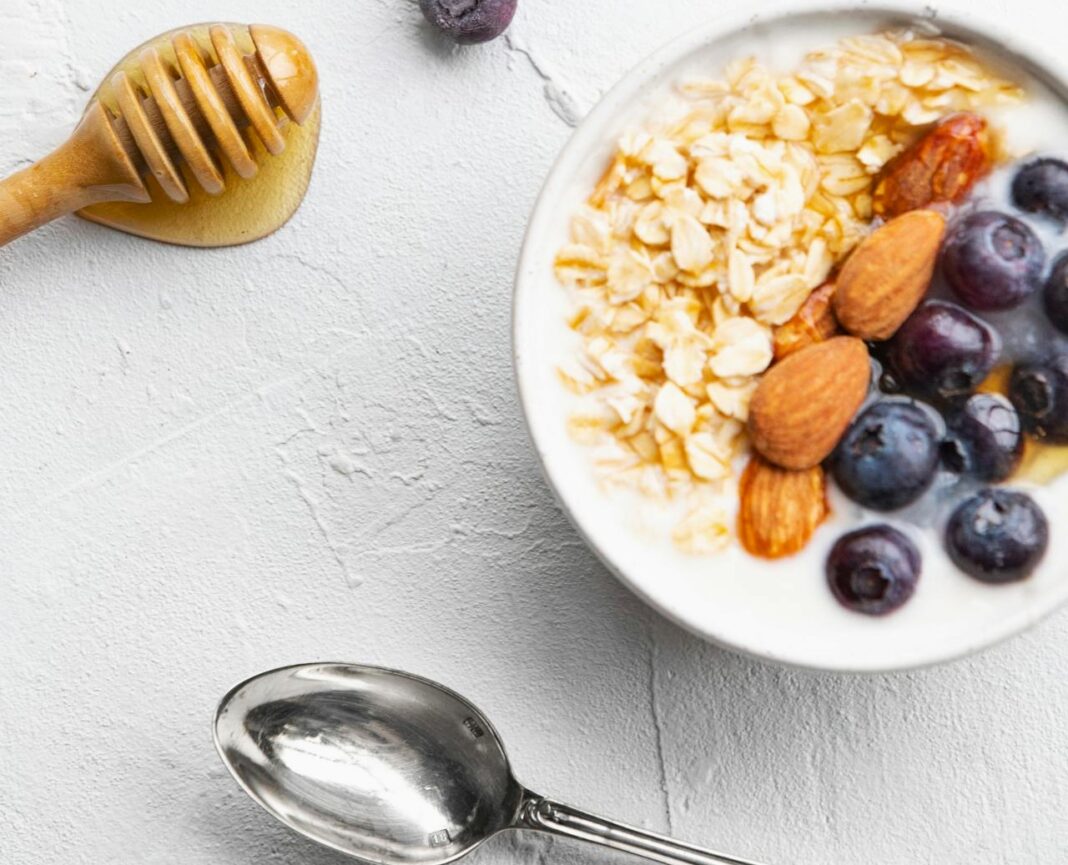
Non-fat Greek Yogurt with Berries and/or Nuts
Protein: 17–20g per 6 oz. of plain Greek yogurt
High-protein, low carb, no saturated fat. Creamy, satisfying, and packed with probiotics. Adding almonds or walnuts boosts healthy fats and fiber.
Hard-Boiled Eggs with Hummus or Veggies
Protein: 6g per egg (more from hummus)
Super portable and nutrient-dense. Pair with hummus or sliced bell peppers for extra flavor and fiber.
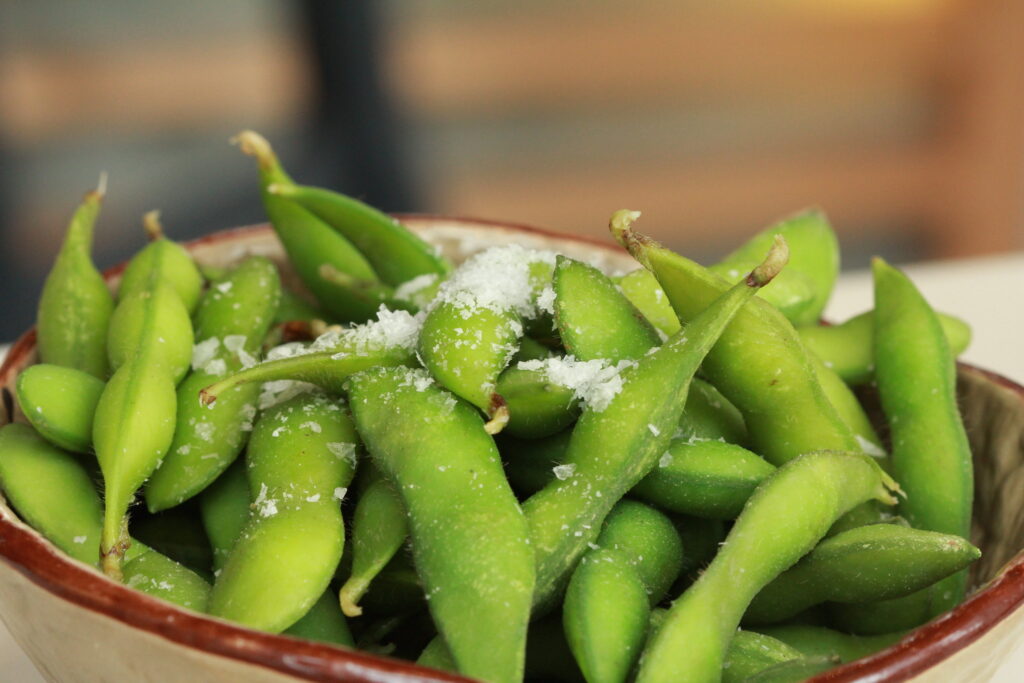
Roasted Chickpeas or Edamame
Protein: 10–15g per cup
Crunchy, satisfying, and plant-based. Easy to meal prep or buy pre-roasted. Very portable.
Cottage Cheese with Pineapple or Cucumber
Protein: 13–15g per ½ cup
Super versatile—sweet or savory. It’s rich in casein protein, which digests slowly and keeps you full longer.