













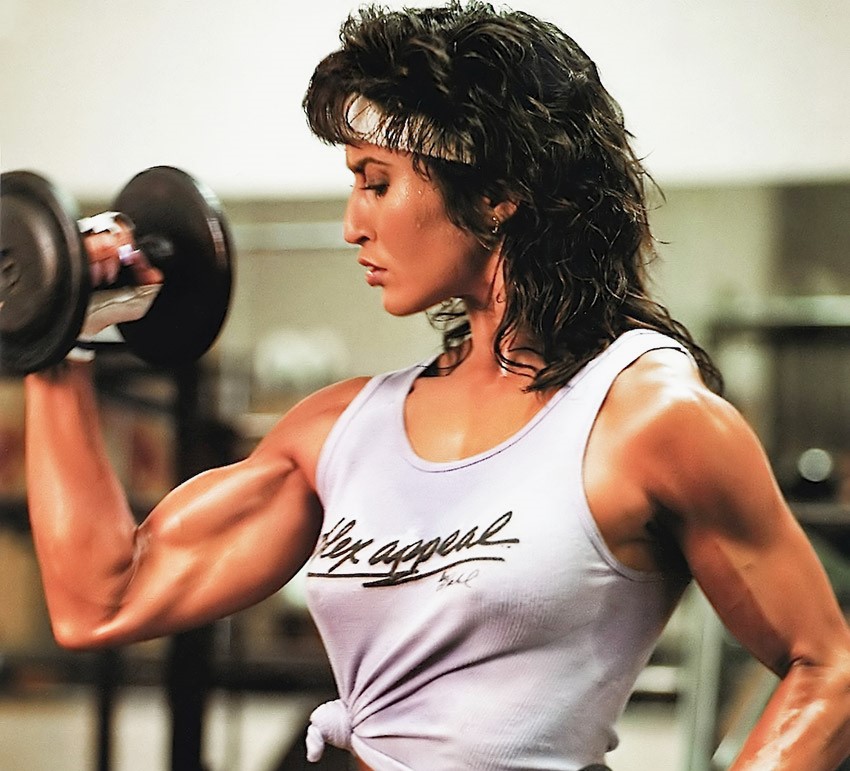
Rachel McLish was the right woman at the right time. Though less muscular than today’s bikini pros, she was the first Ms. Olympia. A Mexican-American with an Irish name, McLish was a strikingly beautiful cover model and a bodybuilding pioneer who popularized weight-training for women. She was the spark that ignited a female fitness revolution. This is the story of Rachel McLish.
IRON INTRODUCTION
Of Mexican ancestry, Raquel Elizondo was born on June 21, 1955, in the small city of Harlingen, in the southern tip of Texas. Her mother instilled in her a deep sense of determination and resilience. She was an avid dancer, and, in high school, a cheerleader.
Her passion for fitness intensified when she attended what is now the University of Texas Rio Grande Valley, where she studied physiology and health and fitness management. “I put myself through college working at a health club in McAllen,” McLish remembered. “The health club was about six miles away from school, and I had 10 minutes to get from school to work. The women would work out on Monday, Wednesday and Friday, and the men on opposite days.” After college, she formed a partnership with another health club manager, and they owned three south Texas gyms. All the while, she was training with weights, a still uncommon pursuit for women in the 1970s. At that time, it was widely thought bigger, stronger muscles would make women less feminine.
She met John McLish at college, and they married in 1979. They divorced not long after, but Rachel McLish kept the name, and thus this Hispanic icon has long had an Irish name.
RACHEL MCLISH: BODYBUILDING PIONEER
In the late 1970s, female bodybuilding was largely an underground activity, with few competitions and minimal visibility. It certainly wasn’t a career. Rachel McLish changed all that. In 1980, she entered and won the first female bodybuilding contest of note, footage of which was shown on a national TV sports show. McLish remembers:
“At that time, Lisa Lyon was getting all this attention. I looked at her body and felt it was beautiful. She had a background in dance like I did. She loved flamenco dancing, I loved flamenco dancing. This was, you know, a woman after my own soul. She was going to promote the first real women’s bodybuilding competition, the United States Women’s Championships. Up to that point, there had just been little Mickey Mouse types of contests. The men’s manager at the health club would always throw these magazines in front of me that showed women competing, and he kept telling me that I should be doing this.”
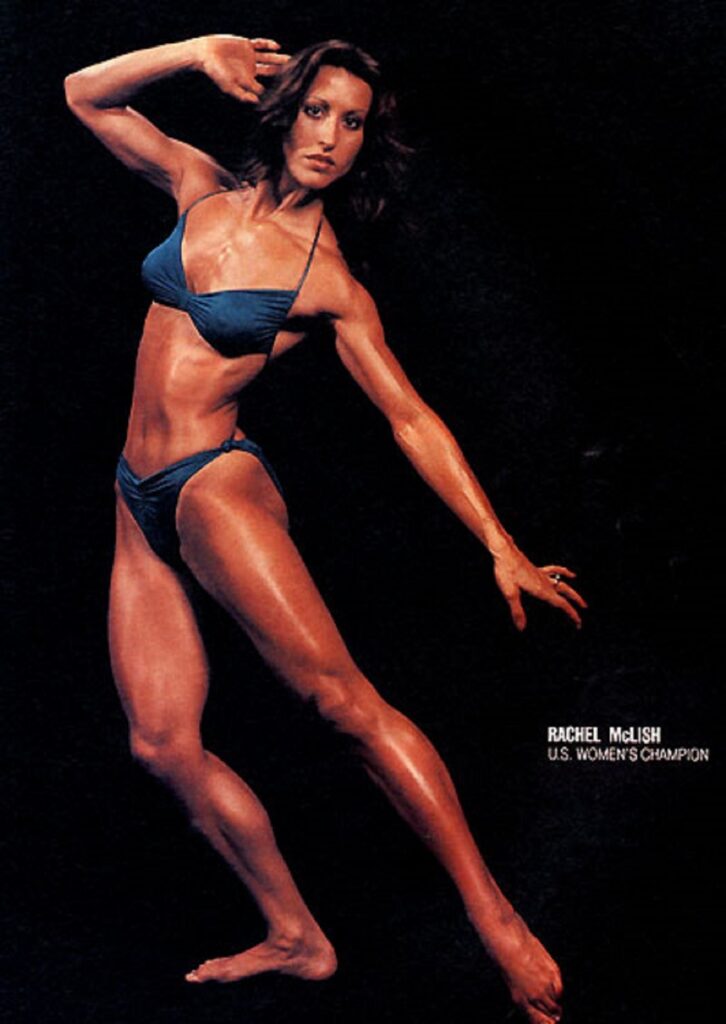
“The reason I decided to enter was twofold: The grand opening of our new health club was going to coincide with the contest, which was going to be televised on Sportsworld [a national show on NBC then]. A title of that nature would enable me to promote the definitive fitness lifestyle that women could embrace forever. Of course, this new sport, this new phenomenon that they were publicizing like a freak show, was not new to me. I’d been bodybuilding long before it was called bodybuilding. The best way to get the body of your dreams can only be achieved with weight-training, what I also call concentrated exercise. If you want to get from point A to point B, the most effective way possible, you should do it this way. I took it seriously then, and I still do….I remember vividly at that first contest that my knees were shaking. I had to flex my muscles to keep my knees from jumping up and down, I was so nervous.”
RACHEL MCLISH: MS. OLYMPIA
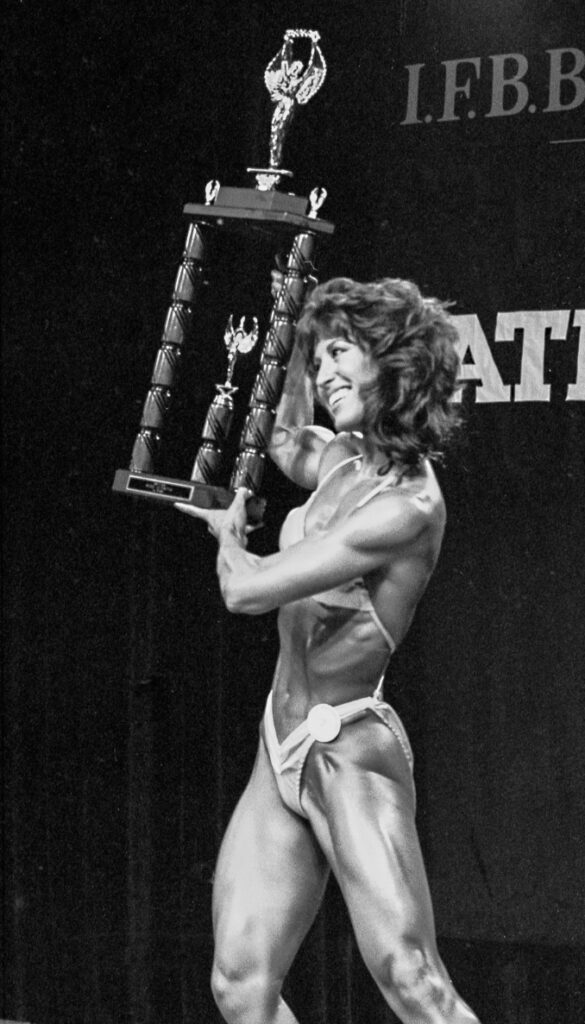
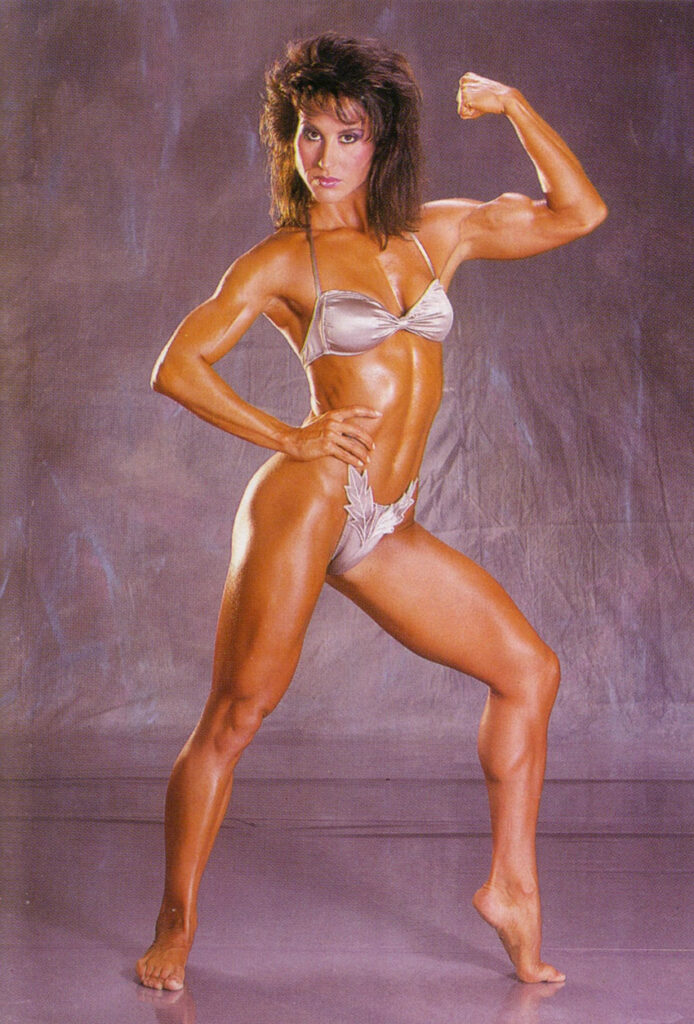
Five months after that first contest, when the 5’7” McLish was, as she jokes “an old pro,” she entered and won the most prestigious female bodybuilding contest in the world: the inaugural Ms. Olympia [then called Miss Olympia], held in Philadelphia on August 30, 1980 with 20 competitors. (First prize was $5000.) At 25, Rachel McLish was the sexy but sinewy paradigm for the new sport of female bodybuilding. Her win was revolutionary. It broke stereotypes about female muscles, showing that women could be strong, athletic, and feminine at the same time. McLish’s appearance on stage was graceful and confident, and she soon became a media sensation.
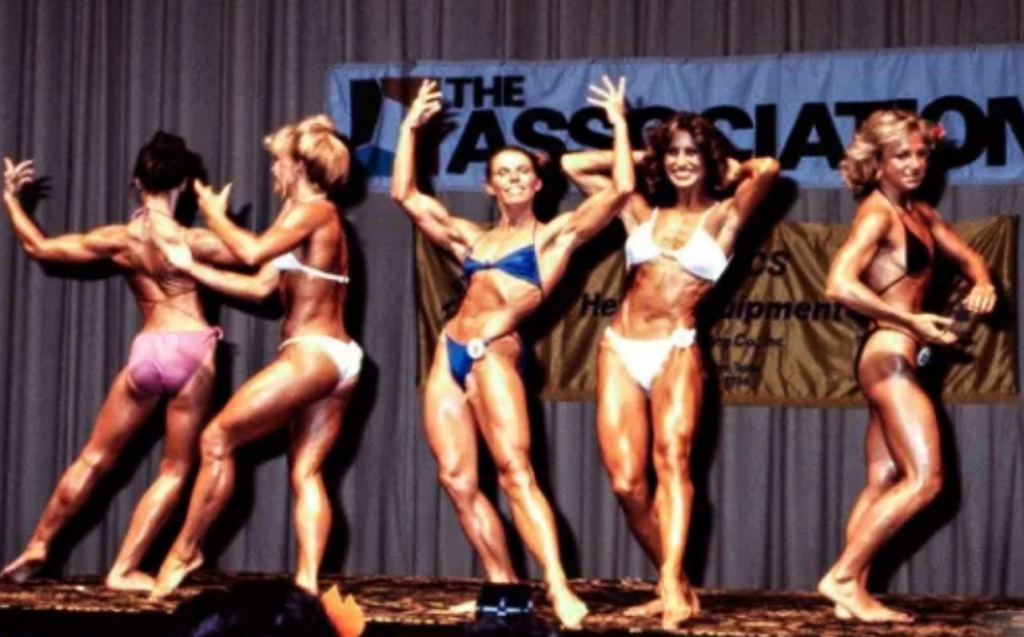
Rachel McLish finished second in the 1981 Ms. Olympia to Kike Elomaa. Then, in 1982, she regained the Olympia crown from Elomaa, and she also won the World Pro Championships. Also in 1982, when Jane Fonda’s Workout videotape sold millions, McLish co-starred in the co-ed fitness instructional video Shape-Up with none other than seven-time Mr. Olympia Arnold Schwarzenegger.
WORLD-WIDE POPULARITY AND THE BACKLASH
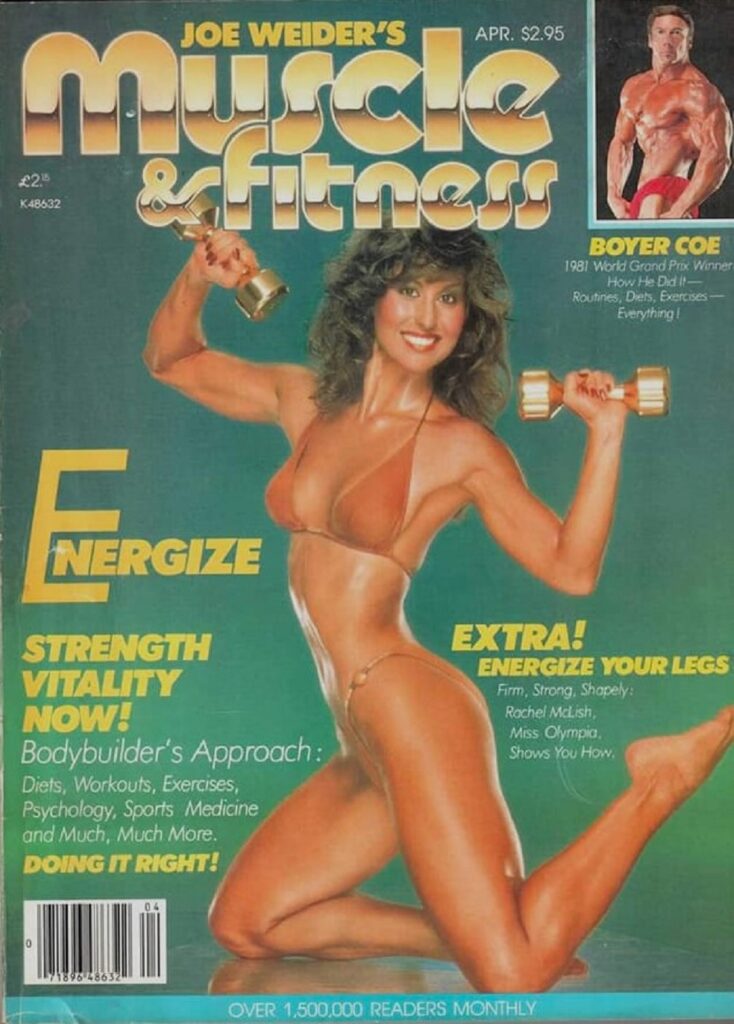
Muscle & Fitness was the #1 fitness and bodybuilding magazine in the world. The first woman to appear on its cover not as mere arm-candy for a male bodybuilder was Rachel McLish with the April 1982 issue, which labeled her “Firm, Strong, Shapely Rachel McLish, Miss Olympia.” The next year she was on two M&F covers in a row, the second with Arnold Schwarzenegger. Between 1982 and 1985, McLish, who had relocated to Southern California to pursue bodybuilding full-time, appeared on six Muscle & Fitness covers and in numerous articles, and twice she adorned the covers of the new bodybuilding magazine, FLEX. (In total, she appeared on Muscle & Fitness eight times, four times alone. The second woman to appear on a M&F cover alone wasn’t until in 1996.) In magazines, on TV talk shows (including Late Night with David Letterman), and via personal appearances, she was the face and physique of female bodybuilding around the globe. FLEX’s gossip columnist dubbed her “McDish” and reported on her love life (for a while, she dated popular bodybuilder Matt Mendenhall).
In 1983, McLish accepted what was described as “a lucrative contract” to bypass the Ms. Olympia and headline the Caesar’s World Cup, held that December at Caesar’s Palace in Las Vegas as a vehicle for George Butler’s semi-staged documentary: Pumping Iron II: The Women. The movie was the follow-up to the legendary Pumping Iron (1977), which helped make Arnold Schwarzenegger a household name. Released in 1985, it painted McLish as a diva and contrasted her with the down-to-earth and much more muscular powerlifter-turned-bodybuilder Bev Francis.
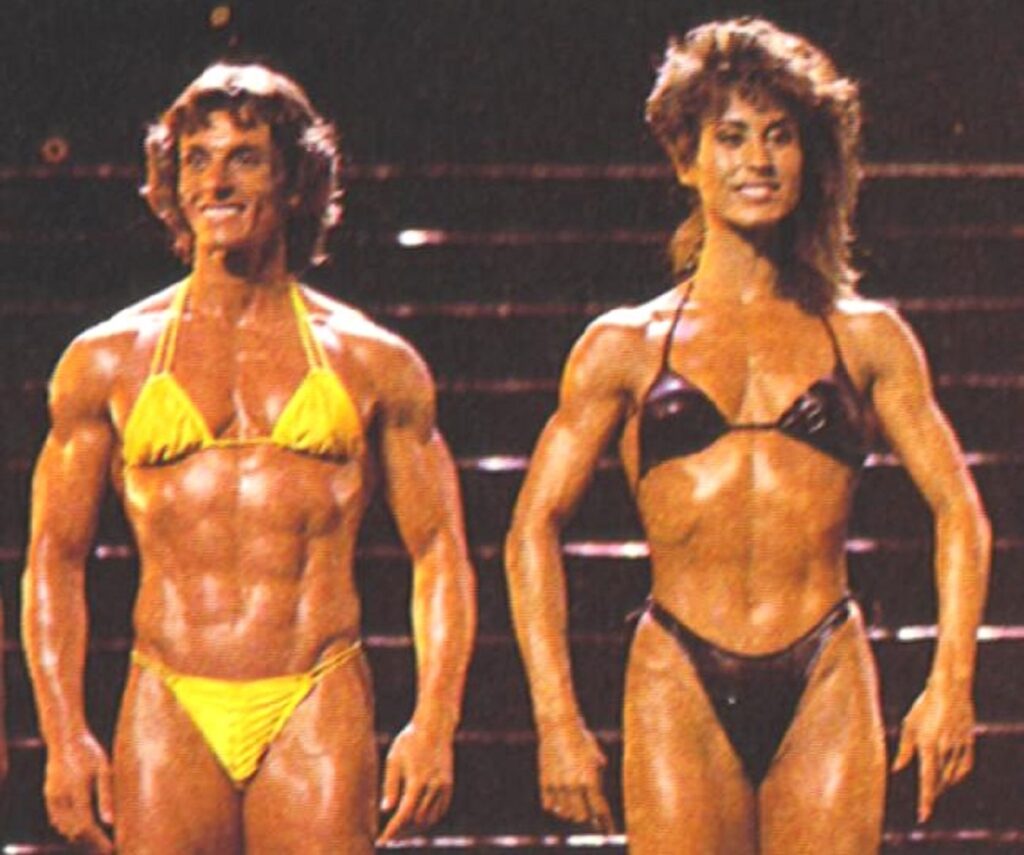
The movie wasn’t the only place the omnipresent McLish received a backlash in the first half of the ’80s. Some female bodybuilders resented her push in the Weider magazines, saying it was more because of her pretty face than her muscles, which were eclipsed by others. Some saw her professed Christianity incompatible with the sort of sexy photospreads she did. McLish disagreed with both counts, calling for drug-testing for female bodybuilders so they didn’t grow too big and masculine and stating that her photos revealed no more and often less than the Ms. Olympia contest. She turned down an offer to pose nude in Playboy.
The second Pumping Iron did not make McLish the next Arnold. Before its release, she returned to the Ms. Olympia in 1984, and finished second behind the new female bodybuilding phenom, Cory Everson, who went on to win the title the following five years. She had over-dieted and, though ripped, appeared thin next to others. It was Rachel McLish’s final bodybuilding contest; she was 29. She said of her feminine look and the bigger bodybuilders eclipsing her, “If I wanted to keep competing, I was going to have to put on some size and I thought, You know what? Nope. Because then that means all of you are right and I’m wrong and no. This is what I believe in.”
MCLISH’S WRITING AND ACTING
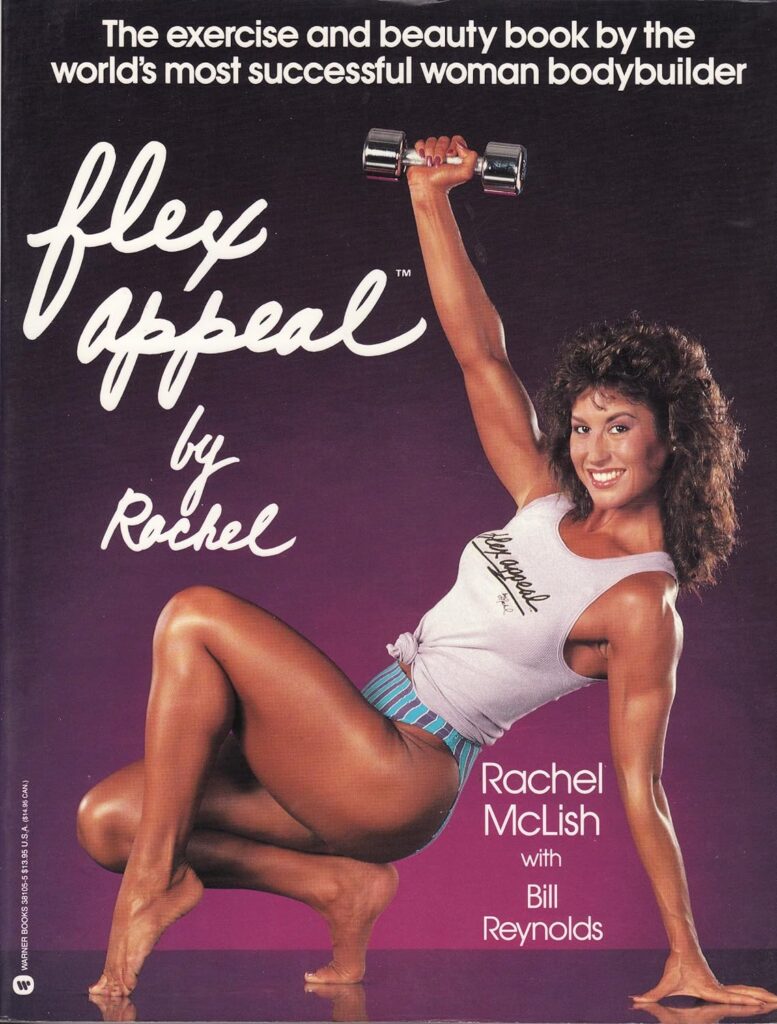
Rachel McLish expanded her influence through writing and acting. She authored two best-selling fitness books: Flex Appeal by Rachel (1984) and Perfect Parts (1987). Both books focus on promoting health, fitness, and body sculpting for women. They not only provide workout routines but also encourage women to embrace their strength and reject societal pressures that limit their participation in fitness and bodybuilding.
In Perfect Parts, McLish wrote, “The body is the temple of the spirit. If we respect it, care for it, and maintain it, we will gain not only health but also a powerful sense of self-worth.” This philosophy highlighted her holistic approach to fitness, focusing on both physical and mental well-being.
Like Steve Reeves and Arnold Schwarzenegger before her, Rachel McLish also transitioned to acting. In fact, no female bodybuilder has had bigger acting roles than her. She co-starred with Louis Gossett, Jr. in Aces: Iron Eagle III (1992), and she starred as the vengeful Native American Rhyia Shadowfeather in the HBO action flick Raven Hawk (1996). Both are bad. If you’re wondering how a novice actress scored such plum parts, both movies were produced by her second husband, Ron Samuels, whom she married in 1990. They live in Rancho Mirage, near Palm Springs, California.
RACHEL MCLISH’S IMPACT
Rachel McLish’s success in bodybuilding allowed her to bridge the gap between bodybuilding and mainstream fitness, and she continued to do so far into middle age, decades after her final contest. In 2013, at 58, she appeared in a photo shoot in Ironman magazine, still looking buff and beautiful, still advocating for women to weight-train—at any age.
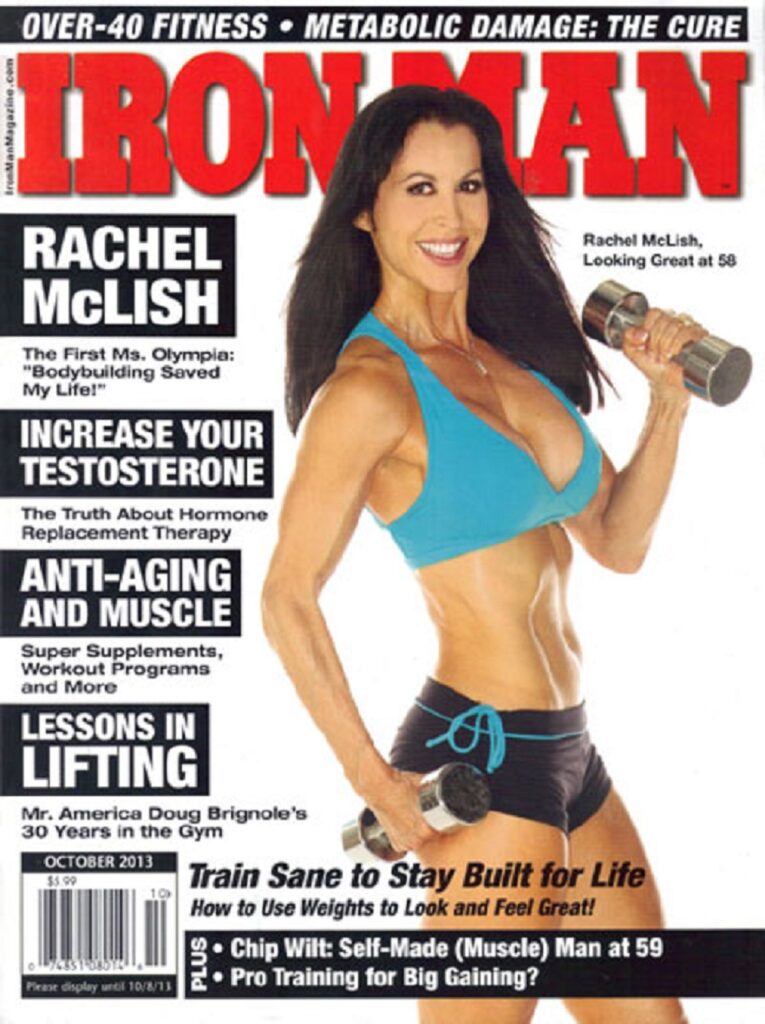
McLish always understood the importance of promoting a positive image of women in fitness. She was a role model to women who wanted to pump iron in a time when female muscularity was often considered unattractive or unfeminine. She said, “Muscles don’t make a woman less feminine; they make her more so. Strength is beautiful, and being strong makes a woman more complete.”
One of the most significant impacts Rachel McLish made was on societal standards of beauty. Before her, mainstream media often portrayed women in rigid, traditionally feminine roles, with little emphasis on strength or athleticism. McLish, however, challenged these norms by promoting a physique that was muscular yet elegant, sinewy yet sexy. Her image helped redefine what it meant for a member of “the fairer sex” to be strong and attractive, shifting beauty standards to include women who prioritized their physical fitness. And month after month, that image traveled around the world inside, and frequently on the cover of, the most popular fitness and muscle magazines.
The rise of McLish in the 1980s coincided with a broader cultural shift toward fitness. The aerobics craze and increased attention on health and wellness created an environment where fitness models and athletes like McLish could thrive. She was the first woman to truly make bodybuilding her career, and she became a symbol of a movement, one that emphasized health, strength, and balance.
RACHEL MCLISH: ICON
“You have to learn to love your body and make it your own,” McLish said. “That’s when fitness becomes empowering because it’s about doing it for yourself, not anyone else.” This attitude toward fitness and body image was groundbreaking at the time and continues to inspire women today. Today, as Rachel McLish approaches 70 but still looks amazing and amazingly fit, her legacy lives on in the countless women who lift weights, prioritize fitness, and refuse to conform to weaker notions of femininity.