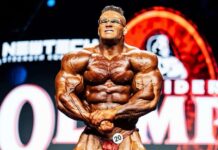



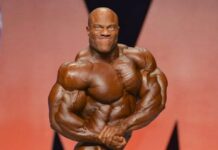

















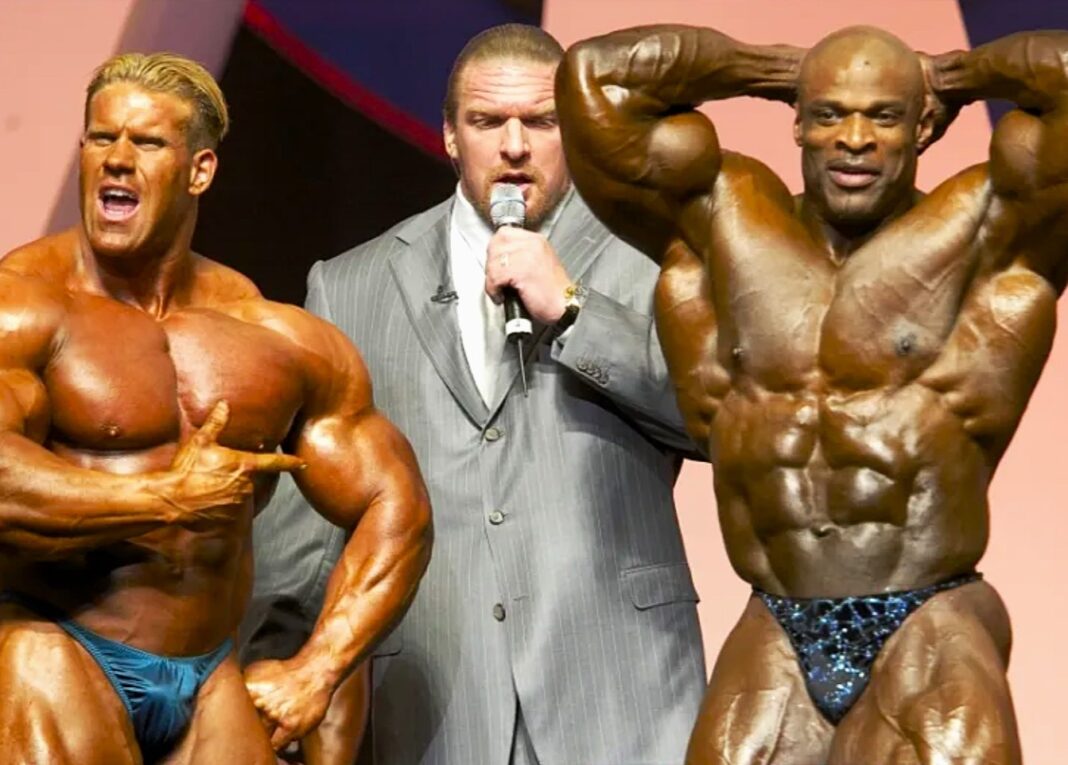
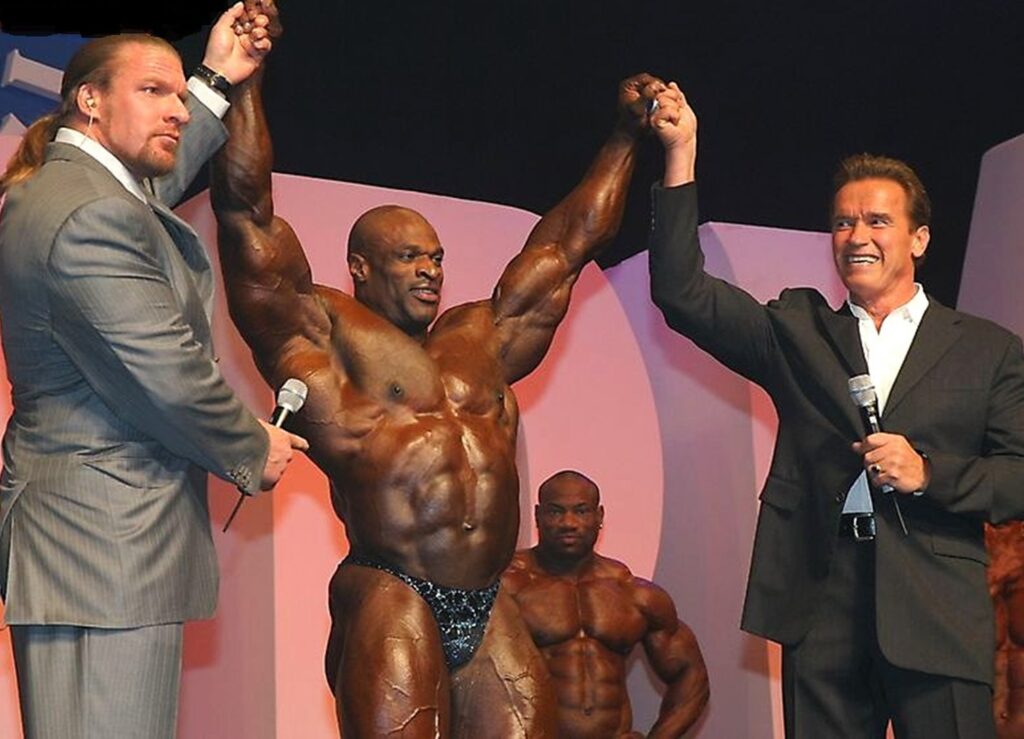
Jay Cutler challenges Ronnie Coleman in the 2004 Mr. Olympia as Triple H emcees. / Kevin Horton
The 2004 Mr. Olympia was a weird one. It was the year of the Challenge Round, in which the new owners of the contest attempted a dramatic makeover of the scoring system but succeeded only in confounding the audience and, seemingly, the judges. It was Ronnie Coleman at his brain-jarring biggest, just shy of three bills, racking up his seventh consecutive O title. And it was the out-of-nowhere rise of perennial also-ran Gustavo Badell, soaring from 24th in his only previous Olympia to a WTF third this time. It seemed anything could happen—except Ronnie losing. It’s October 30, 2004, three days after the Red Sox won their first World Series in 86 years. Friends has just ended, Facebook has just launched. Let’s journey to Sin City for the unique 40th Mr. Olympia contest.
2004 MR. OLYMPIA MAKEOVER
This would be the first Olympia produced by the contest’s new owner, AMI, which had also purchased Weider Publications (my employer). So I was there when FLEX magazine’s editor in chief, the late Peter McGough (my editor), first brainstormed the Challenge Round as a way to bring some excitement to typically jejune bodybuilding contests. I was there for meetings when the format was modified and when the most muscular became the eighth compulsory pose. I was one of the “pro bodybuilders” (Weider employees) who, in street clothes, acted out the round in the parking garage of Weider headquarters for McGough and IFBB Pro League president Jim Manion. I was watching in Vegas that July when, before the doors opened for the USA Championships, some actual pro bodybuilders in street clothes went through the Challenge Round paces for Olympia judges, and a doubtful Chris Cormier wondered, “Couldn’t we have tried this with some other contest first. The Ironman maybe? Not the Olympia.”
Here’s the new and untried system that had Cormier (who, smaller and smoother than usual, would barely miss the Challenge Round) wondering about its feasibility:
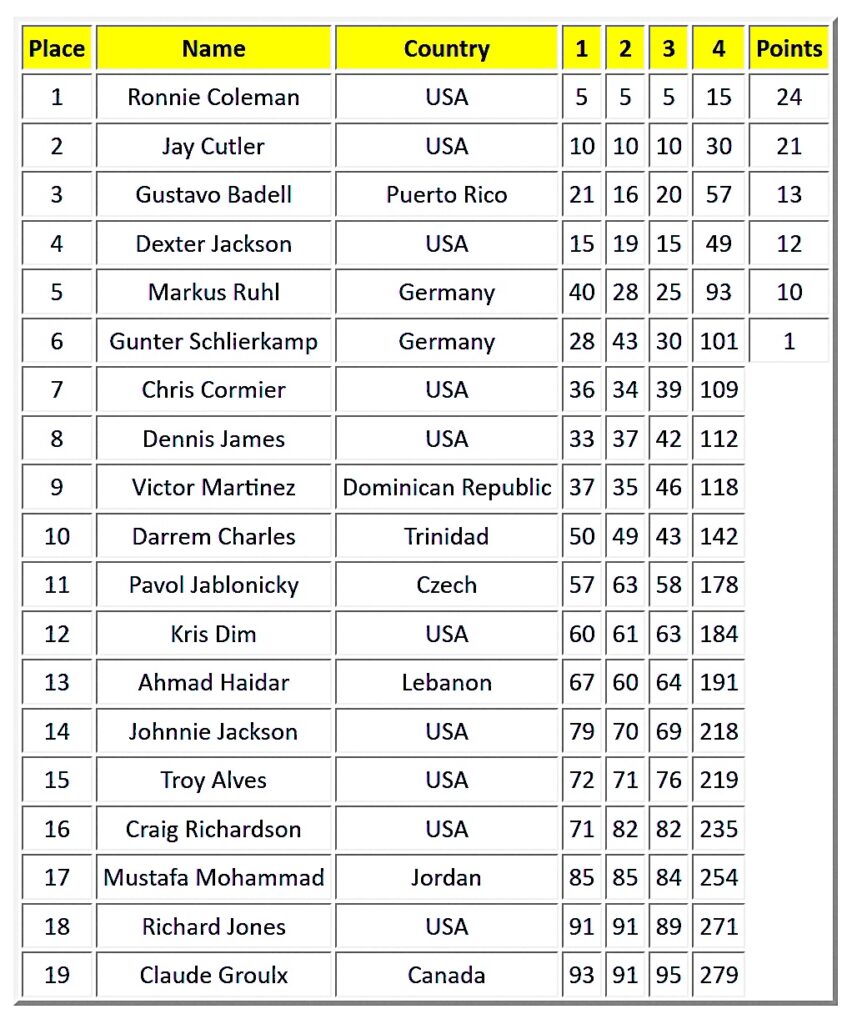
Prejudging occurs, per usual, with the rounds for symmetry (semi-relaxed stances) and muscularity (compulsory poses). Also scored is the posing round (individual posing routines) at the finals. This all determines the top six and the placings for those outside the top six. The top six receive points corresponding to their prejudging places: 6 for 1st, 5 for 2nd, down to 1 for 6th. That’s all they carry into the Challenge Round.
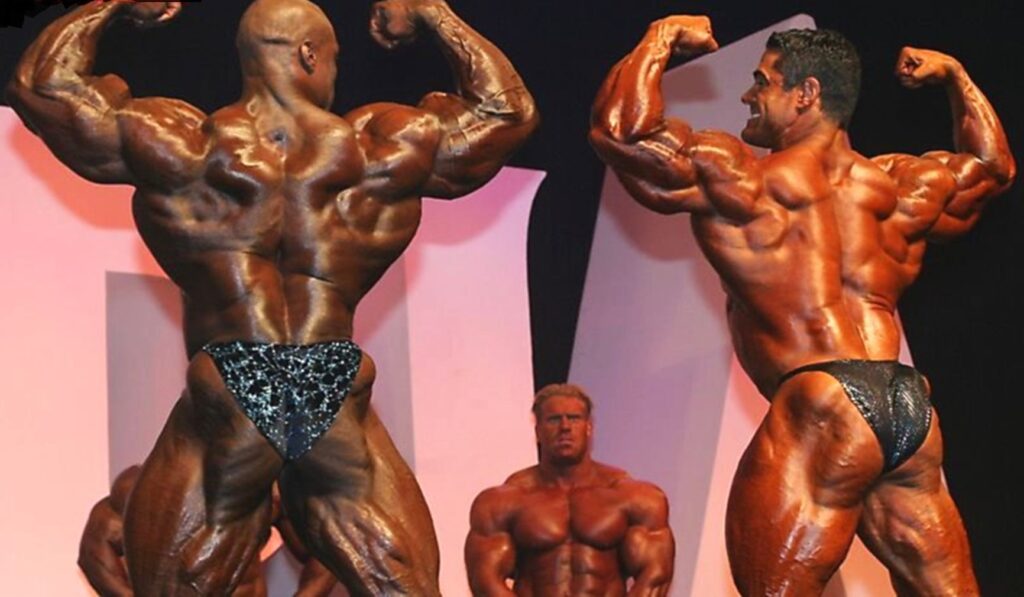
In the Challenge Round, the top six competitors choose one of the eight compulsory poses to strike in mano-a-mano duels against the other five, ideally trying to highlight their strengths and/or expose their opponent’s weaknesses. So Dexter Jackson calls abs and thighs in his clash with Ronnie Coleman to showcase his superior middle; and, when its his turn to challenge, Ronnie calls rear lat spread to dwarf Dexter via width. The judges select the winner of each challenge, who receives two points. This appears on an electronic scoreboard, changing the point tally for the top six in real time for the audience to see. Each bodybuilder goes against every other top sixer twice (once selecting the pose, once doing the pose selected by his competitor), for 10 total challenges.
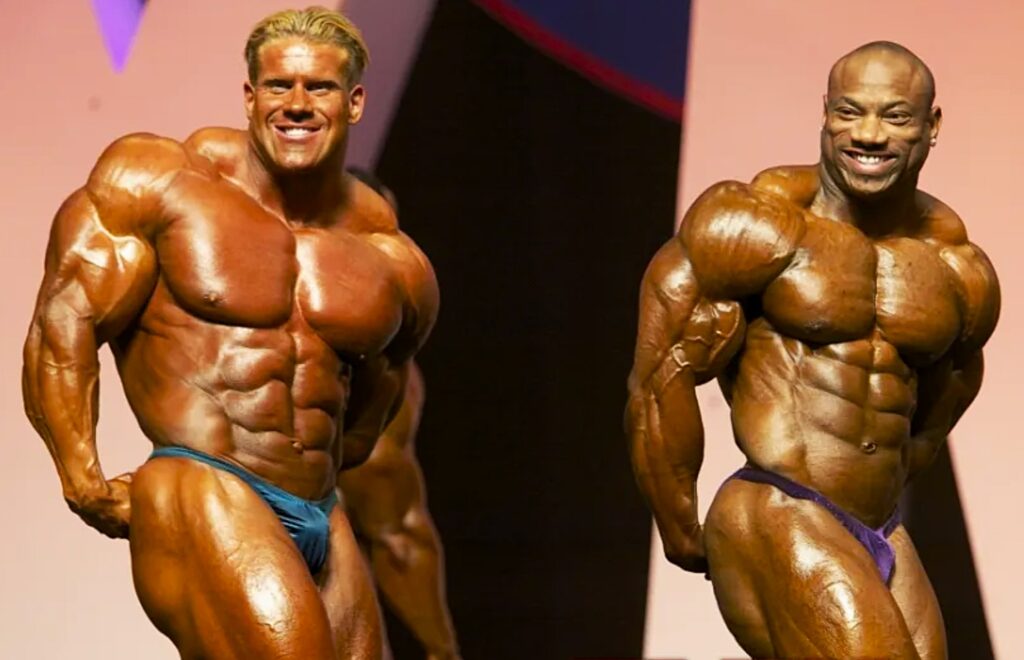
THE CHALLENGE ROUND: START
Also there was my fellow FLEX senior writer, the late Shawn Perine. He chronicled the 2004 Mr. Olympia for FLEX with a particular focus on the Challenge Round, which began like this:
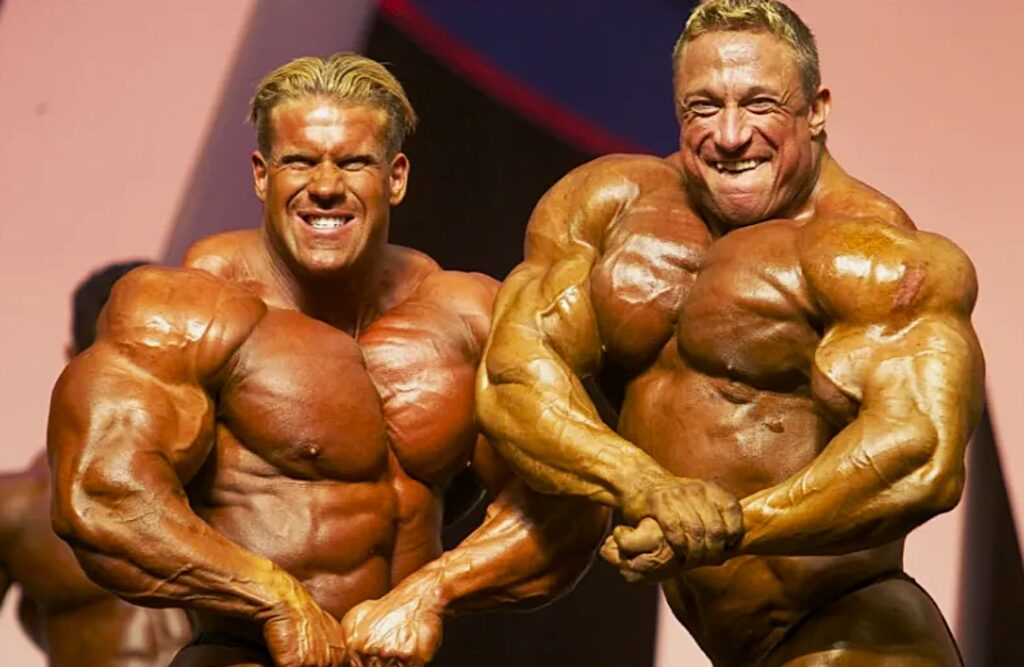
“Back double biceps.” The gauntlet was thrown. The game was on. Halfway through the evening finals of the 2004 Mr. Olympia competition, Gunter Schlierkamp challenged Markus Rühl to match him in a pose of his choosing, and bodybuilding history was made in the process. Whatever happened from this point on, one thing was sure: there was no turning back.
Co-emcee Triple H draws the microphone away from Gunter Schlierkamp’s face and lets fifth-place Markus Rühl step up to the challenge made by his fellow German. The rear double biceps pose was designed to show off development of back, shoulder, and arm muscles primarily, as well as lower-limb muscles secondarily. A loud buzzer—the kind heard at the end of a basketball game—indicates that the bodybuilders should enter into the five-second pose.
Simultaneously, the men turn to face the 12-foot letters spelling OLYMPIA behind them. They each shoot one foot back, pressing its ball into the stage, and each man cranks himself into a picture-perfect rear double-biceps pose. At the sound of the second buzzer, the two giants relax and turn back to face the audience. A moment of dead silence hangs over the large room until a shout of “Rüüüüüühl!” echoes off the Event Center walls, triggering an avalanche of screams from 5000 backseat judges. Then all eyes turn to the huge screen above the stage to see which competitor would earn the red dot indicating a Challenge Round win.
When the dot flashes beneath Rühl’s name, the theater erupts into a cacophony of hoots, whistles, cheers, and boos, backed by the ubiquitous “Rüüüüüühl!” sound made by fans of the German’s preternatural size. Ever-smiling Schlierkamp shakes his head over the ignominy of having lost a pose that he called for. He does not gain the two points that would leapfrog him from sixth place to fifth. Rühl, in winning the challenge, catapults from fifth to a tie for third with Dexter Jackson, if only temporarily.
In a flash, Triple H is back in Schlierkamp’s face, requesting another pose from the man who boldly claimed victory only two days prior at the Olympia press conference. Triumphant, Rühl saunters back to his challenge pod, one of six platforms flanking the rear of the stage, and Gustavo Badell is on his way down from his own pod on route to the evening’s next challenge. With each new challenge, the audience becomes ever more involved. Schlierkamp goes through his challenges. The other five athletes follow suit, calling for poses of their own choosing to be compared against their rivals, in ascending order of their placings as determined by the previous three rounds of judging.
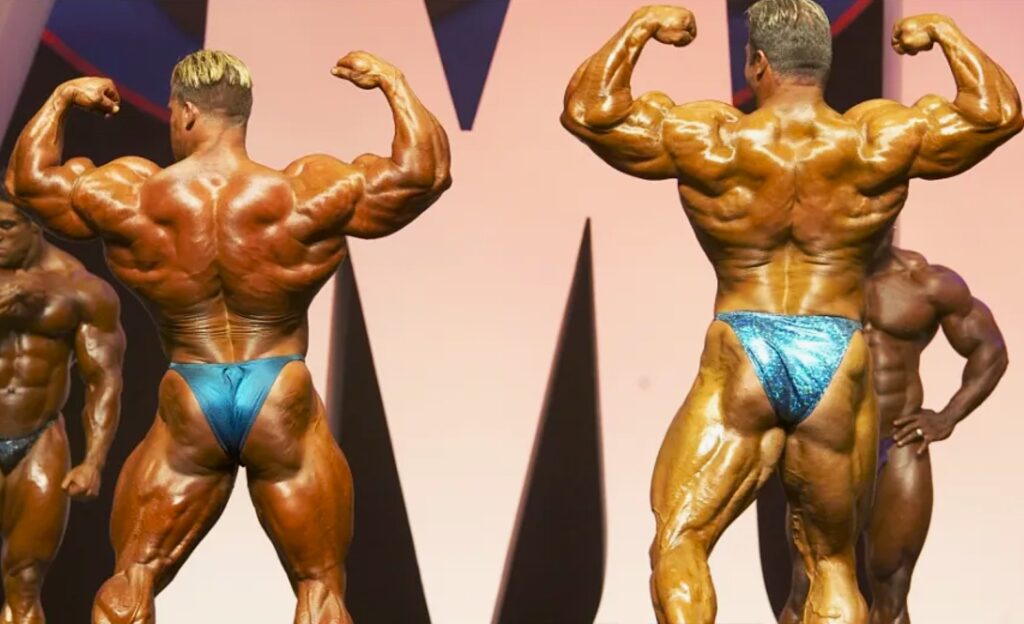
THE CHALLENGE ROUND: FINISH
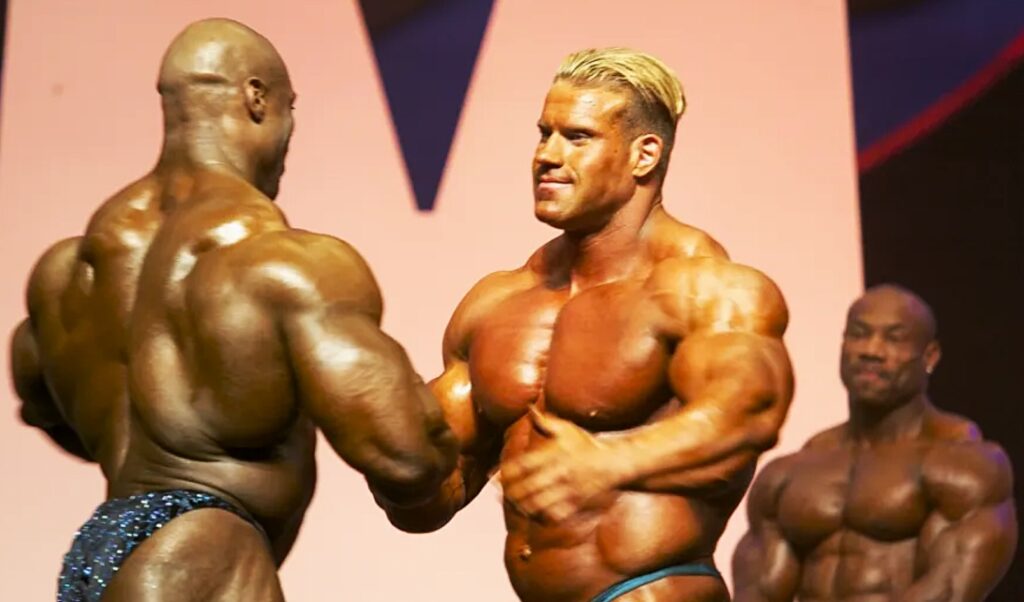
Here’s how the Challenge Round went. Schlierkamp lost all five of his called challenges. Rühl won his first three (Schlierkamp, Badell, Jackson), but lost when he called side chest with Cutler and most muscular with Coleman. Similarly, Badell won his initial three (Schlierkamp, Rühl, Jackson), but lost a rear double biceps to Cutler and abs and thighs to Coleman. The most unpredictable results were those of Jackson who, after beating Schlierkamp and Rühl, lost to Badell when he called most muscular (uh-oh!), beat Cutler in rear double biceps (hey!), and then lost to Coleman in abs and thighs (really?!). Finally, Cutler and then Coleman won all five of their called challenges, including those against each other: abs and thighs for Cutler, rear lat spread for Coleman.
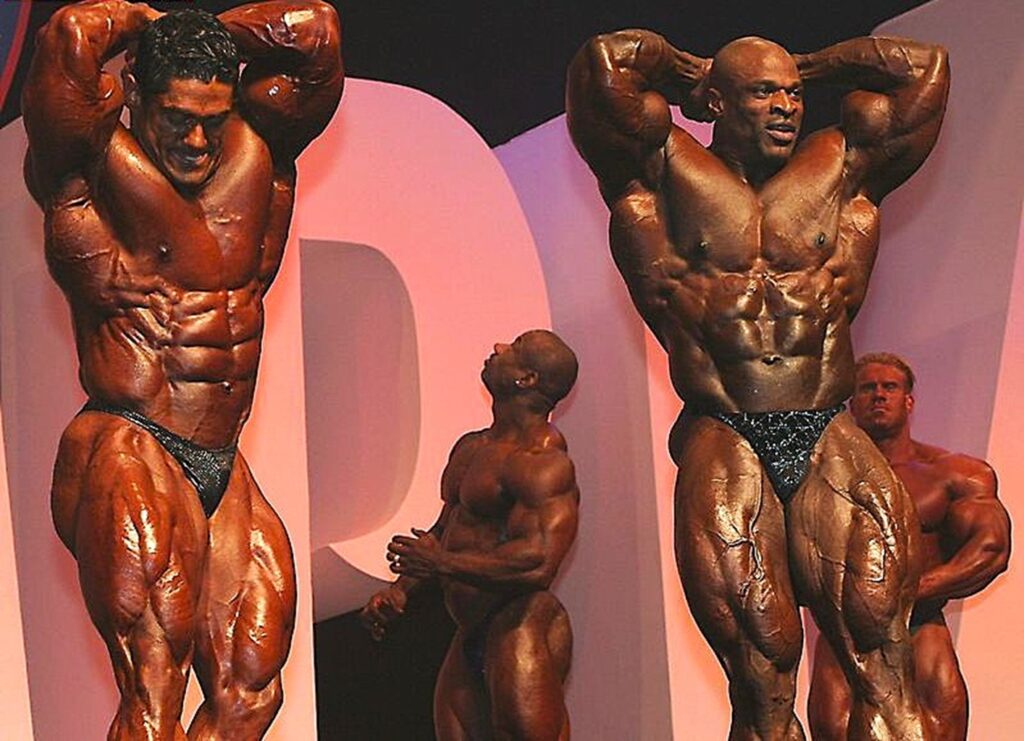
Shawn Perine chronicled the final pose of the 2004 Mr. Olympia:
By this time, Ronnie Coleman has amassed 22 points, while Jay Cutler has 21, due to his clean sweep during his own challenges. The aggregate scores glow on the screen above the stage for all to see. An announcement is made that this, the final pose of the evening, would determine the Mr. Olympia 2004. It would be either Cutler edging by at 23 to 22 or Coleman winning 24 to 21.
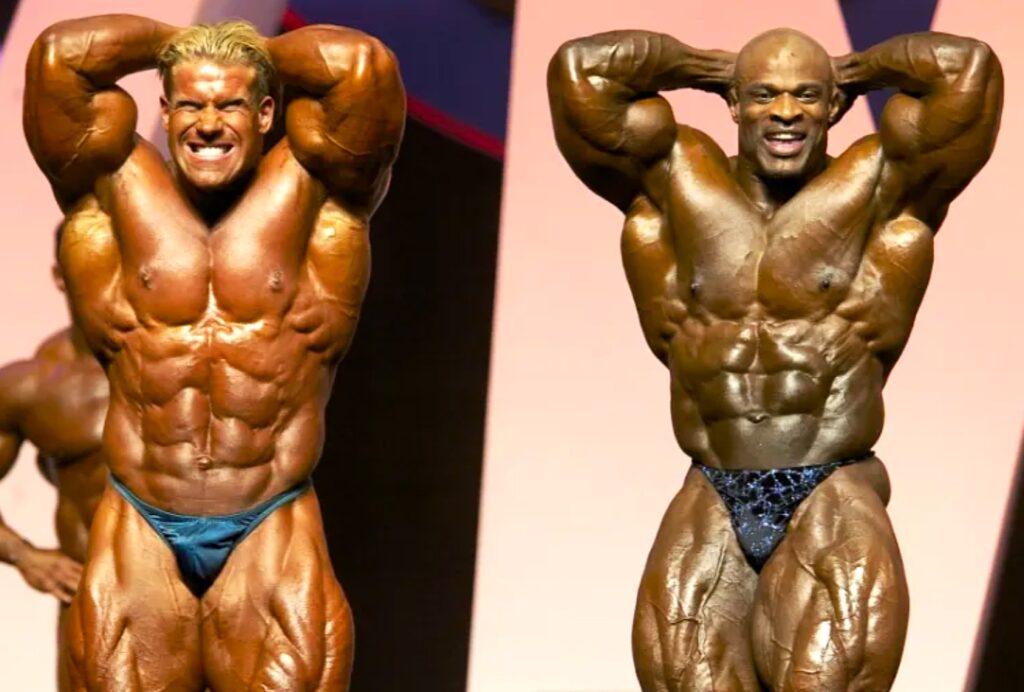
Of course, everyone figured Big Ron had it in the bag. The Challenge Round rules state that competitors are allowed to call the same shot only twice. Coleman had only called his killer pose, rear double biceps, once, and it now had Cutler’s name written all over it. In previous years, Coleman could have also called upon the rear lat spread to do in his perennial rival. In 2004, though, Cutler underwent a massive expansion, and the overall mass, if not the detail, of his back had reached a point where it equaled Coleman’s.
“What’s it gonna be, Big Man?” Triple H inquires. “Rear-lat-lights-out-game-over spread,” the reigning champ asserts. Many in attendance immediately realize the tactical error Coleman had made. Could he win the pose? He could. Was it a guaranteed “game over”? Not by a long shot.
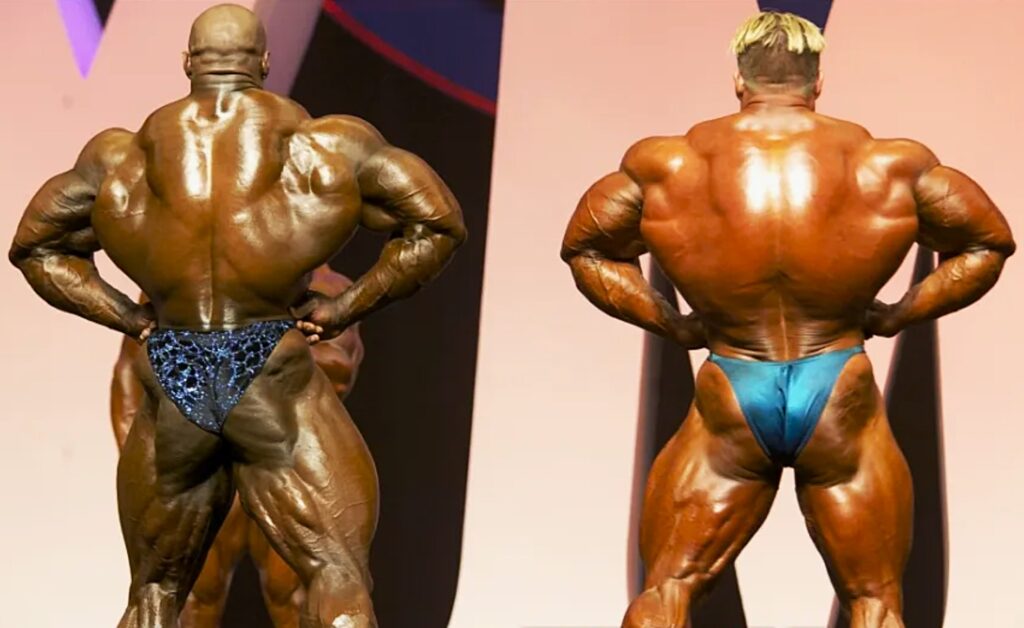
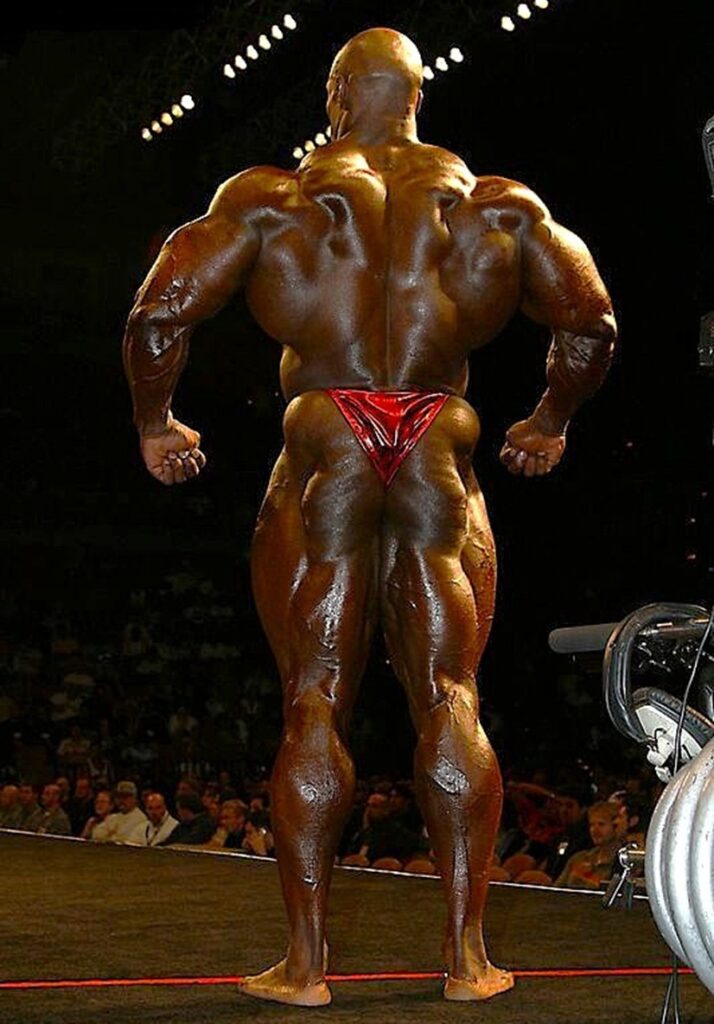
At the buzzer, Cutler spread his lats nearly simultaneously. They flare like the proverbial cobra’s hood, casting a dark shadow across the stage. Coleman is slow off the draw. Buzz! Five seconds are up and the man-mountain is still in the midst of unraveling his meaty wings. He hasn’t quite hit the pose fully, hasn’t straightened out of the forward lean bodybuilder’s employ to exaggerate the illusion of growth that comes with the rear lat spread. When he finally “sits down” into the shot, it is majestic. But that isn’t until a split second after the buzzer sounds. Do the judges see enough of his back in the allotted time to secure him a seventh consecutive title?
2004 MR. OLYMPIA: TOP SIX
As an addendum to Perine’s Olympia report in FLEX, Peter McGough wrote an analysis of all 19 competitors. Here’s what he said about the top six:
1st RONNIE COLEMAN
5’11”, 296 pounds
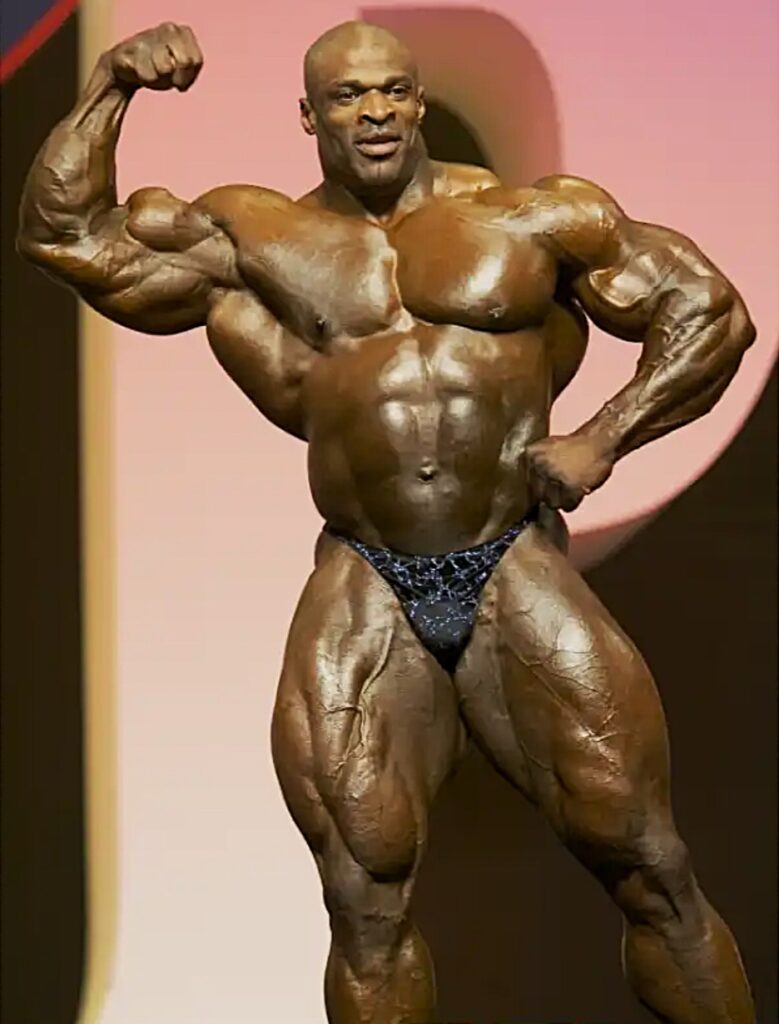
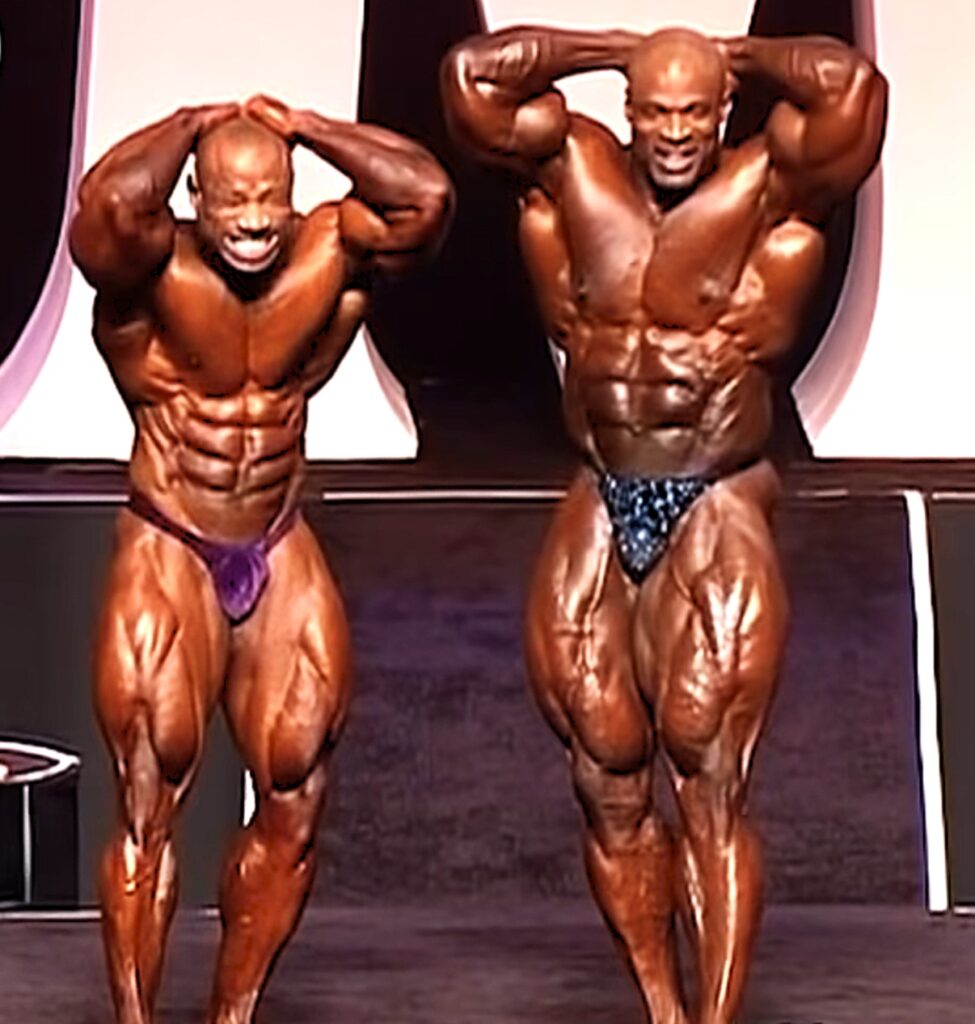
Ronnie was nine pounds bigger than he was last year, and that package swept to a clear victory. However, he wasn’t as sharp as last year, particularly in the lower back, and from the side, his pecs looked flatish. On the other hand, his thighs, always huge, were more cut than we’ve ever seen them. Cognizant of the scrutiny his abs would face in the Challenge Round, the champ was as tight in that area as he had been in years—and he deserves credit for making that area less problematic than was thought to be the case going into the contest. However, that didn’t stop a boofest from breaking out when Dexter Jackson challenged him in the abs and thighs pose and lost. My personal preference is for the drier, lighter, and more cut Coleman who won the 2001 Arnold Classic. Still, the name of the game is winning, and the champ keeps doing just that.
2nd JAY CUTLER
5’9″, 273 pounds
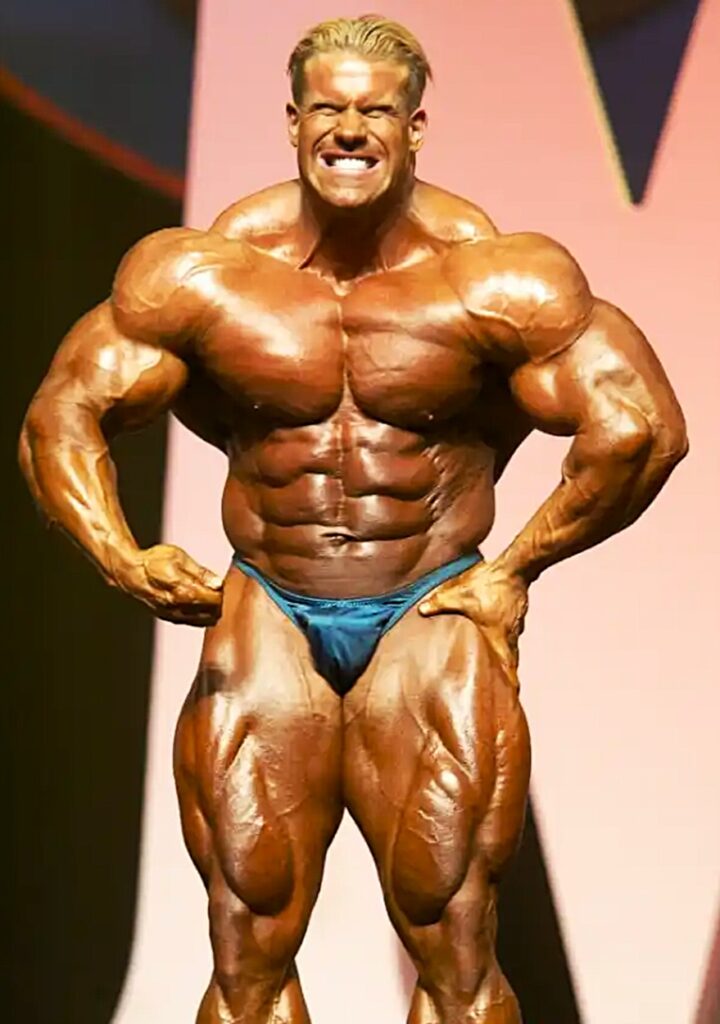
After experimenting with a more streamlined look at the 2004 Arnold, Cutler went for size in his quest to topple Coleman. Particularly outstanding was his improved rear double biceps, which had gathered width and thickness and showed more detail in his upper back. In that pose, with his delts looking crazy, his teres major muscles hung there like a couple of midget rock climbers. He was not beaten for width, but his lower back still lacked the definition to be competitive with Coleman, although his abs and thighs and all-around condition were their trademark good selves. Overall, in the current climate, Cutler’s rise to the Olympia crown seems to hang more on Coleman being off than perhaps Cutler just being on, which he invariably is.
3rd GUSTAVO BADELL
5’8″, 244 pounds
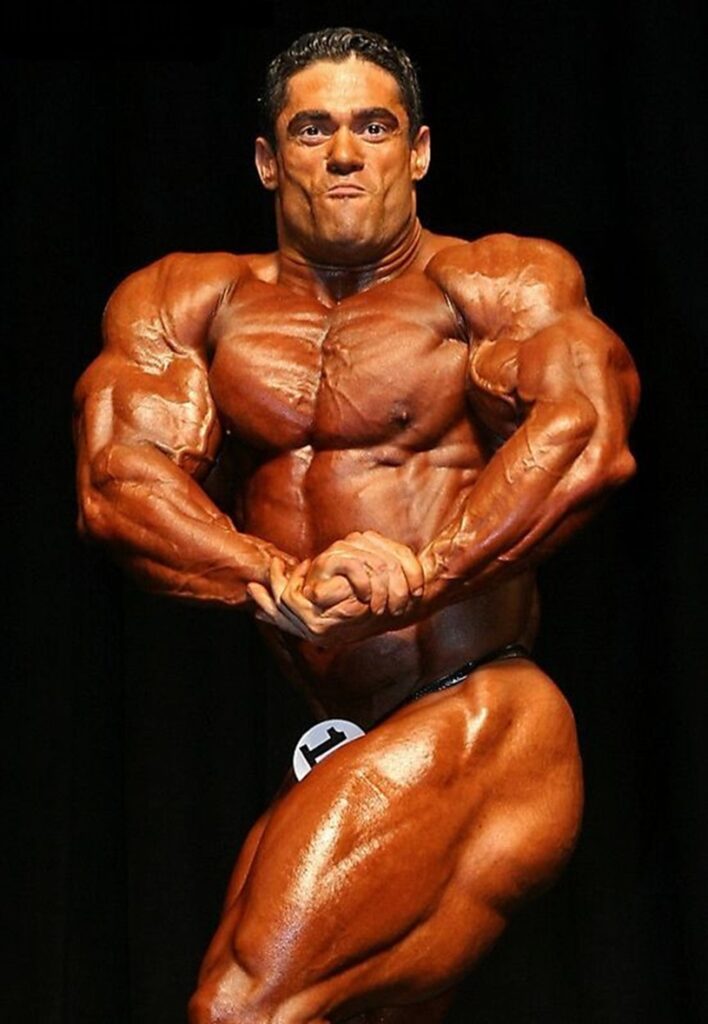
It was instantly clear that Badell, with Dexter Jackson a close second, was the hardest and driest in the contest. Kick in sinew-splitting fullness, proportionate muscles, and presto! Badell’s emergence is the real story of the 2004 Mr. Olympia. From head to toe, he was competitive for a top spot. Highlights were arms, chest, and hams with standout poses being side chest (full length, a view that captures separated hamstrings) and back double biceps. After a long and uneventful pro career (debut was ninth in the 1999 German Grand Prix) and his only previous Olympia appearance earning him a 24th in 2002, hard-as-nails Badell finally nailed it and became the feel-good story of this Olympia. [His contest-to-contest leap of 21 places is an Olympia record, unlikely to be broken.]
4th DEXTER JACKSON
5’6″, 228 pounds
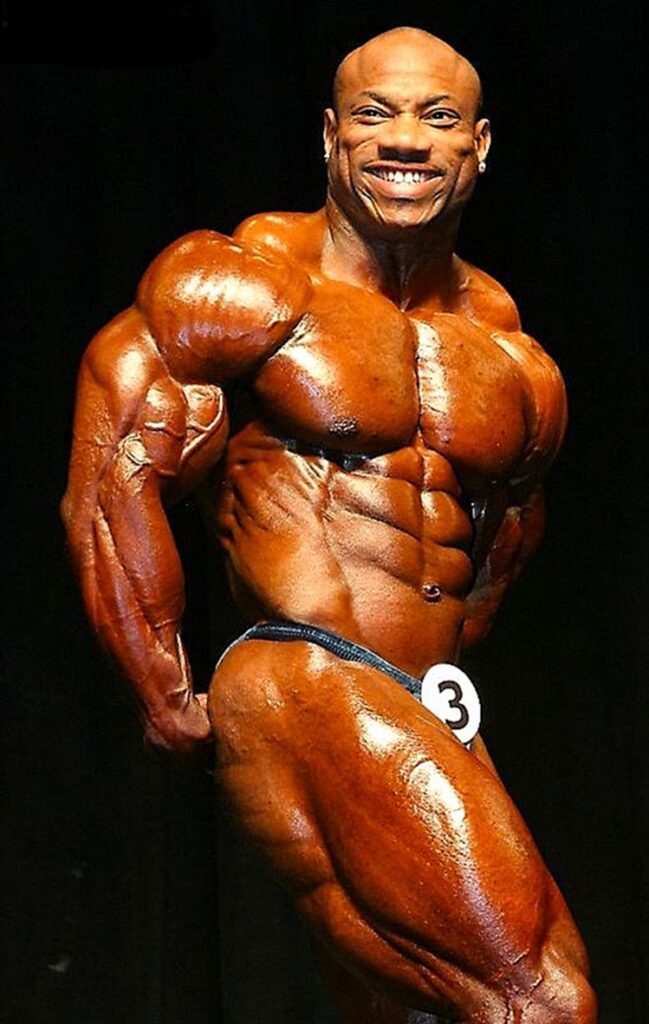
As cut and dry and full as he’s ever been. His dryness markedly stood out in a lineup where excess moisture was abundant. The strikes against him were high lats and calves and a lack of width (especially in the front lat spread), but his overall package was the best of the day. His serratus should have carried a “dangerous weapon” warning. After the 2003 contest, I commented that if the bodybuilding criteria I understand were followed, Jackson may have deserved to win. In 2004, ditto. That being said, he was the casualty of the Challenge Round, dropping from third to fourth, although how he lost out on abs and thighs in that round to Coleman is a bigger mystery than where Markus Rühl’s neck disappears to during a most muscular.
5th MARKUS RÜHL
5’10”, 280 pounds
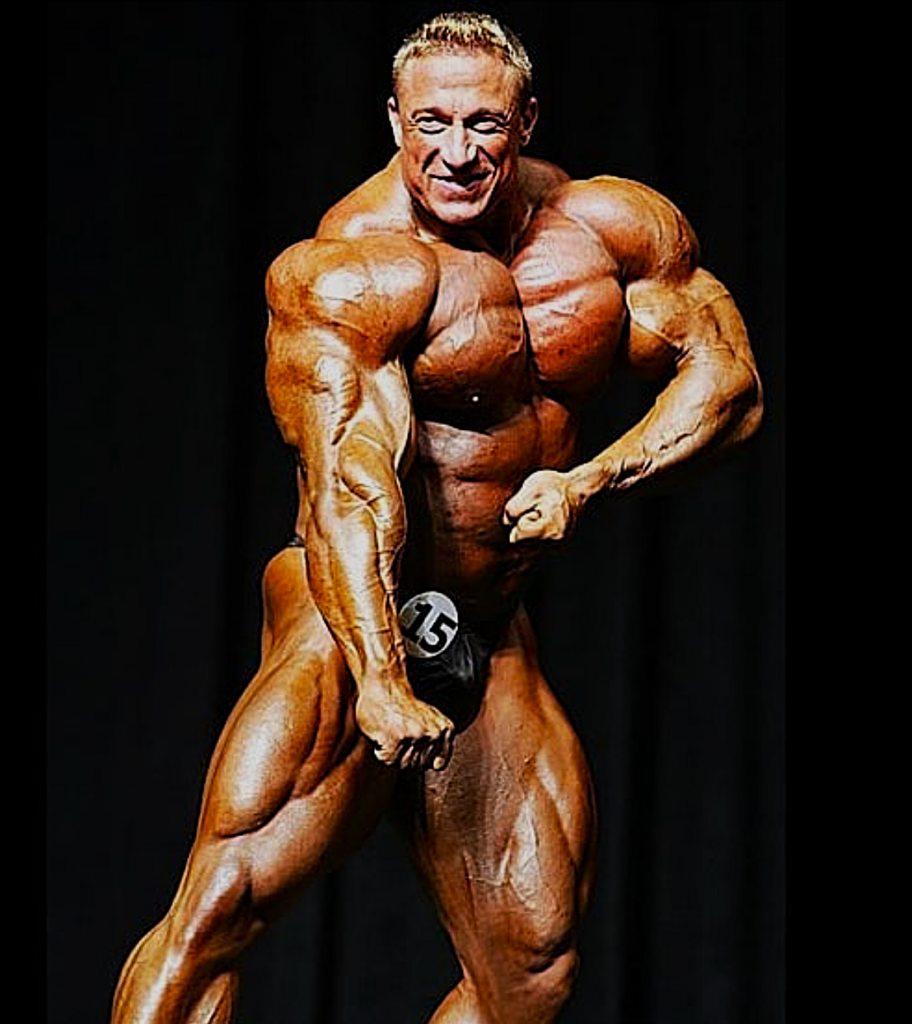
With his sheer size and smiling countenance, Rühl is the ultimate crowd pleaser. At this contest, he was in his best-ever condition without losing his signature fullness. His midsection has improved and become tighter. He is slowly etching in detail to his back. His massive front lat spread is a stage clearer, his thighs are full and cut, and his most muscular—complete with beaming grim—is a showstopper. I believe Rühl beat Coleman in the most muscular Challenge Round duels, although the judges saw it differently. The giant German was ecstatic with fifth place (his highest Olympia placing yet).
6th GUNTER SCHLIERKAMP
6’2″, 295 pounds
At 295 pounds, Schlierkamp is an imposing sight as he walks out onstage, but the fact that he was not in his Coleman-defeating shape of 2002 was abundantly clear once he started hitting the compulsories. [Three weeks after Coleman won the 2002 Mr. Olympia, Schlierkamp beat him at another contest, the Show of Strength.] His chest was softish compared to his best, and he just didn’t fill the space or show the detail that he had two years ago in the back double biceps pose. That athletes who placed sixth through ninth all missed their peaks and were separated by only a few points after the prejudging. Schlierkamp nudged the others for sixth, but that he was not at his best was proved when he lost all of his challenges.
WHY THE CHALLENGE ROUND FAILED
The Challenge Round was a bust. It had several key problems. First, it minimized prejudging when the 19 Olympia competitors performed the four semi-relaxes stances (round 1) and all eight compulsories (round 2). This was the “real judging,” but only a total of 21 points carried over from its careful conclusions as well as the evening’s posing routines. A whopping 50 points were up for grabs in the C.R. The contest for the top six virtually started anew, which was a big selling point for the format. Anything can happen!
And yet the judges didn’t want anything to happen. They’d determined the top six in the first two rounds, based on a dozen poses and various callout configurations, and now they were asked to rapidly make A or B choices based on one pose. It seems they sometimes just picked the bodybuilder they’d already ranked higher and not the pose winner. The most striking example of this was abs and thighs. It was Ronnie’s worst pose by a wide margin (structurally, he has, at best, a four-pack), so four of the five bodybuilders challenged him to it. The judges only awarded it to Cutler over Coleman even though Jackson bests Coleman via his sharp middle and Badell likely does as well. If all three duels had gone against the champ, he would not have been the 2004 Mr. O.
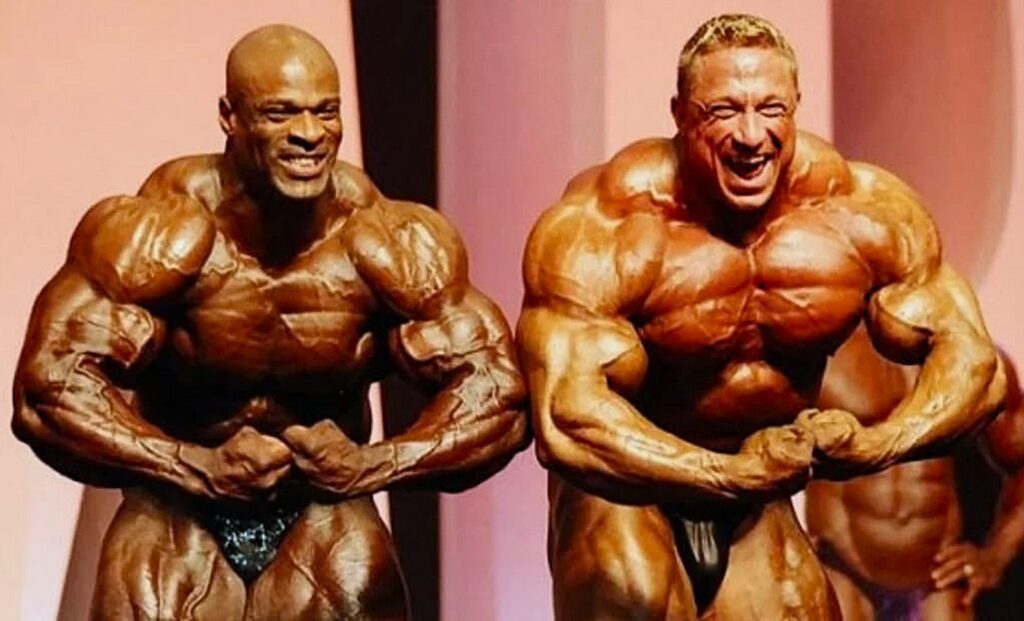
Also, Rühl and Coleman both challenged each other to the most muscular. Though it was a phenomenal pose for Coleman, it was more so for Rühl, in terms of shoulder-to-shoulder size. The judges but not the audience said Coleman won both. However, if they’d chosen Rühl, it would’ve meant four fewer points for the champ and four more for the challenger. The result: Rühl would’ve ended in third behind runner-up Coleman and new Mr. Olympia, Jay Cutler. If mass won Coleman the abs and thighs (the least size-centric pose), what won him the most musculars (the most size-centric pose)? Reputation, in all cases, it seemed.
I’m not saying the final results were unwarranted based on all four rounds. I’m saying the potential for upsets was promised by the Challenge Round. It was right there for the having, and it failed to deliver. Everyone saw it in real time when one bodybuilder bested the other in a pose but didn’t get the win and the points. The over-importance of the C.R. could’ve been addressed by making the first three rounds at least as crucial to the top six’s placings as the C.R. But this Olympia was oversold as a new, exciting, sporting event with live scores constantly changing and anything can happen!
Anything could’ve happened and maybe should’ve happened, if every duel had been a fair fight judged only on that single pose, but it wasn’t to be, maybe for the best. Ultimately, the 2004 Mr. Olympia was more frustrating than exciting, partly due to the judges’ predetermined opinions but mostly because it was clear results were unlikely to change dramatically as we watched. Only Badell overtook Jackson via the C.R. and only by a point—the sort of minor scorecard jostling that happens in most Mr. Olympias. That said, Badell never could’ve made up the eight-point margin without the C.R.
Another problem: Six of the 30 challenges were repeated. The second bodybuilder had already won the pose when challenged by the first, so he called it again. Cutler wisely did this in all three of the challenges he’d previously won. The judges, predictably, selected the same victor twice, and the audience collectively yawned. This could’ve easily been prevented with a rule change, if the Challenge Round had become an enduring thing.
And as for the scoreboard, this was supposedly a way to bring bodybuilding in line with other sports and boost drama. But bodybuilding isn’t only a sport. It’s also kind of a pageant. And the most dramatic thing in most every contest is the announcement of the final placings. Put the changing results up in lights for the audience and competitors to see in real time and all the concluding tension vanishes. What’s more, the contest halted 30 times while everyone gazed at the scoreboard, even though almost every time fans could correctly guess the result before the pose was even struck. It added tedium, not excitement. And it was cheesy, like a game show (“Survey says…?”)—if that game show was hosted by a pro wrestler.
The Challenge Round was universally panned. Cormier was right. The experiment was too bold. It should’ve been tried at a lesser contest first to smooth out kinks and test its feasibility and popularity. Potentially, it could’ve been pared down and incorporated as a short part of the overall judging, minus the scoreboard. Maybe each of the top bodybuilders gets to challenge one other to one pose. The C.R. returned to the 2005 Mr. Olympia as a separate contest within the contest; the top five were judged by previous Mr. Olympias, but points were not tallied in final scores (Badell won that C.R. and $25,000 while Coleman won his eighth and final Mr. O). In a year, the C.R. had gone from 70% of the points to none. And then it was gone. It was rarely mentioned again at Weider Headquarters. Although bodybuilders proposing their own pose duels remained a sound concept, the term “Challenge Round” had become a curse amongst the powers-that-be. Do not speak its name.
2004 MR. OLYMPIA: CONCLUSION
Though it was an attempt to shake things up, the 2004 Mr. Olympia was ultimately a repeat of 2003, at least when it came to the ultimate decision. The previous year Ronnie Coleman reinvented himself as a nearly-300-pound goliath with Jay Cutler chasing but unable to measure up. And here we were again, same place, same result. What changed was the shocking emergence of Gustavo Badell, leaping from next-to-last in his previous Olympia to two spots from first this time. And, of course, there was the Challenge Round, which was too consequential in terms of points and yet almost inconsequential in terms of placings. No matter the rounds, no matter the challengers, the Ronnie reign endured.
2004 MR. OLYMPIA RESULTS
October 30, 2004 / Mandalay Bay Events Center / Las Vegas, Nevada
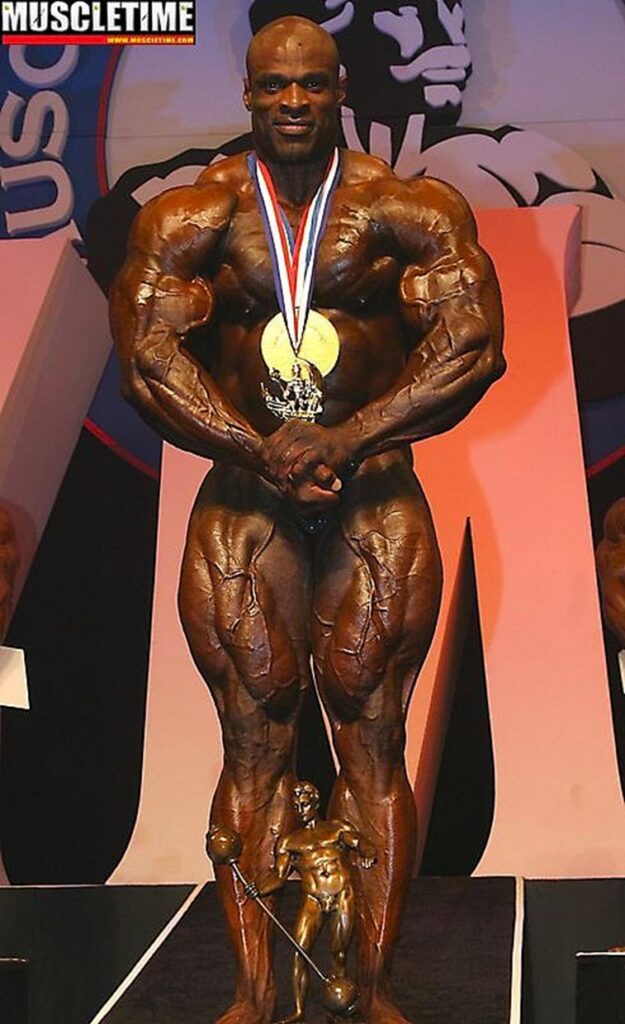
1. Ronnie Coleman ($120,000)
2. Jay Cutler ($75,000)
3. Gustavo Badell ($50,000)
4. Dexter Jackson ($40,000)
5. Markus Rühl ($30,000)
6. Gunter Schlierkamp ($25,000)
7. Chris Cormier ($15,000)
8. Dennis James ($14,000)
9. Victor Martinez ($12,000)
10. Darrem Charles ($10,000)
11. Pavel Jablonicky ($1000)
12. Kris Dim ($1000)
13. Ahmad Haider ($1000)
14. Johnnie Jackson ($1000)
15. Troy Alves ($1000)
16. Craig Richardson ($1000)
17. Mustafa Mohammad ($1000)
18. Richard Jones ($1000)
19. Claude Groulx ($1000)
2004 MR. OLYMPIA SCORECARD