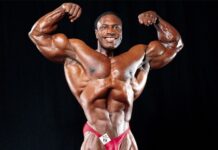



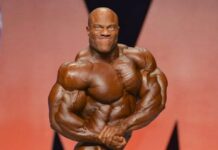
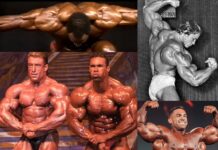
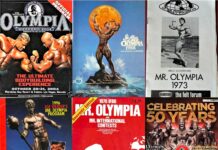






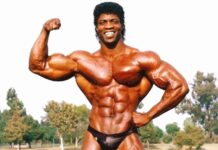

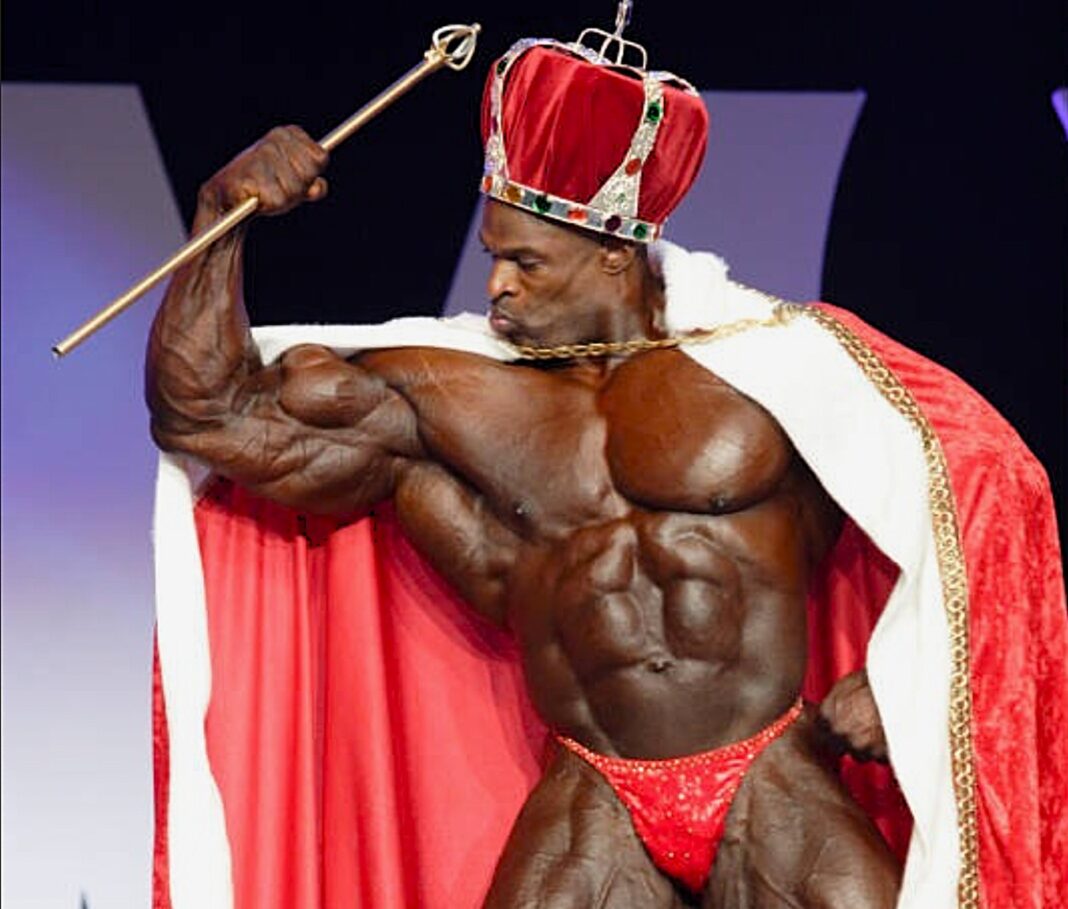
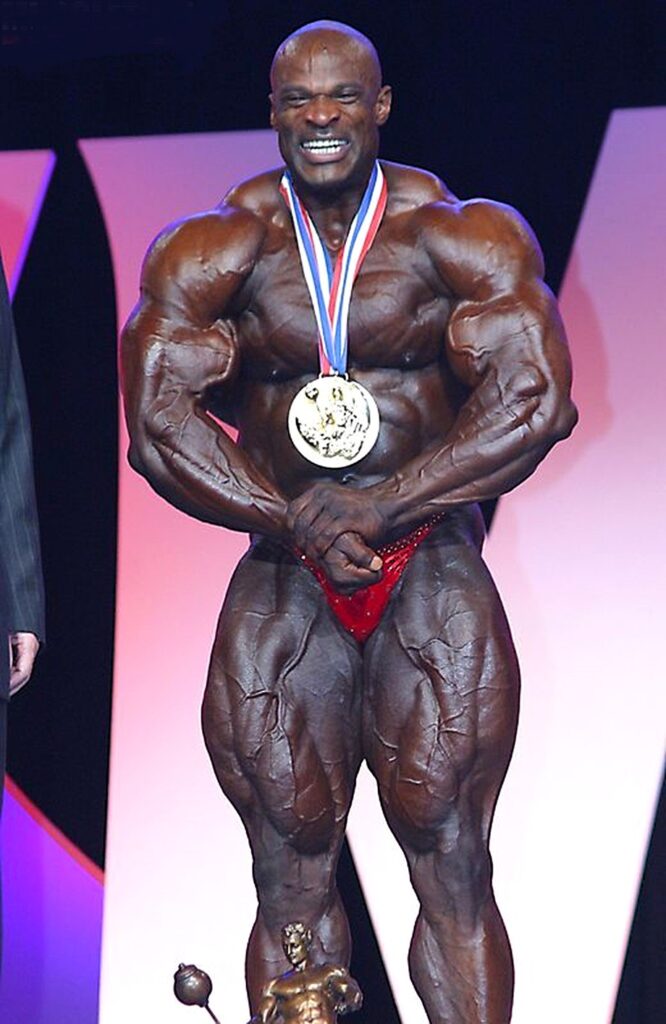
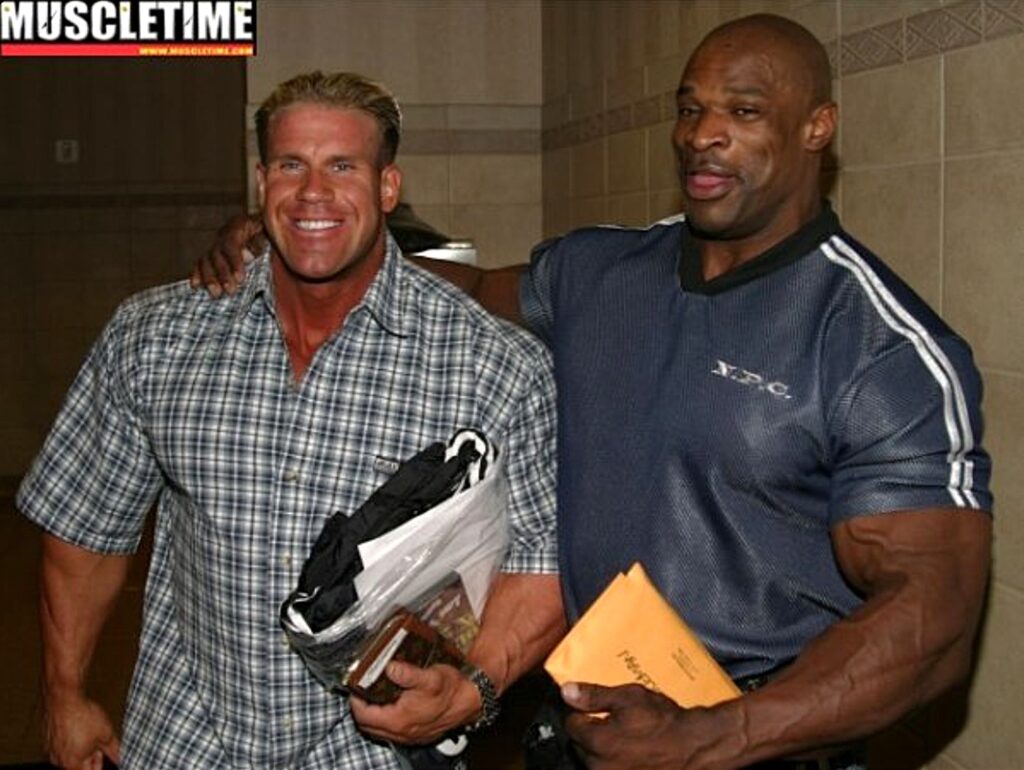
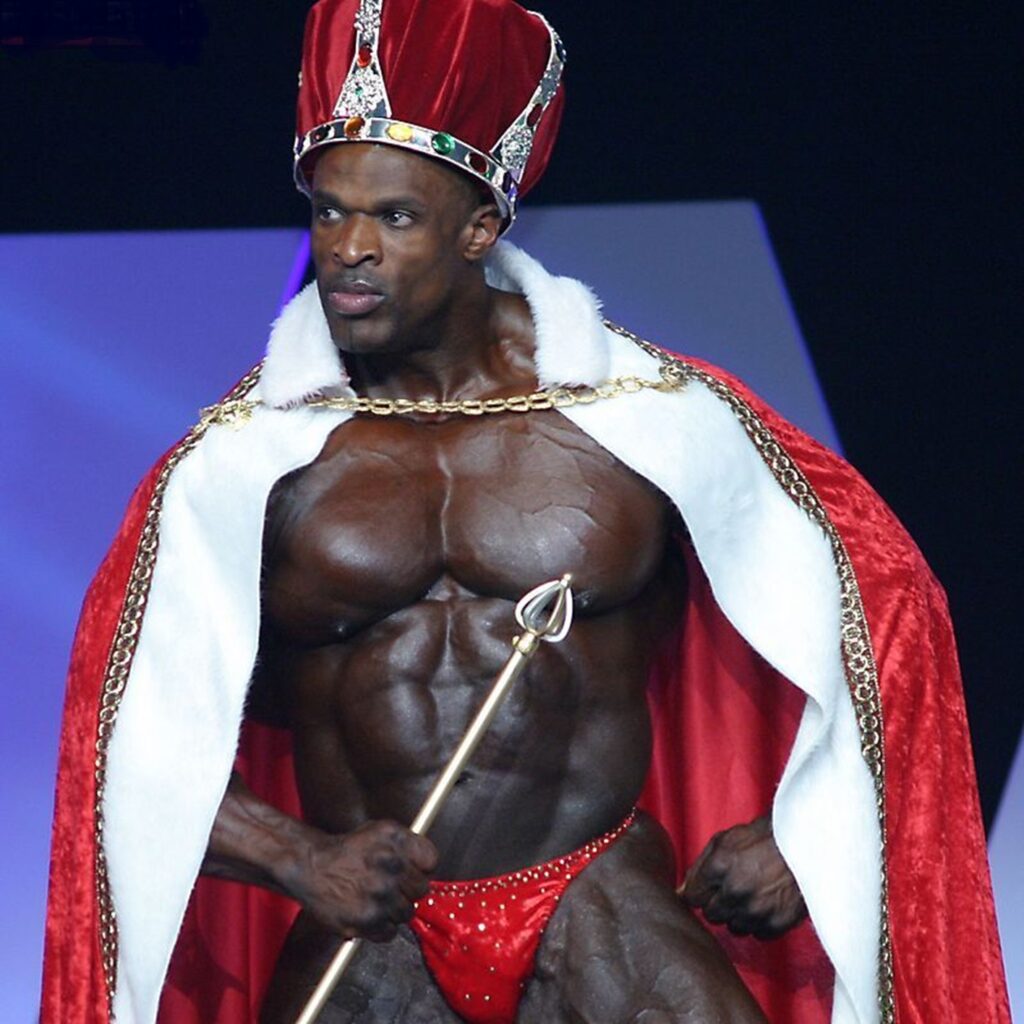
King Coleman winning the 2005 Mr. Olympia.
Eddie Giuliani: “The king of the hill can only go down.”
Arnold Schwarzenegger: “Or stay up.”
— Pumping Iron (1977)
In the end, his glistening head is raised to the heavens, eyes clenched, and when he hears his only true rival has once again been vanquished, he falls to the stage overwhelmed with joy. We’ve seen this scene seven times prior, but what preceded it is unique. The setting is new. Eight of the competitors are different than the time before, and most of the other 13 look dramatically different. Competitive bodybuilding itself has changed. To comprehend how we got here and where we’re going, we need to journey into the gyms, the private meeting rooms, and the pump-up pen, from behind the scenes with an all-access pass to the bright lights of center stage where the eight-time Mr. Olympia, finally, rose triumphant.
VORTEX
This happened this year. A judging mandate elevated symmetry, V-tapers, streamlined waists, and aesthetic development over bloated freakiness. The Mr. Olympia stayed in Las Vegas but moved from the Mandalay Bay—its home the previous six autumns—to the Orleans Arena; the expo moved to the Las Vegas Convention Center. A men’s Wildcard Challenge was added to Friday’s female fitness and figure competition with the winner earning a slot in the big show the following day (David Henry won, earning $10,000). The controversial challenge round was made a contest within the contest, voted on by former Mr. Olympias and not affecting final scores. There were no post-Olympia European shows for the first time since 1986. Rumors percolated about a new bodybuilding organization. Lee Priest backed out of the Olympia in the final days, dishonoring his contract.
All of the above, in addition to an increasingly stormy climate for sports supplements, fed a growing vortex—a feeling that anything, good, bad, or shocking could happen in this, the 41st Mr. Olympia.
KING OF THE HILL
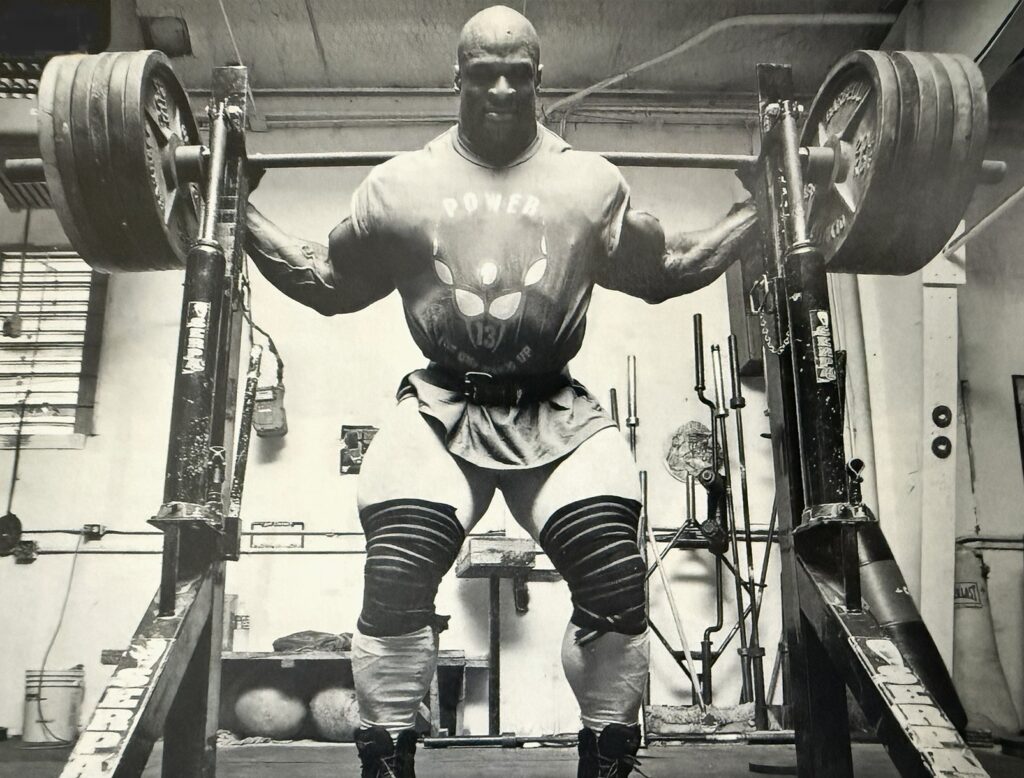
September 17, Arlington, Texas. “Fans are evil,” the graffiti on the wall reads, referring to the spinning sort that futilely battle today’s 98 degree heat. It’s the raw, dirty, implacable mentality of Metroflex, the gym that spawned you. At this moment—countdown four weeks—you’re rising out of the squat hole on your 10th rep, carrying nearly 600 pounds, no spotter, no safety bars, nose bleeding.
After Jay Cutler pushed you to the wire in 2001 and Gunter Schlierkamp defeated you the following year (in the GNC Show of Strength just after you won the 2002 Mr. Olympia), you supersized, transcending previous mass standards. In the process, you sacrificed upper body crispness, and your belt size garnered criticism. This year, at age 41 and in the wake of the new judging guidelines, you vowed to remodel yourself yet again, dieting all year, consuming smaller portions, training abs with high reps at least every other day and aiming for a lighter bodyweight, all to miniaturize your middle and tighten up, all to stay on top of the hill.
HEIR APPARENT
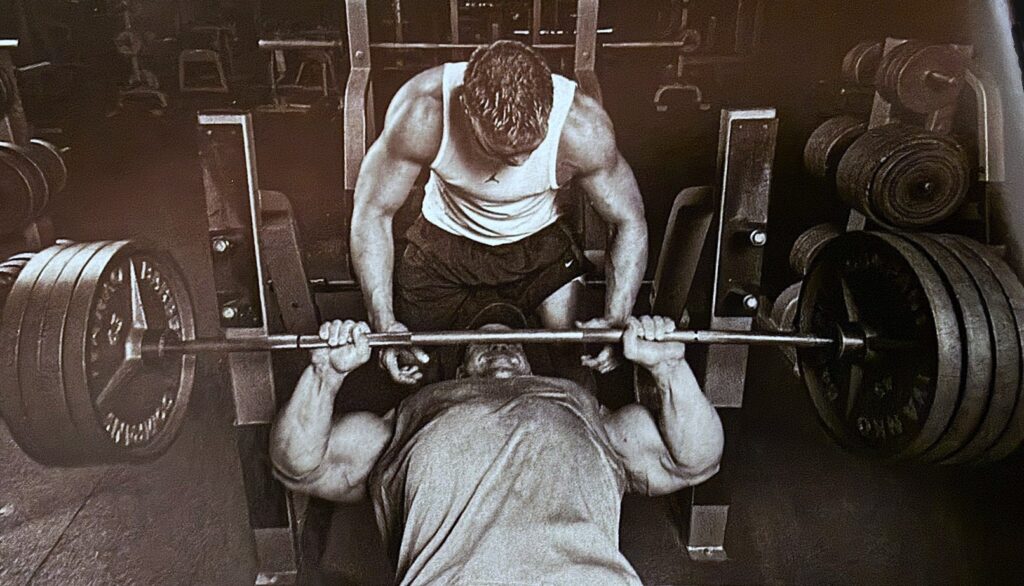
August 1, Las Vegas, Nevada. You’re the second-best bodybuilder on Earth, and you’ve already dieted for five of 17 weeks when you bench press 405 pounds for eight reps, rack the weight and get six more with 315. “How many did Ronnie do?” you ask me. It’s a running joke, but it masks a serious concern that all your effort, all your suffering, all your hopes will once again come to naught because of one man. In fact, you could now be gunning for Mr. O title number five, and not your first, if not for that one man. Athletes shouldn’t drink “could’ve.” It’s poison. How many Hall-of-Famers could’ve won a World Series if not for the New York Yankees winning 27 times?
Bodybuilding is a sport of one-man dynasties. Coming into the 41st edition, only three men had been Mr. O over the previous 21 contests. During that same period, nine men finished second without ever clutching a Sandow trophy. You had the unfortunate timing of bucking up against the Coleman dynasty, but after finishing second in your previous three O’s, winning three Arnold Classics, and, at 32, still two years younger than Coleman was when he took his first Olympia, you’re more determined than ever to reach the top of the hill. You know Mr. Olympia always has the best back, so, since last October, you’ve been assaulting yours like never before, dividing it into width (pullups, pulldowns) one day and thickness (deadlifts, rows, rows, and more rows) the next. This year, you vow, you’ll have the best back. Then your dream will be Coleman’s nightmare.
BACKSTAGE: PREJUDGING
At 9:20 A.M., the seven-time Mr. Olympia strolls backstage. He’s smiling when he greets me with a soul handshake.
“Ready to rock-and-roll?” I ask.
“Oh yeah. Bring it on,” Ronnie Coleman answers.
“How’d you sleep last night?”
“Like a little bitty baby.”
Coleman sits next to the carpeted pump-up pen, 12 feet from where Jay Cutler is already seated. Others are scattered about, lying on the floor with their feet elevated on chairs or chatting on cell phones or eating from Tupperware bowls.
Jan Tana and her crew are spraying or brushing color and slapping oil on previously pale and lusterless men. The distinctive scents fill the air. Ronnie Rockel, the first to peel down to trunks, makes the unfortunate choice of forgoing Team Tana’s expertise for a metallic, details-obscuring coat of Dream Tan, and I joke with a coworker that the decision just cost him five places. You ain’t in Europe anymore, Goldfinger.
Emcee Triple H strides in. “There’s gonna be some scary guys here,” he tells a videographer.
The buzz builds as increasingly more competitors leave the tanning/oiling area to pump-up, repping out rubber band side laterals or dumbbell rows or pushups against a bench. Photographers search for the best angles.
At 9:55, five minutes before competitor #1, David Henry, steps onstage, neither Coleman nor Cutler have removed an item of clothing. I’m reminded of the time Larry Bird won the NBA Three Point Shootout without taking off his warmup suit, as if to say, “Why bother?” His arms draped over neighboring chairs, Cutler, the heir apparent, occasionally looks towards the king, Coleman. Interrupted only by a brief exchange with Branch Warren, the king grooves to gangsta rap on his Walkman. In the same way he says “light weight” before squatting nearly 600 for 10, his demeanor tells everyone—perhaps mostly himself—this show will be light lifting, even if he fears otherwise. The king stares at the carpet, bobbing his head to his personal beat. The heir apparent gazes lazily at the pumping competitors. Neither has moved from their seats when IFBB announcer Kenny Kassel introduces Henry to the prejudging audience.
CHALLENGER
September 8, Las Vegas, Nevada. Far from your old home in Puerto Rico, paging through books and magazines, you study the poses of all 10 Mr. Olympia winners while your son and daughter play nearby. You mimic the way the first Mr. O, Larry Scott, held his arms. You get down on one knee and twist just right to copy a signature shot of Franco Columbu, the fourth. How must it feel to be the best in the world? For your first four professional years, you were a nobody, never finishing higher than ninth, frequently not placing at all. In your fifth year, 2002, you were an embarrassing 24th out of 25 Olympia competitors. Then, after a year off, you stunned the bodybuilding world with a third in the 2004 Mr. Olympia, making the greatest leap in placings in Olympia history.
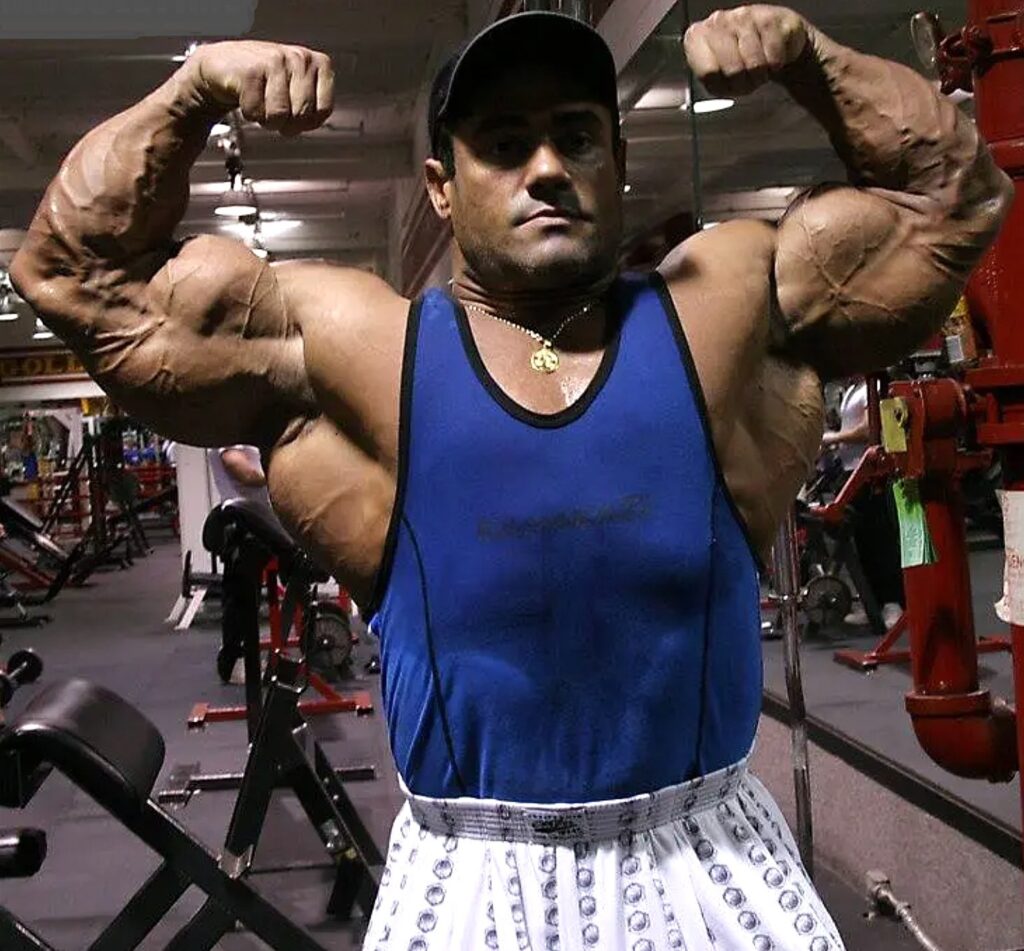
People said you undeservedly placed ahead of Dexter Jackson last year because of the challenge round. When you subsequently won the Ironman Pro and finished third in the Arnold Classic earlier this year, they said you were getting too big too fast and at risk of violating the new judging mandate. But you’ve only begun to refine your physique. Like Cutler, you’re 32. Why can’t I be the 11th Mr. Olympia? You lift your arms overhead miming the signature shot of the second Mr. O, a fellow Caribbean, Sergio Oliva. The victory pose. Your children cheer.
PREJUDGING: SYMMETRY ROUND
After each competitor completes his mandatory poses and after they then do semi-relaxed quarter turns in three groups, IFBB official Jim Rockell calls out the first comparison: “Ronnie Coleman…Jay Cutler…Gunter Schlierkamp.” It’s Schlierkamp’s earliest Olympia callout, and he is at arguably his best-ever, having carved in new lines and accentuated curves. Many in the crowd chant: “Ron-nie!” Others yell: “Cutler!”
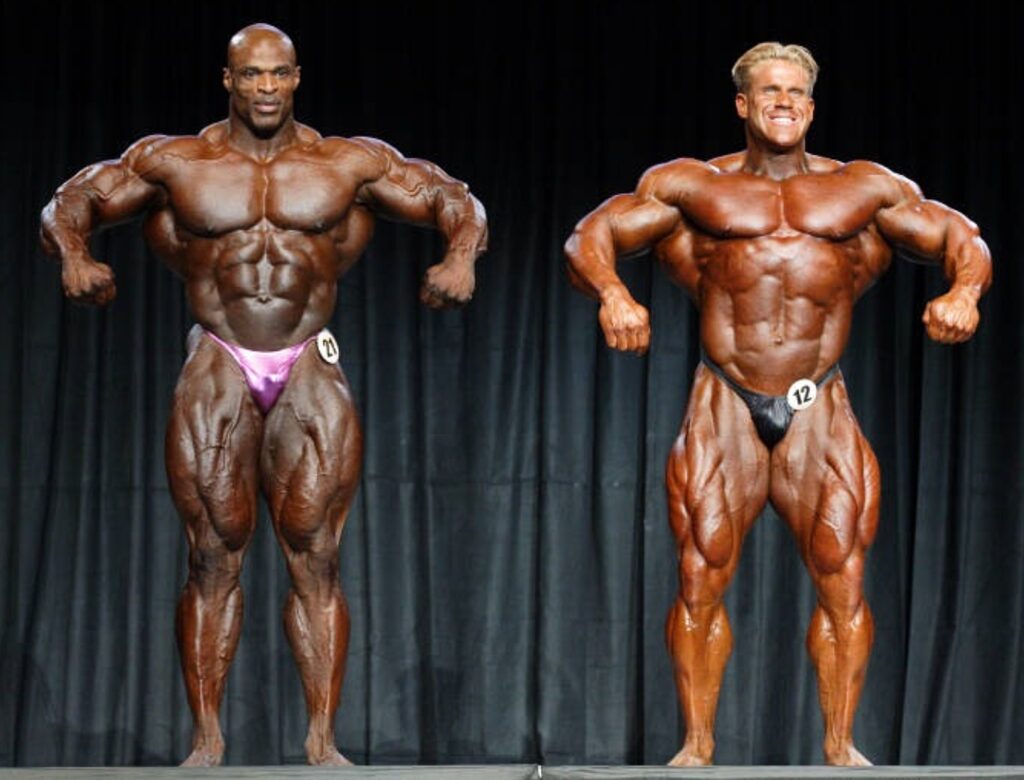
Little is decided after the seven additional symmetry callouts. We’ll discover later, the judges are split nearly evenly between Coleman and Cutler, with the former at seven points, the latter at eight points (lowest score wins); Schlierkamp, Gustavo Badell, and Victor Martinez are bunched together with 21, 22 and 23 points respectively; and Dennis James and Melvin Anthony are tied for sixth with 31. Overall, the quality of physiques is stronger than in recent years.
PREJUDGING: MUSCULARITY ROUND
The second round, when competitors are compared with others in the eight mandatory poses, is the heart of any bodybuilding contest, for this is when judges and fans alike are able to best measure strengths and weaknesses and differentiate one place from another. [2025 note: The symmetry and muscularity rounds were later combined, which is how contests are judged today.] This year, a common and crucial complaint among both competitors and observers is that there simply are not enough comparisons during either round of prejudging (Badell never flexes next to Cutler and Coleman, for example). Perhaps the judges are in a hurry to get to lunch. With the exception of a Coleman/Cutler rerun, each of the competitors is called out only once in the muscularity round. The result is that everyone is segregated into tiers with little chance of moving up or down. What follows are the first four callout comparisons (tiers, if you will) of the second round.
1. Ronnie Coleman, Jay Cutler
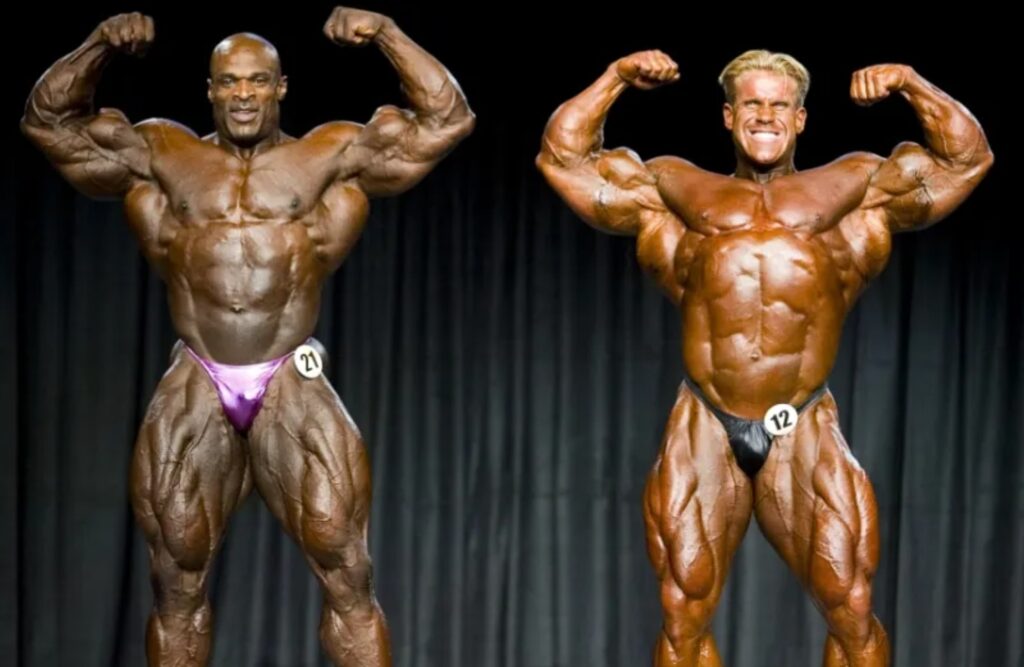
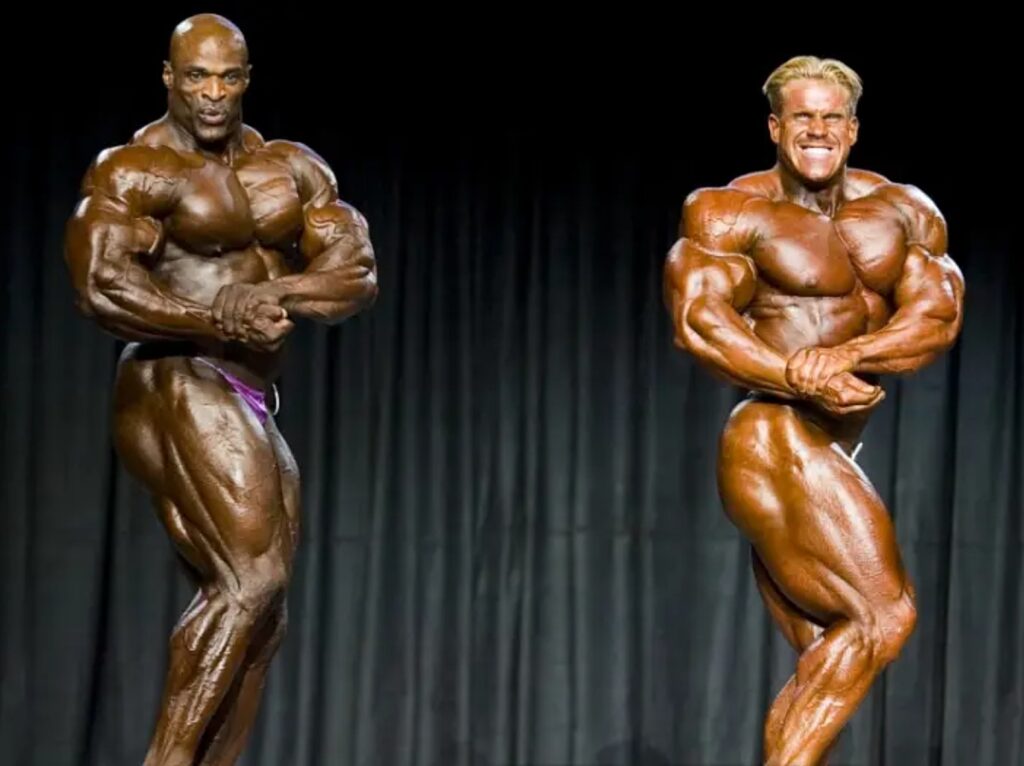
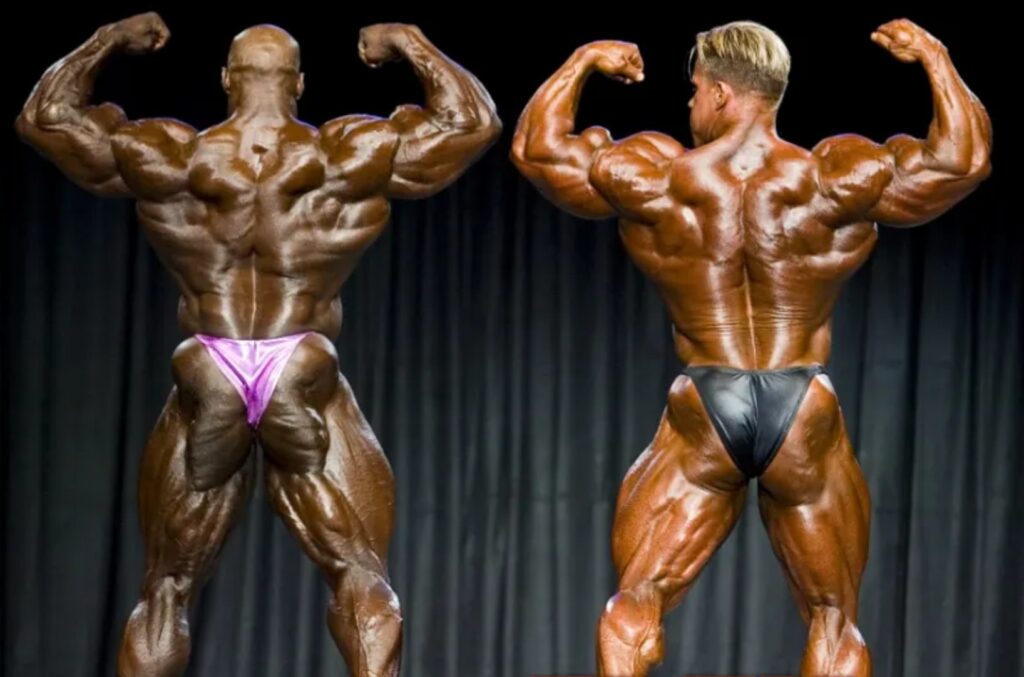
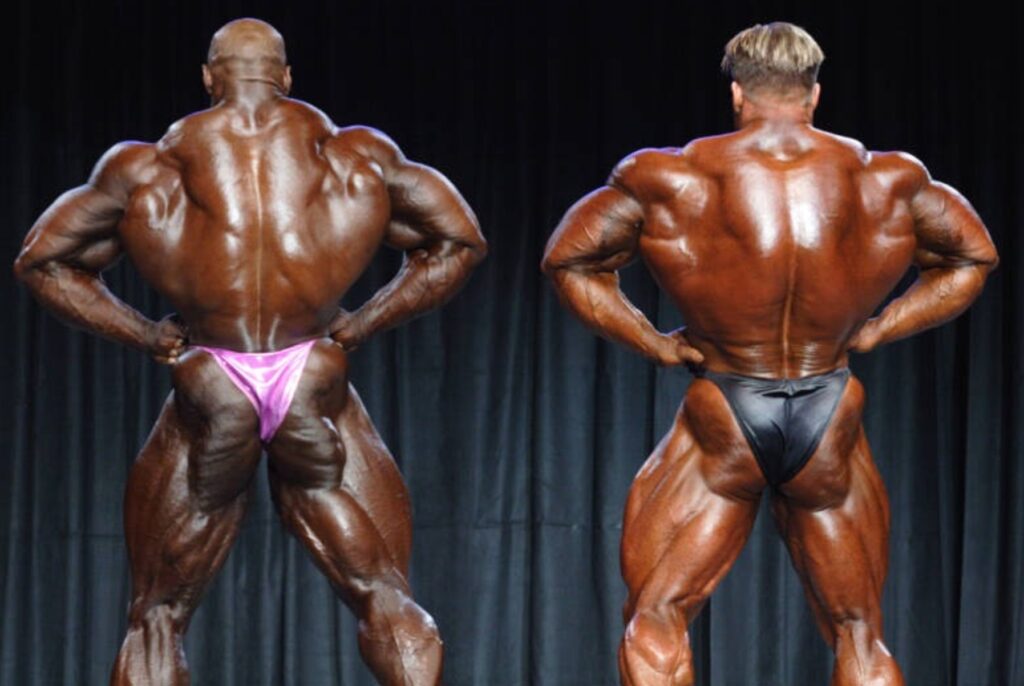
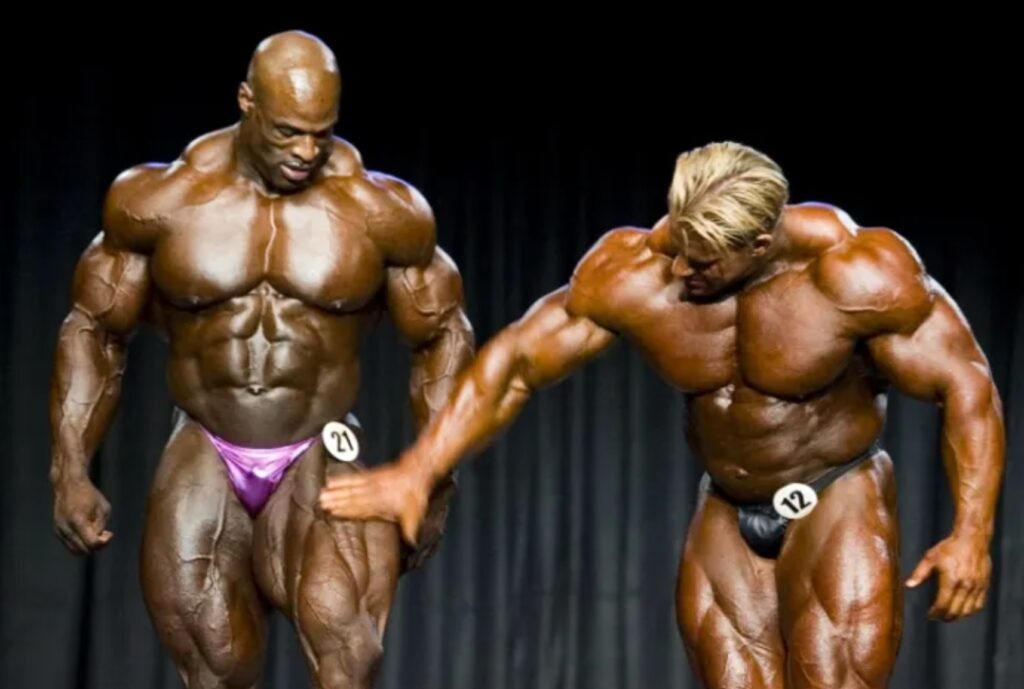
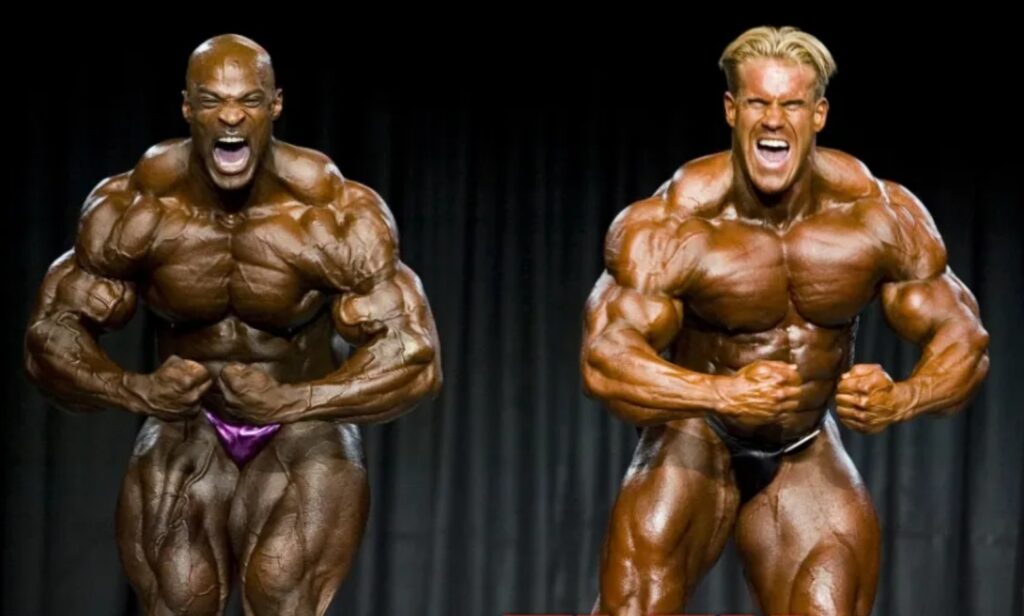
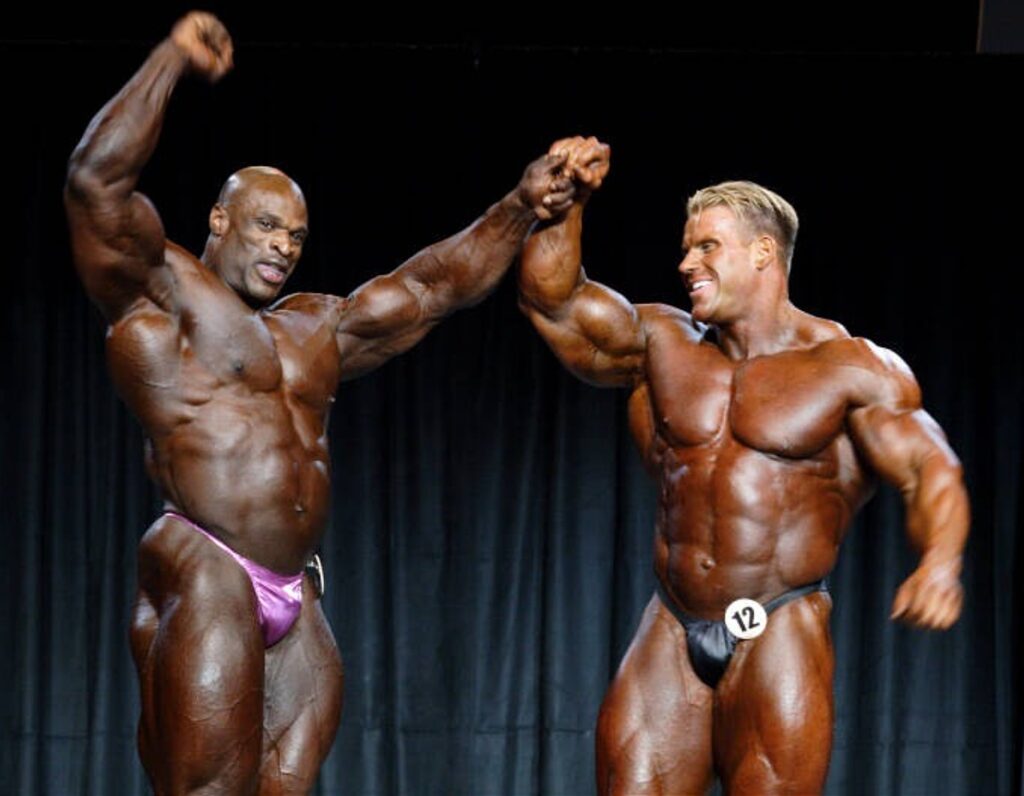
This is both the first and last comparison, indicating that the show is a two-man dual. Their numbers are mirror opposites: Ronnie Coleman is #21, Jay Cutler is #12, and they’re that different and yet that similar. Both were successful in their year-long strategies. Coleman’s waist is indeed smaller, and, at 275 pounds instead of the 296 of last year, his upper body is notably crisper. Cutler, at 264, purposely came in a little flat (especially evident in his pecs) in order to maximize cuts. He says, “We all know I’ve come in a little too full in the past.” His chest, hamstrings, and glutes can’t match the detailed density of the champ’s, but he has newfound lines (especially in his hams and outer quads), and he may indeed possess the best back onstage. Incredibly, Cutler has caught up to Coleman in the rear double biceps—previously the king’s signature, unparalleled shot. He also arguably offers up a little more in the rear lat spread, which is now his best pose. Coleman wins the side chest and front lat spread. Pose after pose, it looks to be a virtual dead heat, and yet, in this round, the judges score straight firsts for the reigning Mr. O.
2. Gustavo Badell, Gunter Schlierkamp, Victor Martinez
During this United Nations callout, many in the crowd are shouting in Spanish or chanting “Gu-sta-vo!” and the Venezuelan from Puerto Rico feeds off the support. He wears too much oil, while the Dominican Dominator, Victor Martinez, wears too little. Germany’s Gunter Schlierkamp is the best detailed of the three. After the comparisons, Schlierkamp vomits into a trash can backstage. “Then when I came back out, I felt much better,” he recounts later with his trademark grin, “so I was really hoping that I got a shot at Jay [Cutler] then.” He doesn’t. Both he and Badell later express disappointment at not being compared to the top two this round. Schlierkamp pulls four points ahead of Badell, and Martinez drops seven behind Badell.
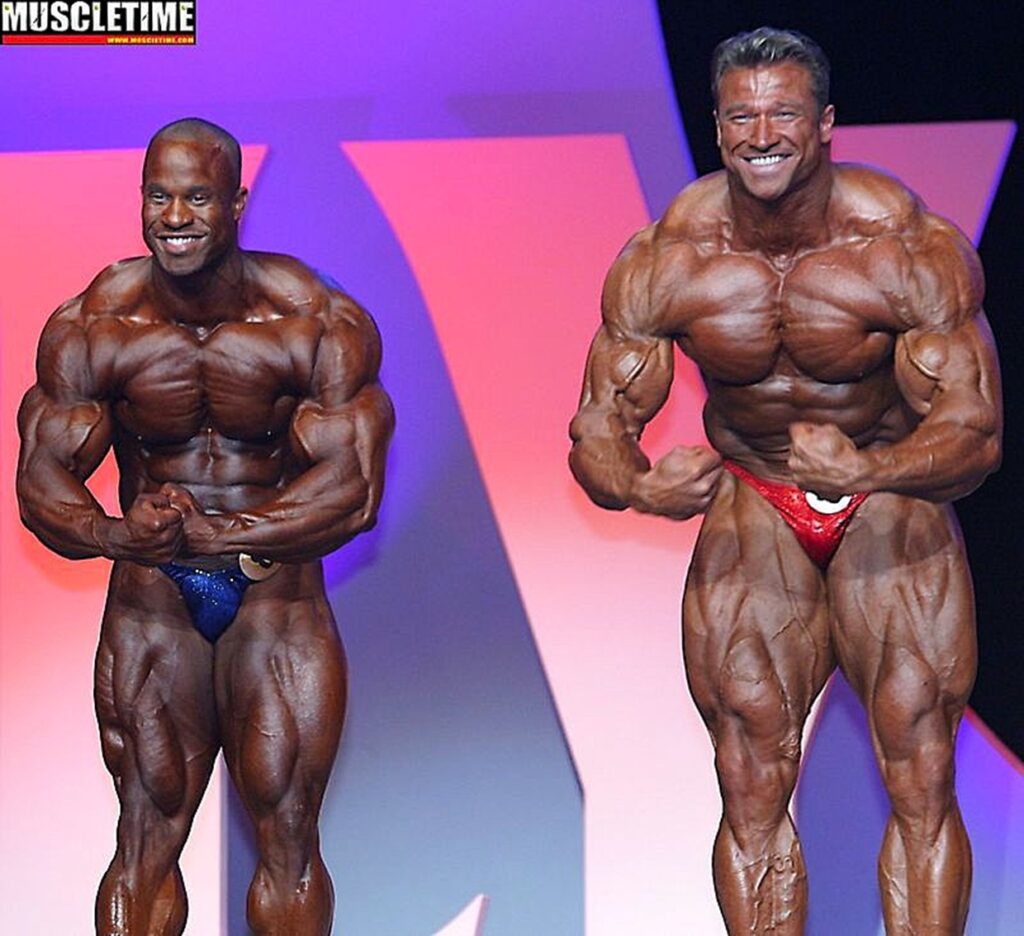
3. Melvin Anthony, Dennis James, Branch Warren
Having won two pro contests in the past month, including a defeat of Dennis James, 30-year-old Branch Warren came into his debut Mr. Olympia with much momentum. Rock-solid and yet carved with feathery stripes, his prodigious quads and pecs look to have been assembled from avian fossils. James, as always, has abundant mass, even if it lacks flow, but too much of it is around his middle—a fault the judges overlook, despite the new mandate. In every pose, it is the classically configured Melvin Anthony, sandwiched between the bigger, blocky duo, who wins the comparison. I had him fourth after prejudging (behind Schlierkamp). The judges see it differently, placing Anthony-the-artist behind the freaks in round two and seventh in the contest. Mandate? What mandate?
4. Darrem Charles, George Farah, David Henry, Johnnie Jackson, Mustafa Mohammad
Here are the day’s three best conditioned men: Darrem Charles, David Henry and Johnnie Jackson. None possess the lower body size to challenge the top dogs, but all should’ve ended the night a couple places higher. Jackson is high-def, revealing new layers of lines in his quads and back. Charles—winner of six pro shows over the past four years—is perennially overlooked in the big one, never having made an Olympia posedown. Charles and Jackson should’ve placed ahead of James and Warren in tier 3 above, but they never got the chance they deserved.
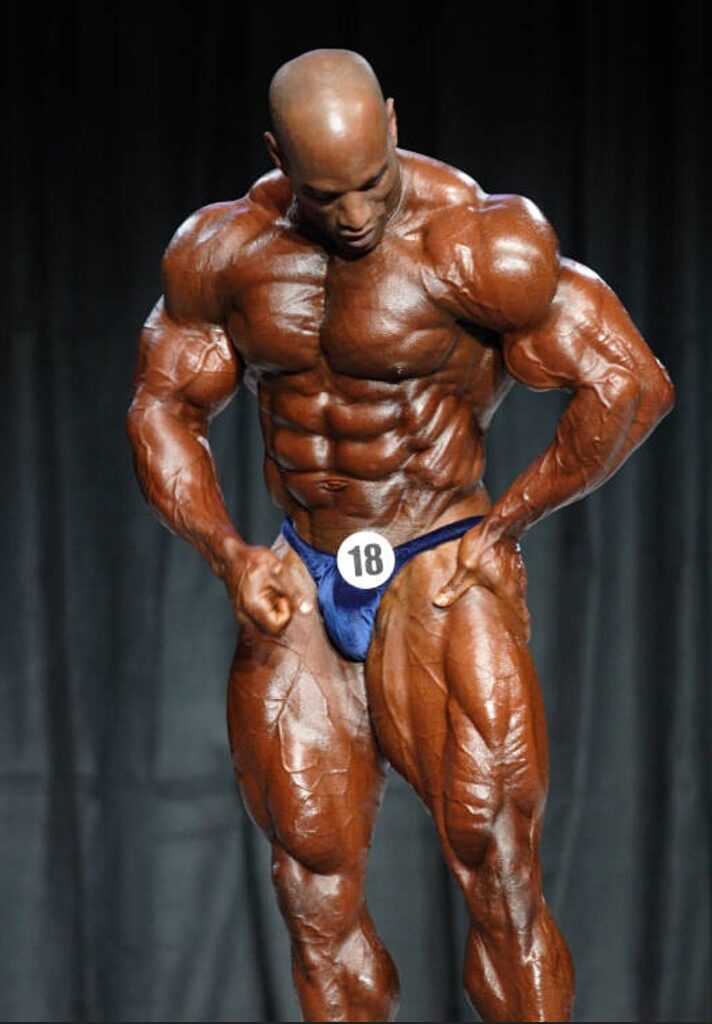
TRANSFORMER
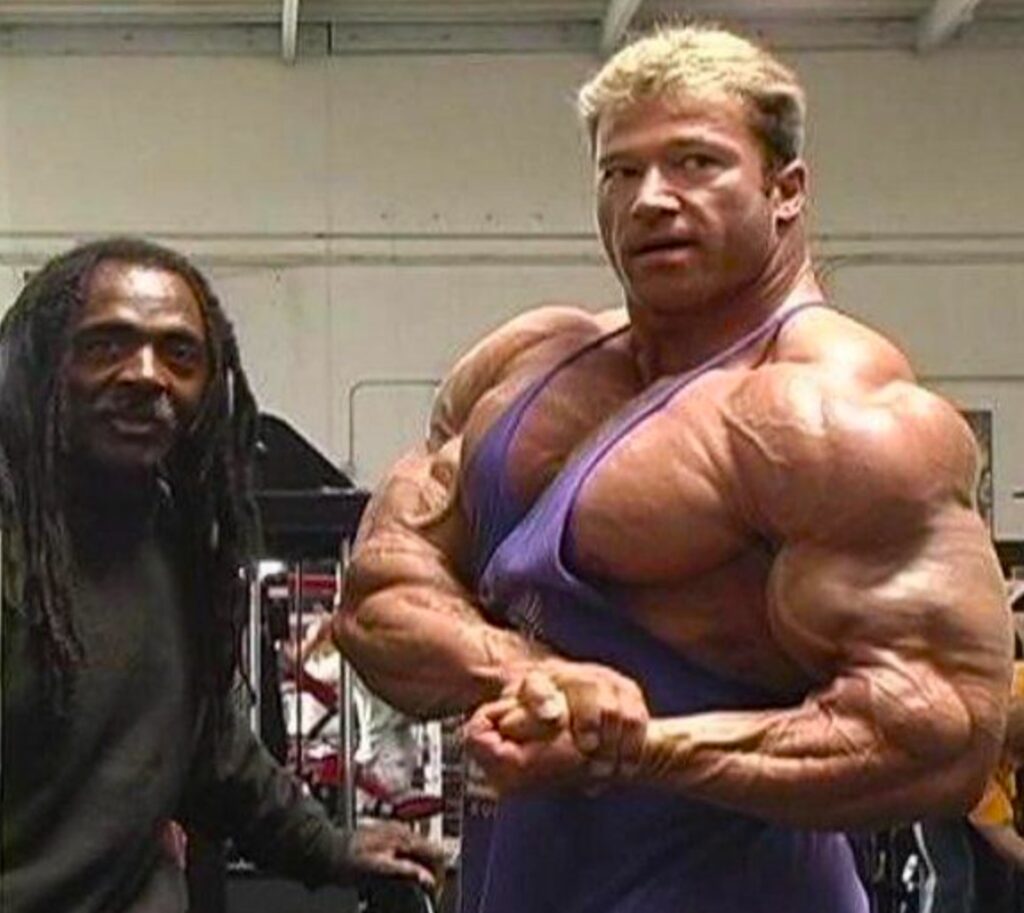
August 10, Venice, California. Your trademark grin is MIA. During the final wobbly steps, you seem more likely to puke or faint (look out below!) than laugh. You’re lunging across the floor of Gold’s Gym immediately after a set of leg presses. The brutal superset is part of the plan of you and your trainer, Charles Glass, to transform your physique into something more aesthetic and athletic. The strategy includes accentuating your delts and lats, having those serpentine varicose veins surgically stripped from your quads, and reuniting with nutritionist Chad Nichols (who also works with Coleman). Despite a sixth place finish in last year’s Mr. Olympia, you were displeased with your physique then and irritated by claims you only make posedowns because of your blond hair and broad smile. Transforming yourself, you plant to shock the bodybuilding world again.
FINALS: POSING ROUND
The evening show begins with the horror of Gene Rychlak, attempting to break his bench press record, crushed beneath 1015 pounds (he is not seriously injured). It’s a bad omen, for the production subsequently suffers from several conspicuous technical glitches. However, the posing routines—each of which begin with training footage and the competitor rising dramatically out of the floor in a veil of fog—are audio/visual successes. These, in order of occurrence, are the highlights.
Melvin Anthony Marvelous again transitions from velvety R&B to up-tempo dance, but this time his falling-backwards shtick is done Matrix-style, dodging imaginary bullets.
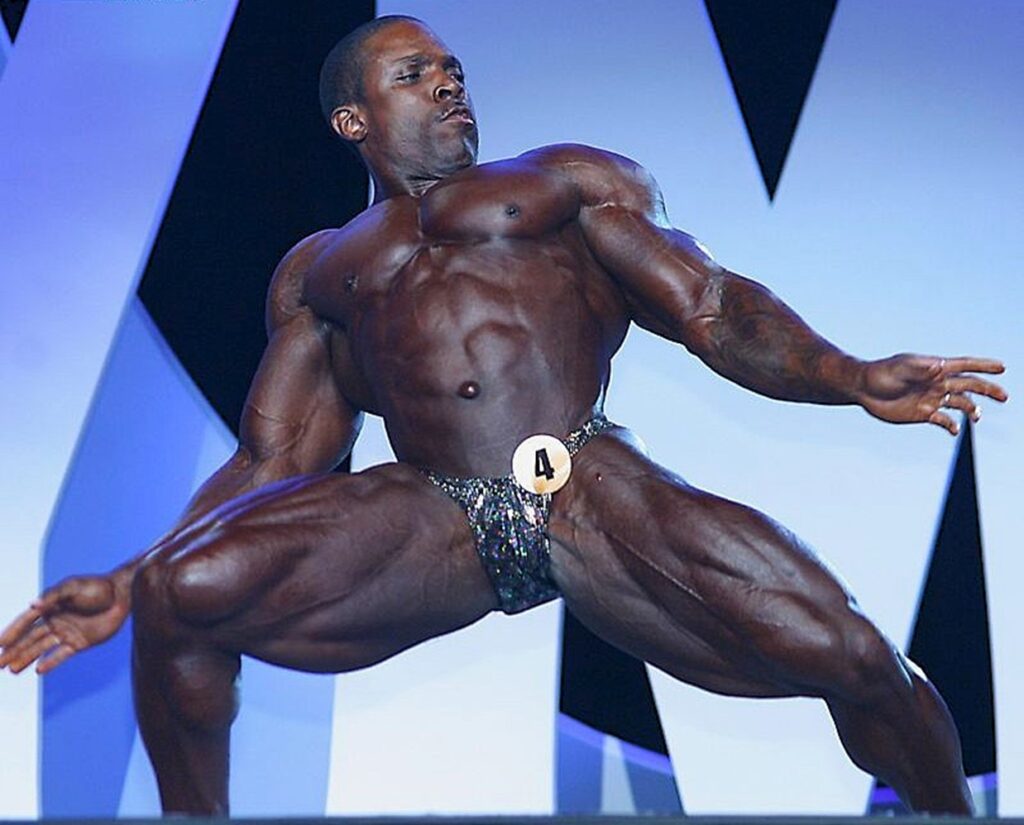
Branch Warren After commencing with opera, Warren snaps off head-bobbing cannon shots to Limp Bizkit’s “Rollin.’” Some in the thunderous crowd bark their ultimate compliment: “Freak!”
Gunter Schlierkamp Schlierkamp melts into elegant poses, sometimes kneeling, sometimes with arms outstretched or legs crossed, emphasizing the new refinements of a physique previously compared to a refrigerator.
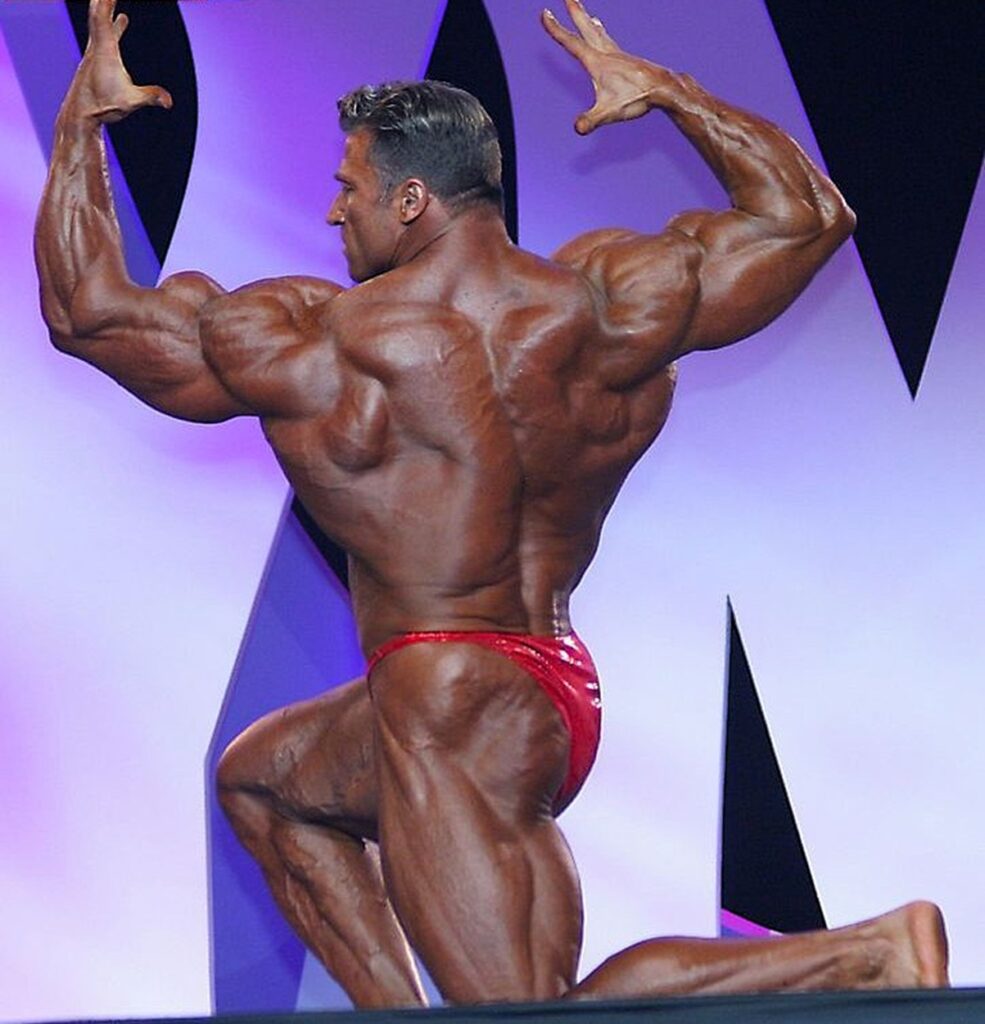
Jay Cutler The heir apparent’s rock-and-rolling starts with a game show intro and is interrupted by a congratulatory phone call from “Joe Weider.”
Chris Cormier Smaller and smoother, the Read Deal still comes to please by dancing “The Macarena.” This night will be the first time in his 70 pro contests that Cormier finishes lower than eighth.
Gustavo Badell In the evening’s most original performance, Badell pays tribute to all 10 Mr. Olympia’s by expertly hitting two signature poses for each—except No. 10, the current champ, instead taking a swipe at Coleman’s recent waistline and “raise the roof” crowd-enticement.
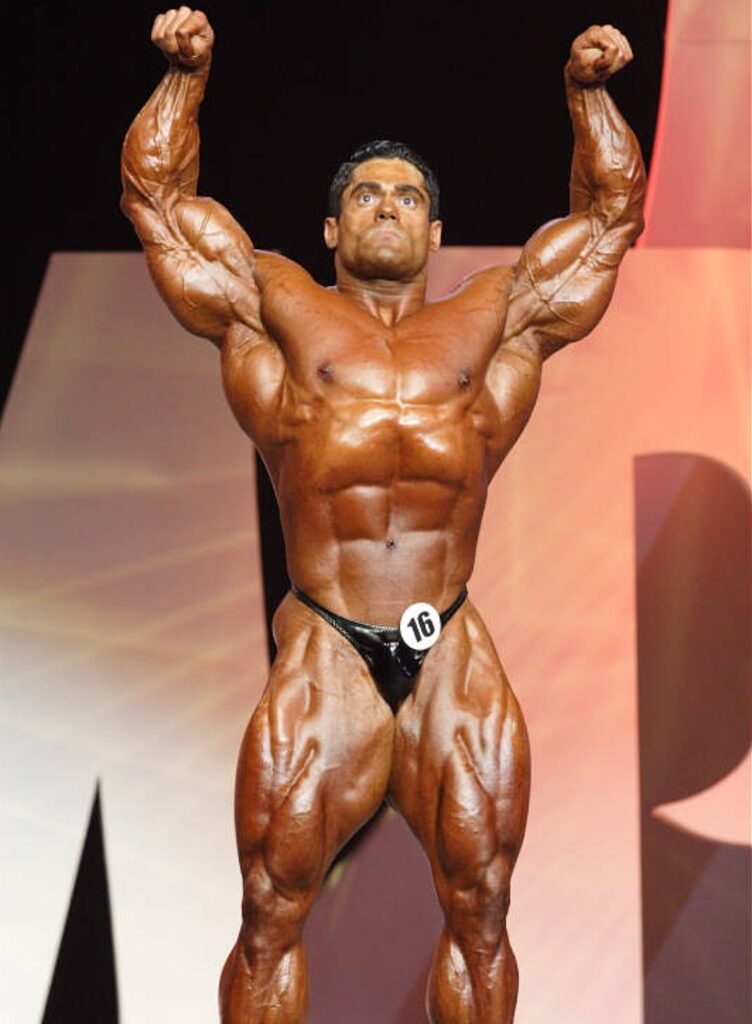
Darrem Charles Sometimes gliding, sometimes poping-and-locking, a Darrem Charles routine proves a bodybuilder can be as graceful as any dancer.
Mustafa Mohammad The gentleman Jordanian flows elegantly to Andrea Boccelli’s operatic “Time To Say Goodbye.”
Ronnie Coleman Accompanied by African chants, the king strides on stage in a royal crown and cape and clutching a scepter. (The judges turn a blind eye to the fact that no props are allowed. He’ll win the round with straight firsts. Other competitors will complain.) His signature phrase “Ain’t nothing but a peanut” marks the transition to hip-hop dancing, concluding with his perennially popular splits.
FINALS: CHALLENGE ROUND
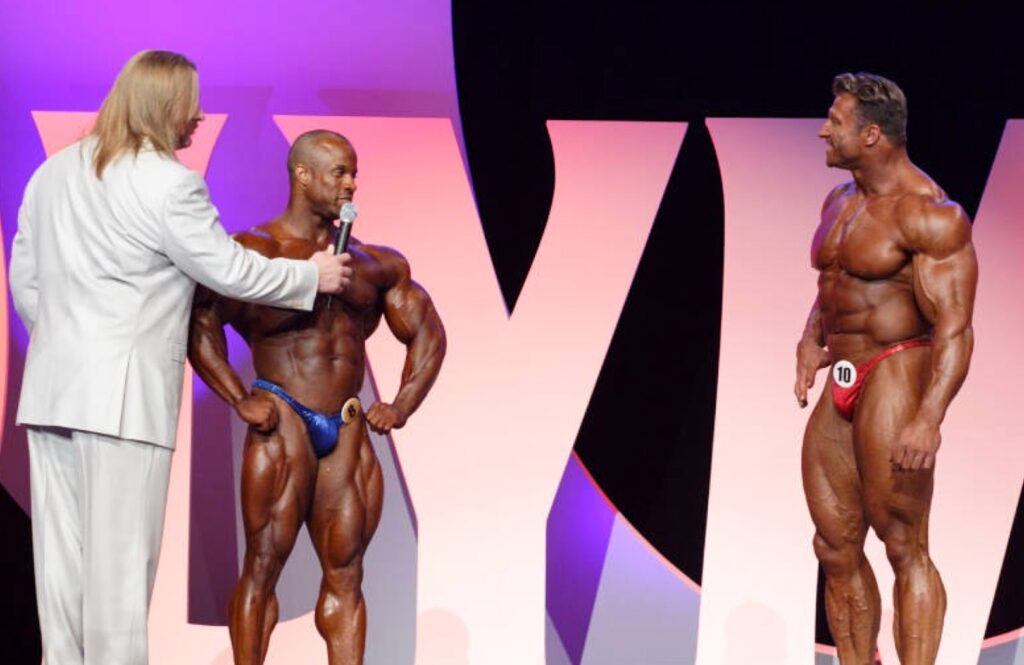
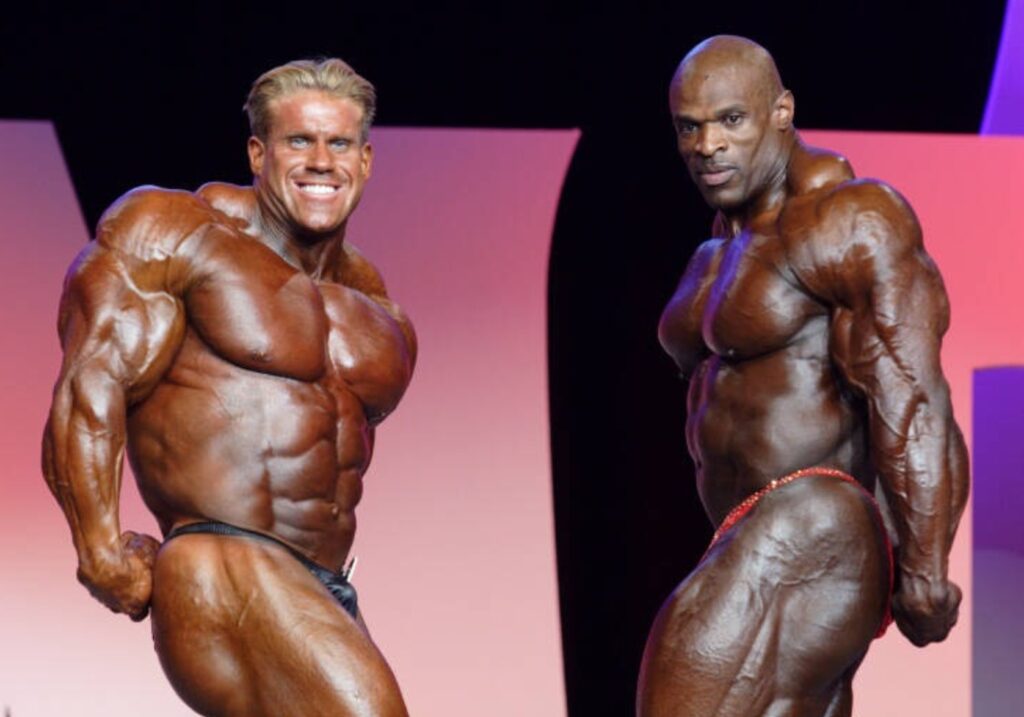
After Jay Cutler wins the $10,000 Best Wheels Award for having the top legs (better than Warren, Mohammad, and Coleman?) and after places 10 through six are announced, there is a contest within the contest worth a total of $50,000 and judged by former Mr. Olympias Larry Scott, Sergio Oliva, Frank Zane, Samir Bannout, and Dorian Yates. In the challenge round, each member of the top five chooses one pose to hit, mano-a-mano, against others. Results are known to all throughout on an electronic scoreboard, and this round doesn’t factor into final Mr. Olympia placings. Martinez, who loses all eight of his duels, quips into the mic Triple H holds: “This is worse than the Bush election.” Cutler beats Coleman in a side triceps but loses in a most muscular. Badell also bests Coleman in a side triceps and Cutler in a most muscular, but he loses to both in rear double biceps.
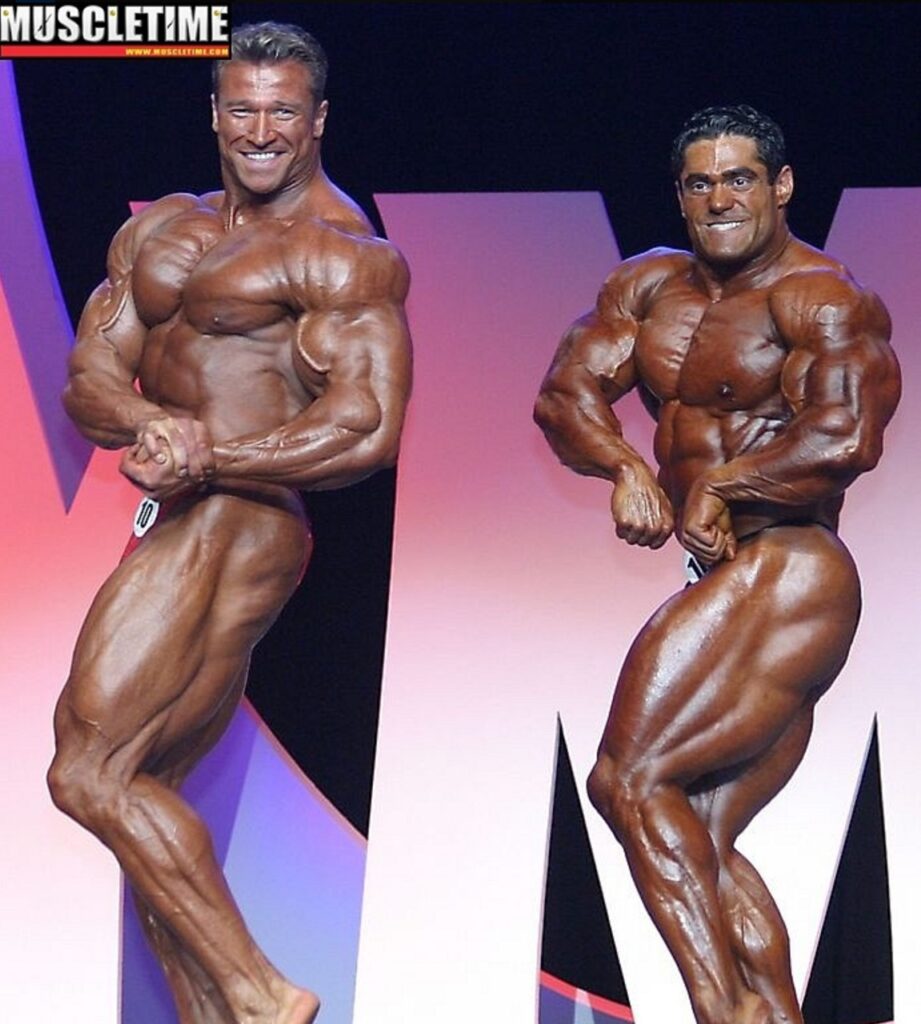
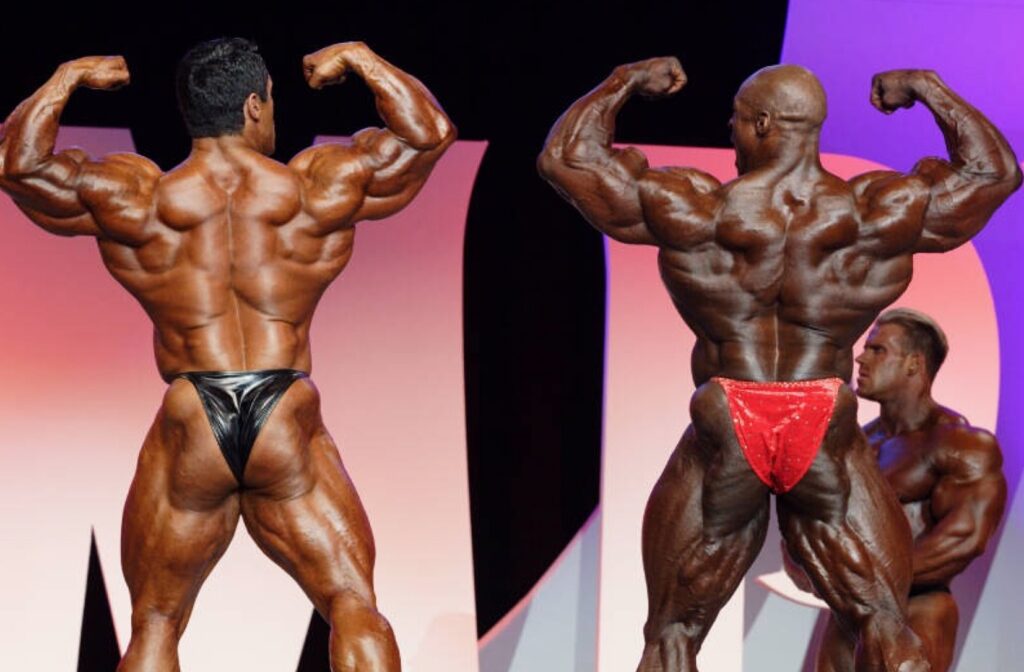
Then, in a surprise ending, Gustavo Badell defeats the soon-to-be-eight-time Mr. Olympia in a tie-breaking pose-off to win the round and the $25,000 top prize. I had earlier joked to a colleague that Badell’s posing routine, a tribute to Mr. Olympias, was meant to influence the challenge round judges. Regardless, like last year, Badell benefits from the one-on-one format (he passed Dexter Jackson in the challenge round to finish third in the 2004 Olympia), establishing himself as the sport’s top “challenger.” And the ex-Mr. Olympias (the majority of them, anyway) sent a message about bigger not necessarily being better.
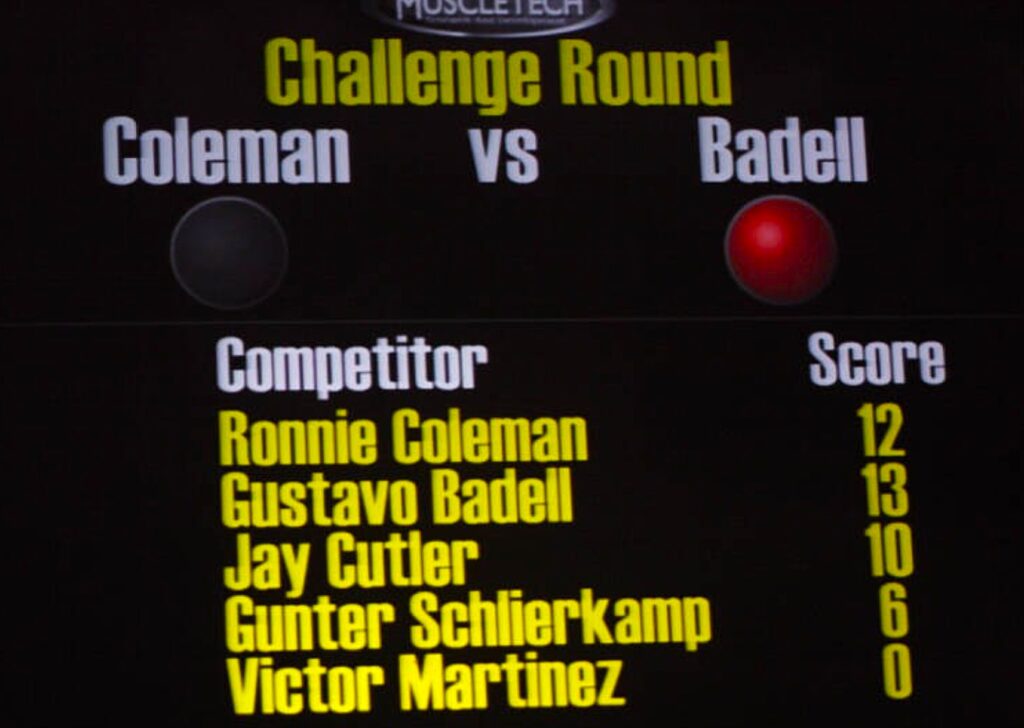
In the moment, Coleman is visibly upset by the outcome, but afterwards he says, “I just care about being Mr. Olympia. The rest of it doesn’t matter.” That’s how most of the audience feels about the challenge round. If last year it meant too much, this year it means too little. It is mostly an unwanted, sometimes confusing, interruption. [A two-year failed experiment, it mercifully has not been repeated.] A highlight of the evening comes immediately afterwards when the five Mr. Olympias who judged the round join a sixth, Arnold Schwarzenegger, to pay tribute to 82-year-old Joe Weider. The crowd twice rises for rousing standing ovations.
FINALS: POSEDOWN
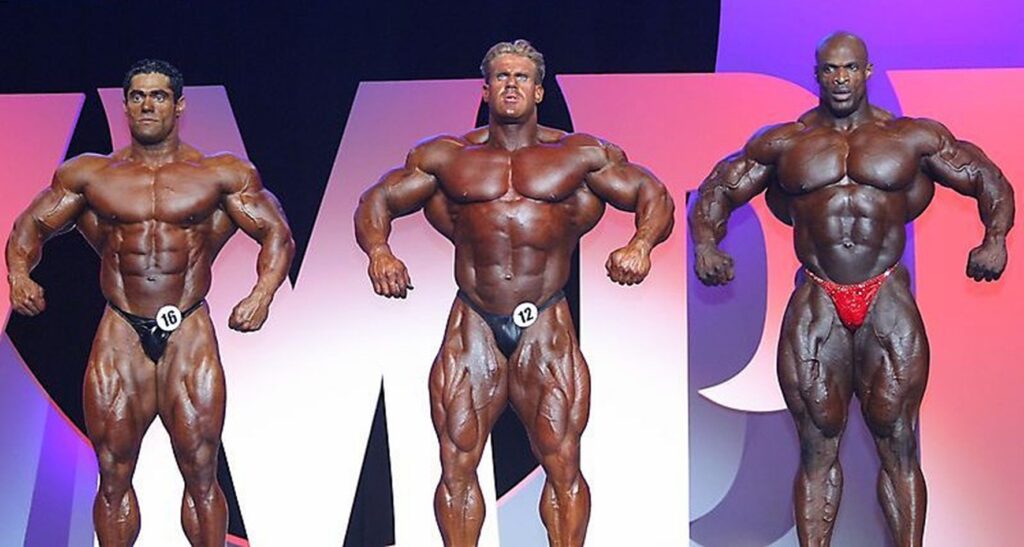
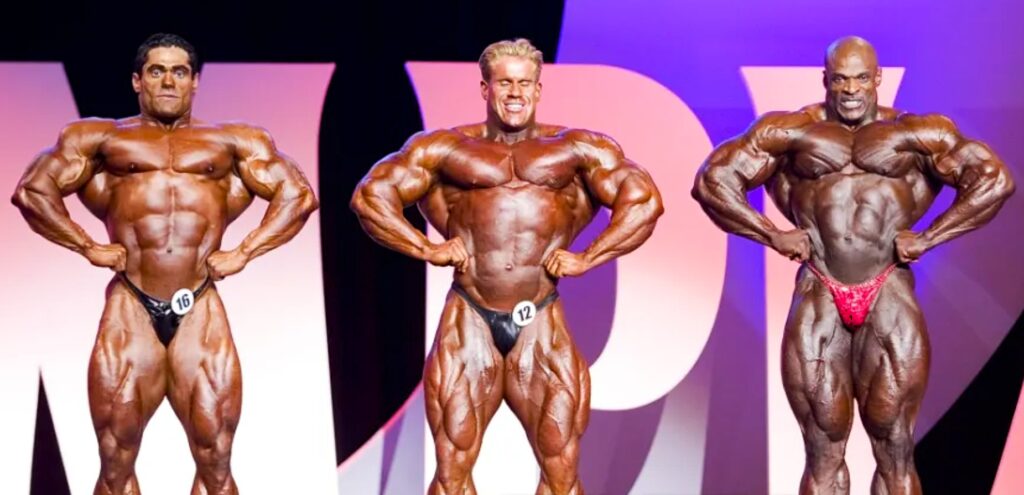
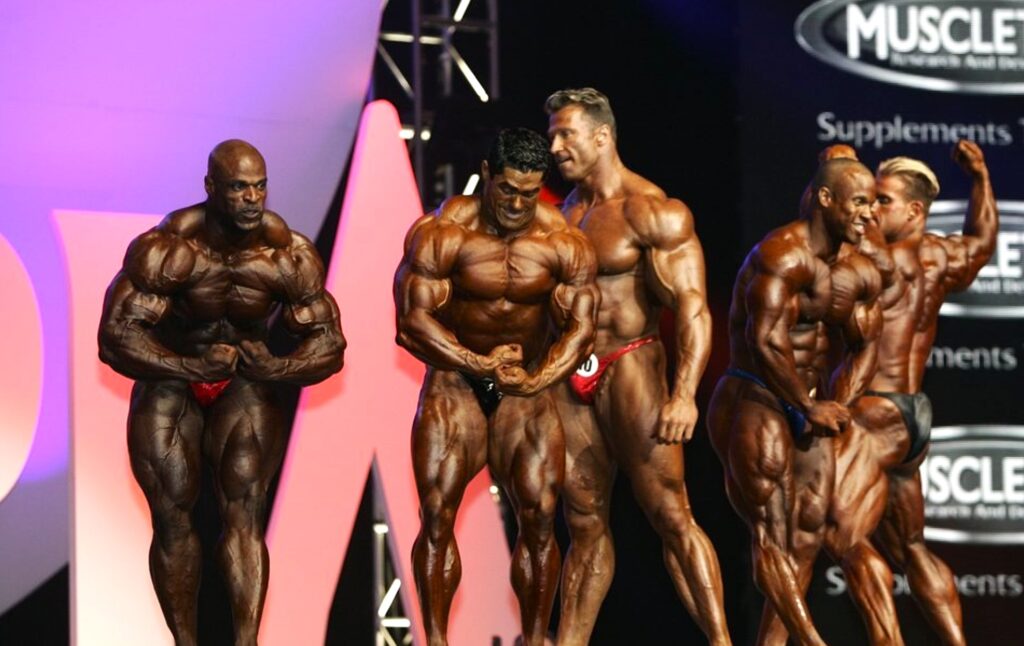
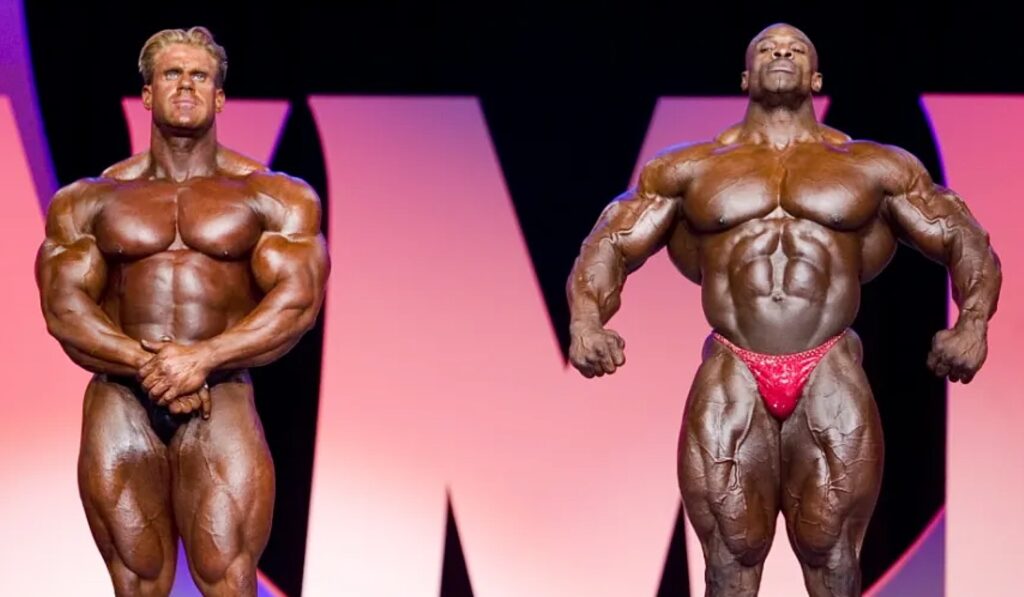
No competitor knew then, but going into the final round only one placing is up for grabs. In third, Schlierkamp leads Badell by a single point, but the Venezuelan has seized the momentum, having defeated the German goliath in the posing round and everyone in the challenge round. He garners every third place posedown vote to take his second consecutive Olympia third place finish. And then, like three times before, only Coleman and Cutler remain. Shouts for one or the other are evenly split. The champ tilts his head up, eyes closed in prayer, and, when it’s announced Cutler is second for a record-tying fourth time, the champ drops to the stage, crying, like seven times before.
BACKSTAGE: AFTERMATH
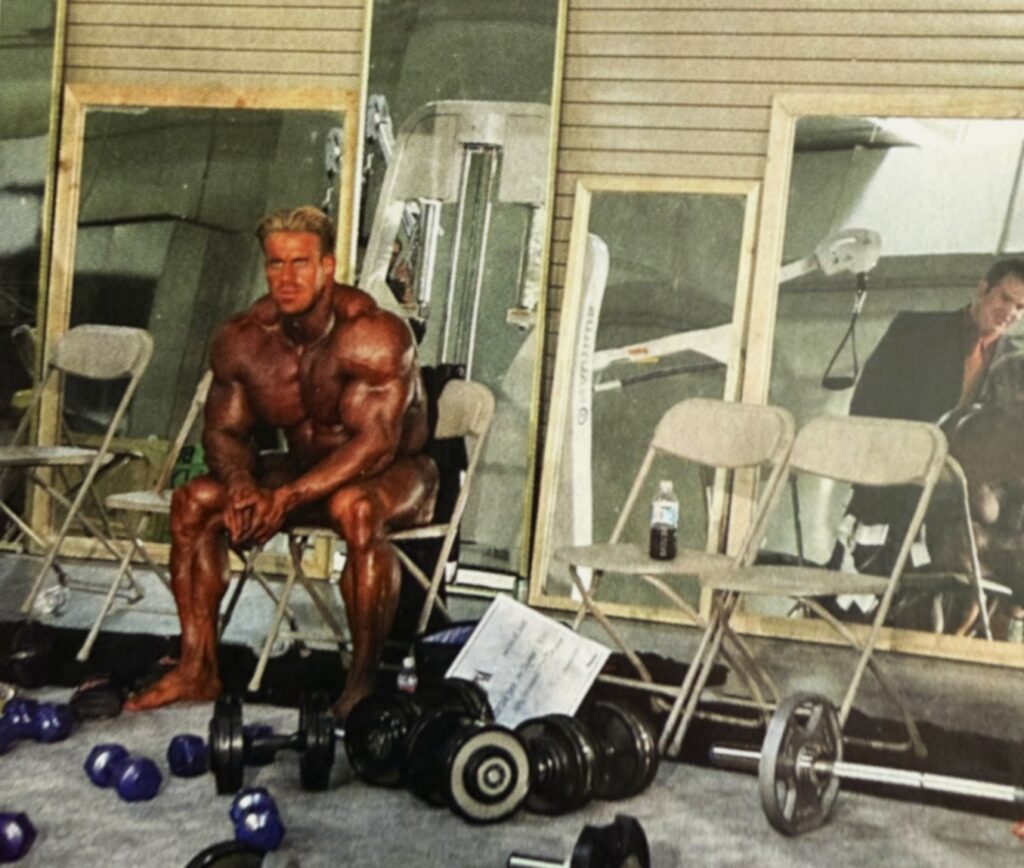
The detritus of the day litters the floor—tan-stained towels, dumbbells, paper cups. Shawn Ray and Dan Solomon interview competitors for the Pay-Per-View broadcast. VIPs, officials, friends, and family mill among competitors who are either disappointed or delighted. In the disappointed camp: Schlierkamp, Charles, Jackson. Among the delighted: Badell, Martinez, Warren.
“I’m finally up there in the top five,” a beaming Victor Martinez effuses, pulling on his sweats. “It feels great. I still haven’t achieved my best condition. At my best, I should be second here. When I get a first callout [in the prejudging], I’ll know I’m at my best.” [He finished second in the 2007 Mr. Olympia.]
“I’m very pleased with my condition,” Gunter Schlierkamp says, wiping away oil, “but disappointed with the results. I wanted to be compared more to Cutler, and I should’ve been at least third. But that’s how it goes. I think I made big strides this year.”
“The judges couldn’t ignore me, because I took third last year,” Gustavo Badell affirms, stuffing belongings into his gym bag. “I worked extra hard this year and put more time into my preparation. At the end, the result was very good.”
Sitting alone in his posing trunks, Cutler’s only comment to me regarding the decision is: “Bullshit.” Two days later, when I’m home writing this report, he calls to talk. He says he never wants to be known as a sore loser, even if losing makes him ache down to the marrow. Not just friends and family but objective observers told him after prejudging he deserved the title. He was devastated at the results, but already moving on. In 2006, he will again focus only on the ultimate prize. “All I want is the Olympia,” he explains. “I don’t have anything to prove in winning the Arnold again. It’s not about the money. It’s about being Mr. Olympia. I know I can win. I’ll come back stronger next year and beat that guy, fair and square.” [He did.]
That guy, Ronnie Coleman, the king of bodybuilding, Mr. Olympia, stands in one of three Weider photoshoot booths, having just shot for FLEX. His family crowd about the makeshift borders as I ask him how it feels to win number eight, tying Lee Haney’s record. “It’s kind of unbelievable,” he answers. “I came into this thing in 1998, glad to win one, and now it’s eight. I’m totally blown away. I don’t understand. This is something God’s doing. I’m just being a servant. I know it’s hard to get in the condition I did at 41, but I just kept my faith and trained extremely hard. It all really came together this year. I don’t know when I’m going to stop now.”
Forty years before, when baby Ronnie Coleman was taking his first steps, Larry Scott, the original Mr. Olympia, didn’t win a cent but merely donned a crown. Bodybuilding has changed a lot since then—for better and worse—and much more is destined to change. Still, some things remain the same. When he finally joins his family and friends in celebration backstage, $160,000 richer, the current Mr. Olympia holds his eighth Sandow in one meaty hand and in the other—a royal red crown. Grinning, he affirms, “It’s good to be the king.”
2005 MR. OLYMPIA
October 15, 2005 / Orleans Arena / Las Vegas, Nevada
1. Ronnie Coleman ($150,000)
2. Jay Cutler ($85,000)*
3. Gustavo Badell ($55,000)
4. Gunter Schlierkamp ($45,000)
5. Victor Martinez ($35,000)
6. Dennis James ($27,000)
7. Melvin Anthony ($16,000)
8. Branch Warren ($15,000)
9. Darrem Charles ($14,000)
10. Mustafa Mohammad ($12,000)
11. Johnnie Jackson ($2000)
12. George Farah ($2000)
13. Chris Cormier ($2000)
14. Dave Henry ($2000)**
15. Markus Ruhl ($2000)
* Cutler also won the $10,000 Best Wheels award.
** Henry earned $10,000 for winning Friday’s Olympia Wildcard Showdown.
The following competitors did not place and are listed here alphabetically.
Kris Dim ($2000)
Alexander Fedorov ($2000)
Craig Richardson ($2000)
Ronny Rockel ($2000)
Mike Sheridan ($2000)
Quincy Taylor ($2000)
2005 MR. OLYMPIA SCORECARD
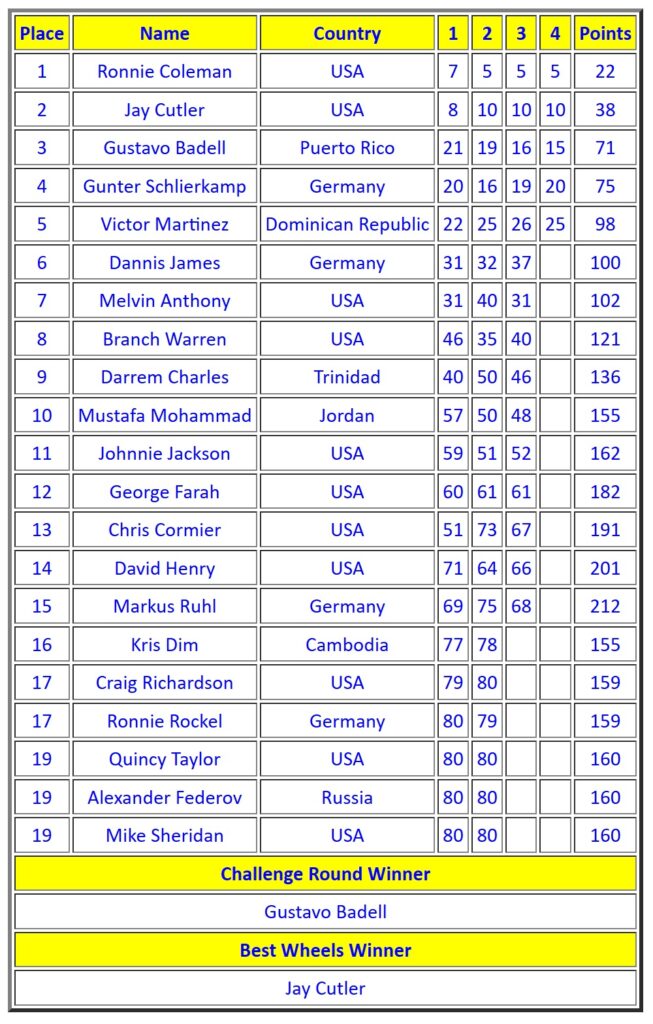
CHALLENGE ROUND
1. Gustavo Badell ($25,000)
2. Ronnie Coleman ($10,000)
3. Jay Cutler ($8000)
4. Gunter Schlierkamp ($5000)
5. Victor Martinez ($2000)
This article originally appeared, in a slightly longer form, in the January 2006 issue of FLEX magazine under the title “Behind the Eight Ball.”