
























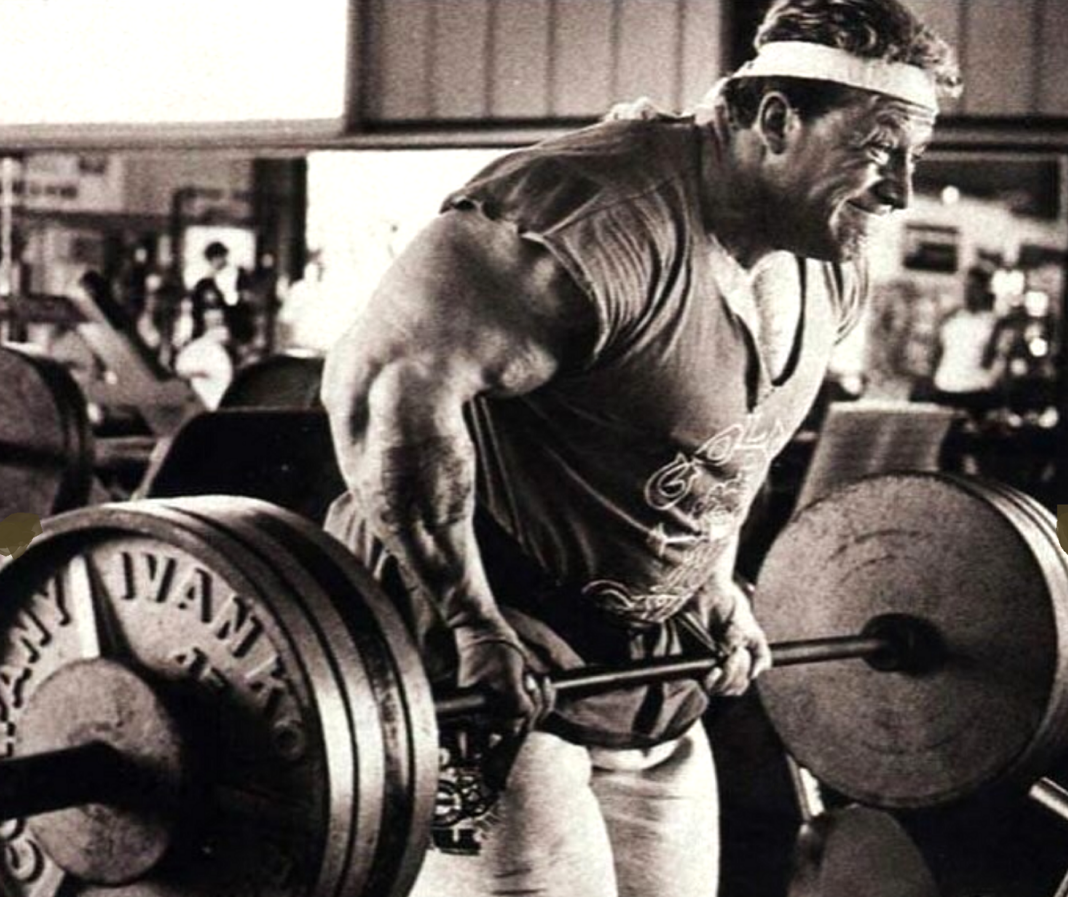
Yates row. Scott curl. Arnold press. It’s rare that a person has an exercise named after them. You know that they had to either come up with something unique and effective or be very successful. Certainly, Dorian Yates accomplished all of the above. The six-time Mr. Olympia (1992-96) was most celebrated for his back width and density, and he built it largely with barbell rows. But he did those rows in a revolutionary style. Recently, Yates wrote about his signature exercise. Let’s look at what he said, how he changed rowing, and how to best incorporate the Yates row in your training routine.
TRADITIONAL BARBELL ROW
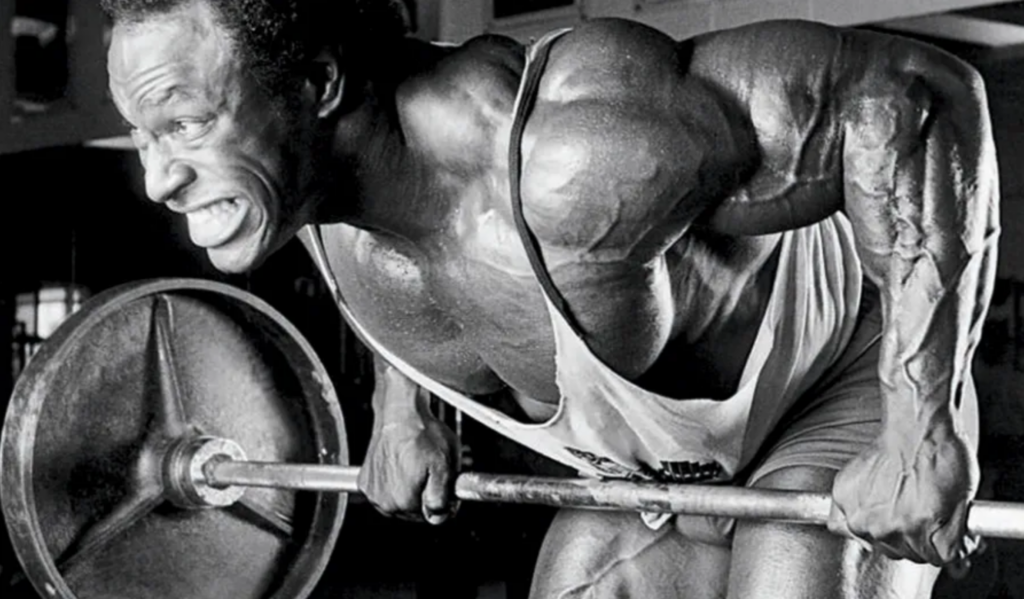
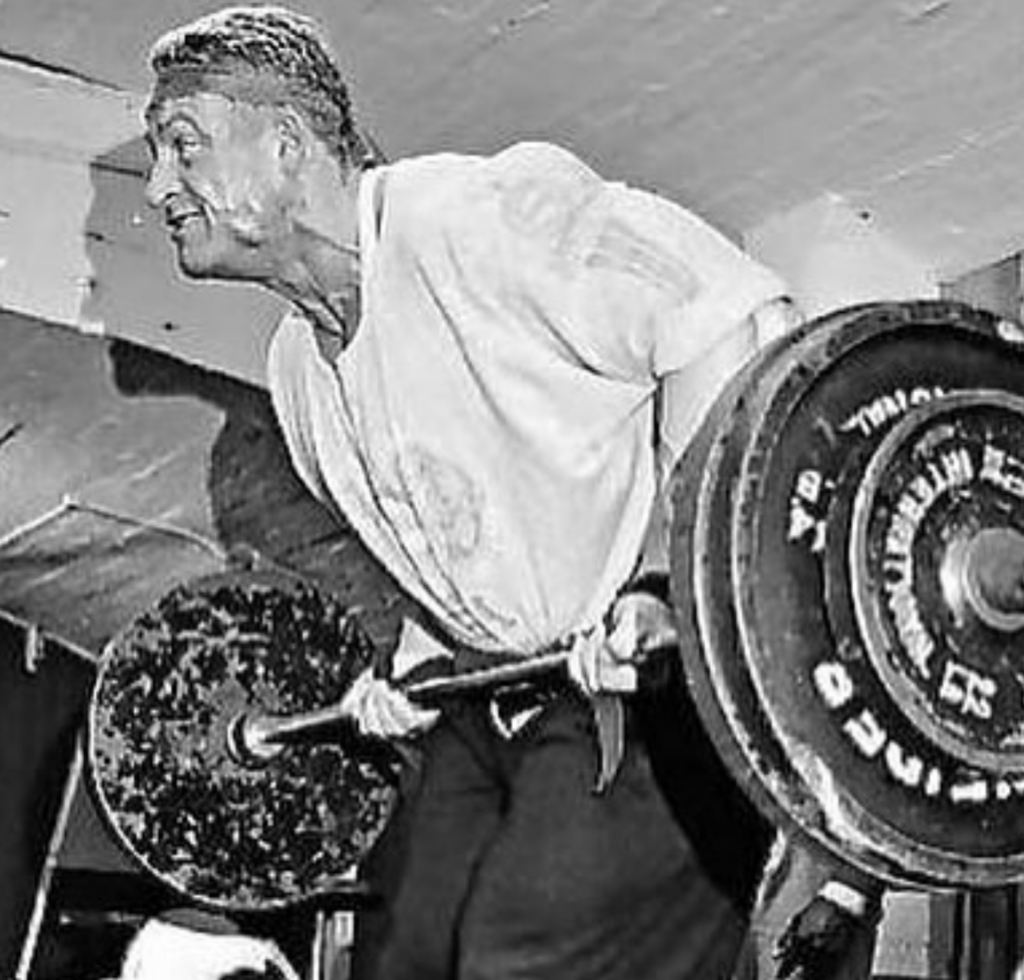
Before Dorian Yates, bodybuilders typically performed barbell rows with their backs parallel or nearly parallel to the floor. Such legendary Mr. Olympias as Arnold Schwarzenegger and Lee Haney built tremendous upper backs by doing barbell rows this way. It just was accepted that that’s how you did a barbell row.
YATES ROW
But Dorian Yates analyzed every exercise in his routine to make certain they were optimally effective. Because strength gains were paramount to his high-intensity training philosophy, he also had be certain he could perform exercises very heavy as he progressed but also safely. He decided early on that barbell rows better worked his lats and put less train on his spinal erectors if he stayed more upright. The Yates row was born.
Dorian Yates wrote: “Now traditional bent-over rows were done with the body parallel to floor and pulling the bar to your chest. My style, which became known as the ‘Yates Row,’ are performed with body more upright which puts the lower back in a safer position and the lats in a mechanically stronger position.”
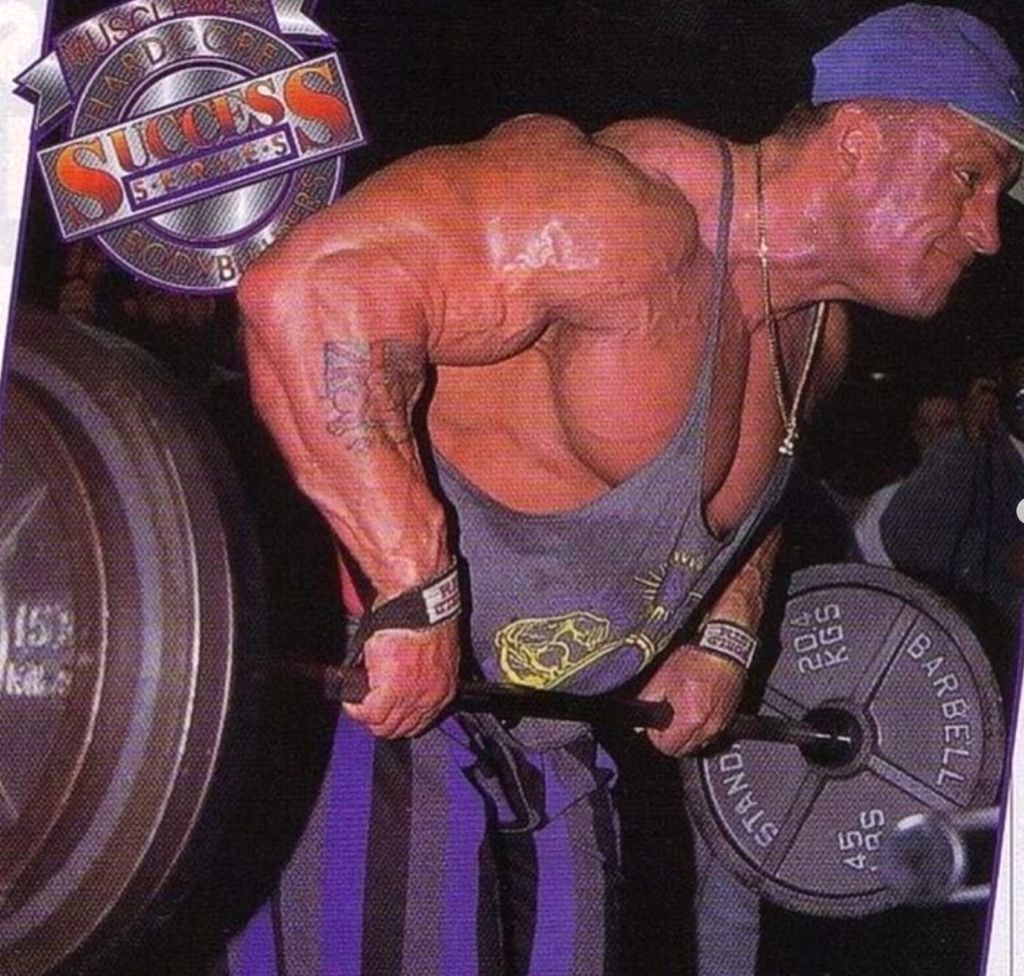
Whereas a traditional barbell row is performed with the upper back at around 90 degrees to the floor or maybe a little less, say 75-90 degrees, a Yates row is done with the back at around 45 degrees to the floor and sometimes, especially for the last couple reps, maybe a little less: 35-45 degrees.
UNDERHAND OR OVERHAND?
Having seen photos of Dorian Yates performing heavy barbell rows with an underhand grip, many people assume underhand is a feature of the Yates row. In fact, the six-time Mr. Olympia has always been agnostic about whether or not a person goes overhand or underhand.
“For the majority of my bodybuilding career, I actually performed these with an underhand grip. Pretty much from 1983-1994, I did them with an underhand grip. Of course, I stopped and switched to an overhand grip after my bicep injury, which worked just as good.”
Nine weeks before the 1994 Mr. Olympia, which he won, Dorian Yates was performing underhand Yates rows with 405 pounds when he tore his left biceps. For the remaining three years of his career, he performed his Yates rows overhand. And as for you, he believes you should choose whichever style—underhand or overhand—you’re most comfortable with.
THE KEY TO THE YATES ROW
You might see Dorian Yates hoisting 400+ pound rows and think such heavy weights are a key to their effectiveness. Of course, you should always strive to get stronger for reps in every resistance exercise, and this is a cornerstone of Yates’ HIT philosophy. However, the weight is always just a tool. Whatever weight you’re capable of rowing with good form for 8-10 reps, the key is maintaining control and feeling that squeeze in your upper back at the top of every rep.
“It’s kind of more of a power movement but you should still squeeze at the peak contraction and be in full control. It’s very easy on this exercise to start jerking the weight up and swinging. Yes, I used a heavy weight, 450 pounds, but my form was always on point.”
WHEN TO DO YATES ROWS
“This exercise was always a staple in my routine for pretty much my entire career,” Dorian Yates said of his version of the barbell row: the Yates row. It’s notable that he typically did it second in his back routine, after better isolating his lats with either a pulldown movement or a machine pullover movement. In this way, he pre-exhausted his upper back to better target the rows on his lats. You can do them at anytime in your back workout, but consider doing the Yates row Yates style: second after a more isolating exercise—especially, machine pullovers, if your gym has such a machine, as they work the lats without involving the biceps. Happy rowing!
DORIAN YATES BACK ROUTINE
Hammer Strength Pulldown or Nautilus Machine Pullover — 2 warmup x 12-15 reps, 1 set x 8-10 reps
Yates Row — 1 warmup x 12 reps, 1 set x 8-10 reps
Hammer Strength Machine One-arm Row — 1 set x 8-10 reps
Cable Row — 1 set x 8-10 reps