


































We love creatine. Aside from protein powders, it’s the one supplement proven to significantly boost strength and muscle growth. That’s why we were both gladdened and maddened by the recent test of popular creatine powders and gummies. We were glad to see all the tested powders pass easily. But we were mad to see 67% of the gummies with zero or virtually zero creatine, and, even the best of them, were rapidly degrading. Let’s see what the results were when SuppCo put popular creatine brands to the test.
WHAT WAS MEASURED?
SuppCo purchased from Amazon.com five of the best-selling creatine powders and six of the best-selling creatine gummies. They sent the samples to a fully independent, accredited laboratory for comprehensive analysis. These are the five things the tests focused on:
◾️Creatine content per serving
◾️Creatine purity percentage
◾️Creatinine levels (a creatine breakdown marker)
◾️Heavy metal contamination
◾️Formulation integrity verification
CREATINE POWDERS
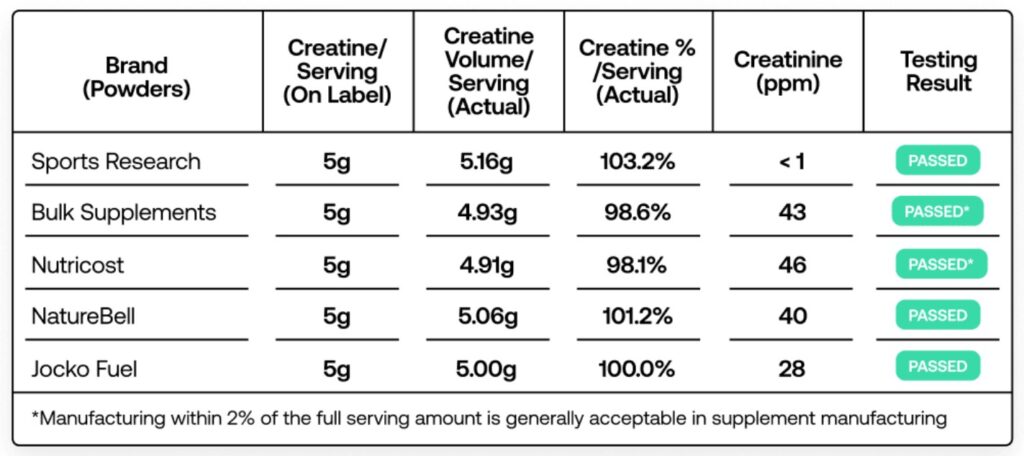
First, the good news. All five of the powders passed. Differences between the five were small. So you may want to make cost and (if flavored) taste your deciding factors.
CREATINE GUMMIES
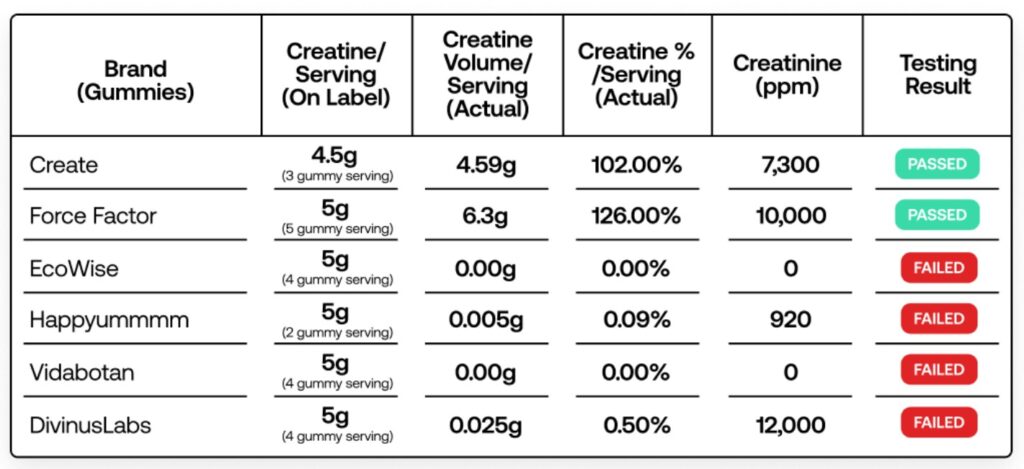
Now, the bad news. Of the six tested gummy brands, two literally had zero creatine, and two more had virtually zero, just trace amounts. The other two, Create and Force Factor, actually exceeded their labels claims of creatine content. However, they had a problematic amount of creatinine—a byproduct of creatine degradation, indicating that the creatine is rapidly becoming less useful. So, even the best creatine gummies struggle to maintain active ingredient integrity, perhaps because of the manufacturing process. Gummy candy may be an easy way for unscrupulous companies to underdose or no-dose their supplements, but, even when properly dosed, it appears to also be an unstable food for dosing creatine. It’s also expensive. Per five gram serving, creatine gummies cost, on average, four to five times more than powders.
And this is before even considering the sugar content of gummies. The most popular brand, Force Factor, has 70 calories, 12 grams of carbs, and a whopping 7 grams of sugar per serving. Some use artificial sweeteners, but when you consider that creatine powders and pills have zero sugar, carbs, or calories and are much cheaper per serving, the need for sugary (or pseudo-sugary) creatine candy is unapparent—even if that candy was fully dosed with stable creatine.
CREATINE TESTING CONCLUSION
As we’ve reported before, the creatine business has been on a growth spurt. It’s not just for gym bros anymore. It’s been attracting more women, elderly people, and vegans (who don’t typically consume creatine-rich foods) because research shows it can support a host of benefits beyond bodybuilding, from healthy aging and combating muscle loss to memory and other brain functions. It was perhaps inevitable in a thriving but crowded marketplace that supplement companies would seek new ways to sell creatine. However, gummies are, so far, a bad creatine supplement. Until further notice, we recommend you stick with powder or pills for your creatine.