


































Whey protein is experiencing a growth spurt. It’s everywhere. It’s not just in five-pound jugs and two-pound bags and protein bars. Protein is being added to cereals and breads and pastas and even the junkiest junk foods. Everywhere foods are powering up as the world experiences a protein boom. But it’s also experiencing a price boom. The cost of whey has gone up roughly 50% over the past three years—far outpacing grocery food inflation—and it’s poised to rise even faster the remainder of this year. What’s fueling the unwanted growth? The Barbell investigates.
RISING COST OF WHEY
We tracked the average price of a five-pound tub of whey protein from the major brands (including Optimum Nutrition, Dymatize, Nutricost, Levels, and Isopure) on Amazon.com over the past three years. Even with a dip in price to $49 over the first three months, the average price has skyrocketed from $52 three years ago to $76 today. That’s a 46% increase. By comparison, the average price of groceries has grown about 10% over the same period.
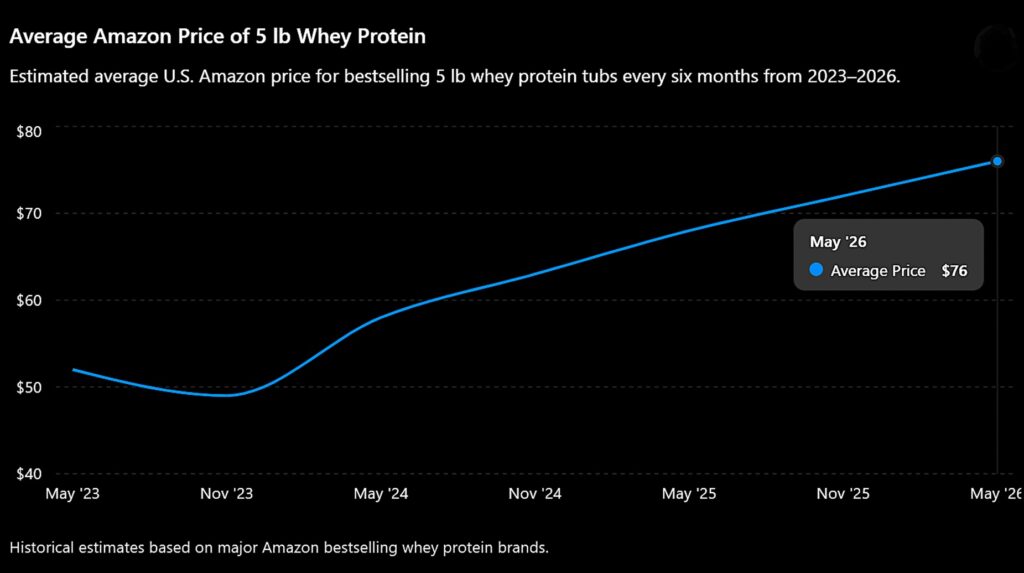
The sharp increase in whey protein prices over the past three years was not caused by a single event. Instead, several supply, demand, and
Global Whey Commodity Shortages
Whey protein is a byproduct of cheese production. When cheese manufacturers produce less excess whey—or when more whey is diverted into higher-margin industrial uses—the available supply for supplement companies shrinks. Beginning in 2023, global demand for whey protein concentrate (WPC) and whey protein isolate (WPI) accelerated faster than dairy processors could expand production. International buyers from Asia, Europe, and North America were all competing for the same limited supply of whey ingredients. Whey isolate was hit especially hard because it requires additional processing and filtration beyond standard concentrate. That meant isolate-based products often saw even steeper price increases than traditional whey blends.
Rising Dairy Production Costs
Milk production became significantly more expensive during this period. Farmers faced higher costs for cattle feed, fuel, fertilizer, labor, transportation, packaging materials, energy, and refrigeration. Since whey protein originates from milk, these higher dairy costs flowed directly into supplement manufacturing. Even small increases in raw milk prices can have a magnified effect on whey protein because isolates and concentrates require extensive filtering and drying processes that consume large amounts of energy.
Protein Became More Mainstream
One of the biggest long-term shifts was that protein supplements stopped being a niche bodybuilding product. Between 2023 and 2026, whey protein demand expanded among:
- General fitness consumers
- Women-focused wellness markets
- Older adults seeking higher protein intake
- GLP-1 weight-loss medication users trying to preserve muscle
- High-protein diet followers
- Busy people replacing meals with shakes
This broadened the customer base dramatically. A product category once dominated by gym rats became a mainstream grocery-adjacent health product. As demand rose, supplement brands gained more pricing power.
Consumers Shifted Toward Premium Products
Another important trend was the movement away from basic whey concentrate products toward:
- Whey isolate
- Hydrolyzed whey
- Grass-fed whey
- “Clean label” formulas
- Added digestive enzymes and specialty ingredients
These products cost more to manufacture and were marketed as higher quality, which lifted the average price of a typical five-pound tub. In previous years, bargain concentrate products heavily influenced average market pricing. By 2025–2026, premium formulations occupied a much larger share of Amazon bestseller lists.
Amazon Discounting Became Less Aggressive
In 2022–2023, Amazon supplement competition was extremely intense. Brands routinely offered deep coupons, buy-one-get-one promotions, heavy “Subscribe & Save” discounts, flash sales, and loss-leader pricing. That environment changed as ingredient costs climbed. Many brands realized consumers were willing to tolerate higher prices because protein supplements had become habitual purchases. Companies pulled back on aggressive discounting to protect margins. As a result, “normal” retail pricing increased, coupon frequency declined, discounts became smaller, and temporary sale prices (such as during Prime Days) were no longer as low as they had been in earlier years. A tub that frequently sold for $49 in 2023 might now “sale” for $69 while listing at $79.
Shipping and Packaging Costs Hurt Large Tubs
Five-pound tubs are bulky, heavy, and relatively expensive to ship. During this period, post-Covid freight costs remained elevated, plastic packaging costs rose, warehousing became more expensive, and Amazon fulfillment fees increased. Large protein tubs were affected more than smaller supplement items because shipping weight matters heavily in Amazon’s logistics system.
THE WHEY FORWARD
So, after whey prices rose roughly 50% in three years, where do we go from here? Well, the mainstream protein craze isn’t subsiding anytime soon. Instead, it appears to be ramping up at the same time whey is becoming even more scarce.
The dairy industry is racing to add capacity. U.S. dairy producers have announced $11 billion in new and expanded manufacturing capacity across 19 states, according to the International Dairy Foods Association. The trade group expects U.S. milk production to grow by 15 billion pounds by 2030 to meet demand for protein. That sounds like a lot, but when you consider the USA currently produces about 230 billion pounds of milk annually, it’s only a 5% boost over the next four years.
The demand is far exceeding industry growth. With higher ingredient prices, companies are now grappling whether to raise prices at a time when consumers are already tapped out by inflation. One solution may be for companies to reformulate “high-protein” foods using cheaper alternatives such as soy and pea protein. But as for whey, the way forward will likely be even higher prices. The good news is people are eating more quality protein. The bad news is we’re all paying for the popularity.