


























Dante Trudel / Instagram
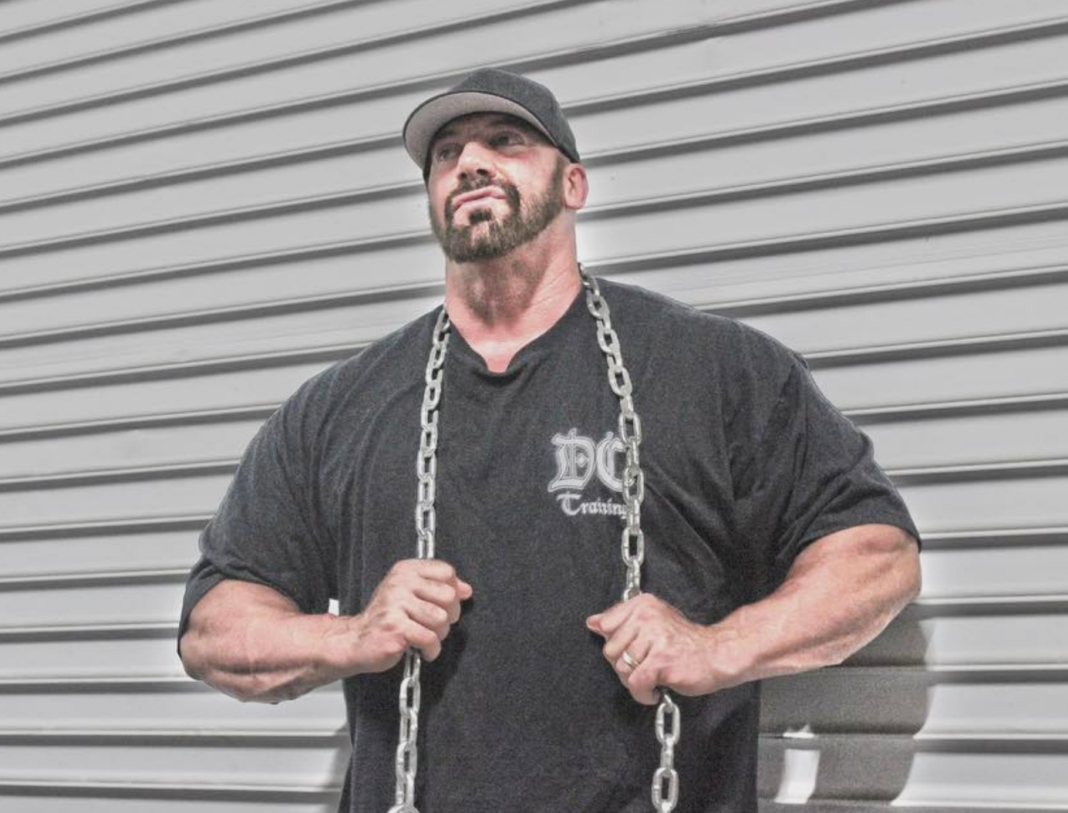
Dante Trudel invented Doggcrapp over three decades ago, and after he posted his workout beliefs on an internet message board in 2000, Doggcrapp (a.k.a. DC) became a bodybuilding phenomenon. We spoke with Trudel about Doggcrapp training and eating to learn about DC’s continuous growth and why its adherents grow so rapidly.
WHO IS DANTE TRUDEL?
Dante Trudel grew up in Massachusetts and currently lives in Southern California with wife Dianne and their two daughters. He co-owns the supplement company Truenutrition.com. When Trudel began bodybuilding at age 20 he was a wispy 137 at 6’1”, as he jokes, “after a good meal and with four rolls of quarters in my pocket.” After developing his low-volume, rest-pause training style and experiencing his greatest growth (he has weighed over 300, mostly muscle, more than doubling his body weight), Trudel tutored his friends, who saw similar rapid results. From 1993-95, he published a cutting edge bodybuilding newsletter called Hardcore Muscle.

However, it wasn’t until Trudel posted his theories on an internet chat board in 2000 that his ideas spread widely. Unfortunately, he used the screenname “Doggcrapp” for what he thought would be his only post. Much to his surprise, he was deluged with questions, his original post grew to 118 pages and his writings were cut-and-pasted all over the Net. Legions of bodybuilders adopted his philosophy. “Sad to say I’m stuck with the moniker ‘Doggcrapp,’” Trudel laments with a laugh. “If I could do it all over again, trust me, I would’ve gone with a much cooler screen name.”
What was your early training like?
I did the ‘good ole boys’ programs I saw in the magazines, jumping back and forth according to the latest article. It took me two years of six meals a day and training hard just to look normal at 190. It kind of sucked that I had to gain 50 pounds to look normal, but I had a never-say-die attitude. I went three and a half years barely missing a meal, and if I did miss one, I’d get up at two AM and cook it. I really believe that bullheaded consistency in eating put the 50 pounds on me more than any type of training I did.
How did you first develop DC?
After my initial three and a half years obsessive-compulsive volume training, and I started to read everything I could get my hands on concerning nutrition, supplements, training, even abstracts and lab studies. And I got to the point that I thought ”Jeez, there is no rhyme or reason for what people are doing bodybuilding-wise.” It seemed to me that everything was done with an “I must do inclines, declines, flat bench, flyes, cable crossovers, pec dec or I won’t grow” mentality.
I thought about what makes a muscle grow, what would make it grow faster, and to absolutely stop thinking in this ‘” want to be big so badly I’ll overthink and overdo everything” concept. Why do people think in terms of “annihilating myself into rigor mortis in today’s workout” instead of progression and recovery over weeks, months, and years? I started stringing workouts together with a game plan instead of winging it and hoping I was doing the right thing. I was 23 when I scrapped everything and reverse-engineered it. I broke it down, took out all the things I felt were just fluff (and there for ego and obsessive-compulsive satisfaction) and created a “planned powerbuilding attack.“
How fast did you grow when you first started DC training?
As soon as I got down to the brass tacks of what I felt worked and what didn’t, I started gaining again. I was stuck at about 204, and then after I got my head out of my ass and attacked this like a chess game I consistently gained. I’ve been over 300. Now I stay about 260. I reached my goals, proving to myself that with my extreme ectomorphic qualities I could attain a certain level through incredibly hard work and consistency. Now I want to learn to tap dance—just kidding.
What are the basic principles of DC?
1. Heavy progressive weights
2. Lower workout volume but higher workout frequency
3. Multi-rep rest-pause training
4. Extreme stretching
5. Carb cutoffs later in the day
6. Morning cardio
7. Higher protein intake
8. Blasting and cruising phases
Explain why continuously gaining strength is the essence of DC training.
I believe he who makes the greatest strength gains (in a controlled fashion), makes the greatest muscle gains. Note: I said strength gains. Everyone knows someone naturally strong who can bench 405 yet isn’t that big. Going from a 375 bench to 405 isn’t an incredible strength gain and won’t result in much of a muscle mass gain. But if someone goes from 150 to 405 for reps, that incredible strength gain will equate to an incredible muscle mass gain.
Ninety-nine percent of bodybuilders are brainwashed that they must go for a blood pump, and those same 99% stay the same year after year. It’s because they have no plan. They go in [to the gym], get a pump, and leave. They give the body no reason to change. A power-bodybuilding game plan stresses continually getting stronger on key movements, and the body protects itself by getting muscularly larger. If you never get anywhere close to your ultimate strength levels, you will never get close to your utmost level of potential size.
How does the three exercise rotation work?
Pick the three very best exercises per bodypart you can rest-pause—generally those in which you can safely make maximum strength increases. For example, close-grip bench presses are a better choice for triceps than kickbacks, because you should be able to make more incremental improvements over a longer period. The three exercises will be rotated, using only one of them each time you train that bodypart. If someone only does one exercise over and over he plateaus on it very quickly. I’ve experimented with this multiple ways, and the three exercise rotation can keep you from plateauing for a long time.
How important is a logbook?
It’s crucial. You must always write down your weights used and reps done (excluding warmups) in a logbook. Every time you go into the gym you have to continually beat your previous weight, reps, or both—even if it’s just by five pounds or one rep. If you don’t beat it, you lose that exercise from your three exercise rotation. This adds a grave seriousness to a workout! I have exercises I love to do and knowing I’ll lose them if I don’t beat the previous stats sucks! But if you get to a strength sticking point, you must turn to a different exercise for that bodypart and get brutally strong on that new one. Looking at that piece of paper knowing what you have to do to beat your best will bring out the best in you.

What training split do you recommend?
My usual recommendation is (workout A) chest, shoulders, triceps, back width and back thickness and (workout B) biceps, forearms, calves, hams and quads. I recommend this bodypart order because it puts the hardest bodyparts you have to train—back and quads—last in your workouts. This is contrary to conventional wisdom, but after doing deadlifts or a “widowmaker” for quads, you’re not going to have the same energy for training anything else.
The two workout rotation is done three times over two weeks on a Monday (A), Wednesday (B), Friday (A), Monday (B), Wednesday (A), Friday (B) schedule. This creates more growth phases. That guy next to you is training chest on Monday and then waiting a week before training chest again (two growth phases over 14 days). You, on the other hand, train chest three times in 14 days. He trains chest 52 times a year (and grows 52 times), while you train chest 78 times a year (and grow 78 times).
You’re doing only one exercise (out of your three rotated exercises) per bodypart each workout. So Joe Gymguy over there is doing incline barbell presses, flat dumbbell presses, and Hammer Strength decline presses in his chest workout today. You’re doing the exact same exercises he’s doing over two weeks but you’re growing at a much faster rate.
For DC, does it matter if someone is a beginner or advanced?
DC isn’t for anyone who hasn’t been lifting hardcore for at least three years. You have to know your body well and your way around a gym before shifting to something this intense. With highly advanced bodybuilders (only 10% of the bodybuilding population), I usually break the body into three workouts instead of two, and they’ll do four workouts per week (repeating the Monday workout on Friday).
Why do you stress low workout volume?
On this schedule you cannot do 12-16 sets per bodypart. Lower volume is the only way you can recover to train that bodypart again quickly. Besides, once a growth response is met during a workout anything you do past that point is pretty much delving into your recovery and beyond that catabolizing muscle mass, so I don’t want to take one step forward and half a step back. There are many ways to build muscle. In simple terms, I’m using techniques with extreme high-intensity (rest-pause), which I feel make a person’s strength go up as quickly as possible. Along with that is lower volume so you can recover quickly and have as many growth phases as possible in a year’s time.
Explain how a DC rest-pause set is performed.
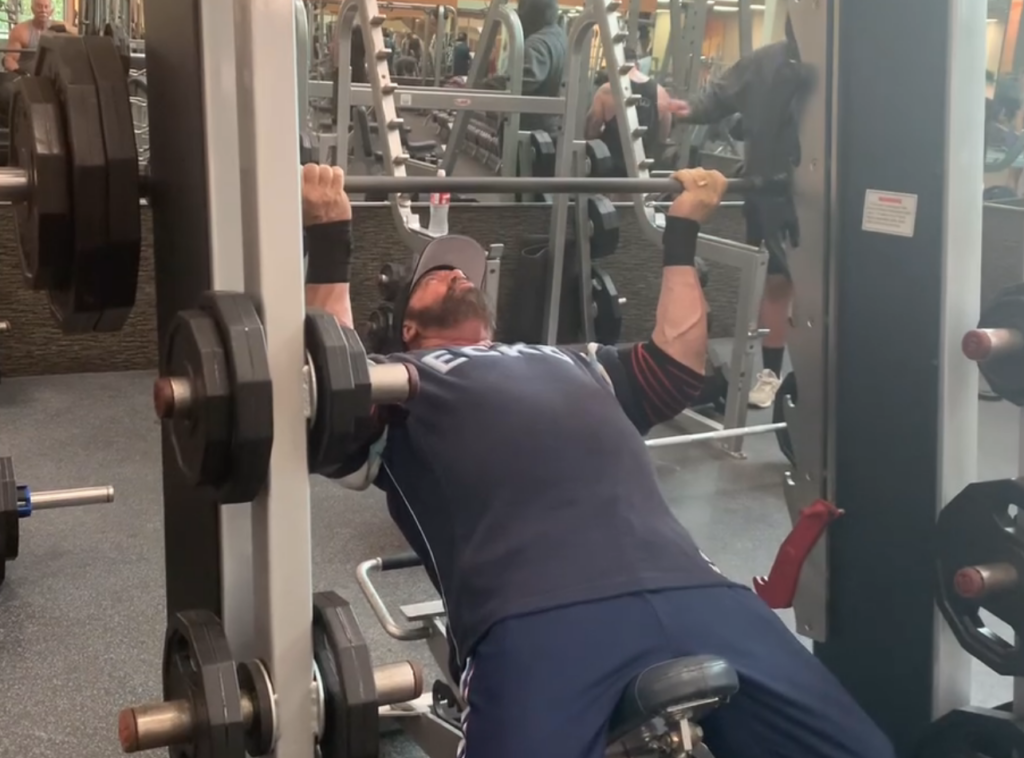
Most of the sets are in the 11-to-15 rep range, though sometimes it’s 15-20 or 15-30, depending on the bodypart, exercise, safety, and health of joints. Every rest-pause set is done with three failure points. A hypothetical incline bench 11-15 rep set would start with eight reps to failure, rack the weight, take 15 deep breaths, unrack, two to four reps to failure, rack the weight, 15 deep breaths, unrack, and a final one to two reps to failure.
Should every bodypart be rest-paused?
Most quad exercises and back thickness exercises are not rest-paused due to safety reasons. These usually involve incredibly large poundages, and as you grow fatigued during a rest-pause set it’s easy on these two areas to lose form. I don’t want someone T-bar rowing 250 and pulling from a bent-over rest-pause dead stop and getting a serious injury.
So, for quads, I usually recommend a brutally heavy set of four-to-eight reps followed (after a rest) by a 20-rep set with less weight (but still heavy). I call that 20-rep set a “widowmaker,” and once you do it you’ll have no questions why. For back thickness, I recommend a brutally heavy set of six-to-eight reps followed (after a rest) by a slightly lighter set of 10-12, going to failure both times.
How many warmups should someone do?
Whether it’s one warmup or five, take as many as you need to get ready for your all-out working sets. This all depends on the person and how advanced he is. For example, if someone was going to rest-pause 405 on the incline press then his warmups might go something like this: 135 x 12-20, 225 x 10-12, 275 x 6-8, 335 x 4-6, then 405 for an all-out rest-pause set of 11-15 reps. A bodybuilder using a lot less weight may only need two warmups before his rest-pause set.
What is extreme stretching and what are you trying to accomplish with it?
Extreme stretching can have a myriad of benefits if done correctly: recovery, fascia size, and potential hyperplasia. It can change your physique in pretty dramatic ways (especially your chest, triceps, and quads). It should only be done after the bodypart has been worked. I recommend extreme stretching for every bodypart except calves, and that’s only because the way I have people train calves already has an extreme stretch built into it. Basically, you want to get into a deep stretch and hold it for 60-90 seconds. These are very painful.
I’ll walk you through a quad stretch. You just got done quad training, so, take an overhand grip on a barbell fastened in a power rack about hip high and simultaneously sink all the way down. Push your knees forward under the barbell until you’re up on your toes (basically a sissy squat). Now straighten your arms and lean as far back as you can and hold that stretch for 60-90 seconds. Its going to be excruciating for most people. Do this one faithfully and in four weeks your quads will look a lot different than they used to.
How important are static contractions?
I like to get people confident in the ability to handle big poundages, instilling that mentality that they are in control of the weights and not vice versa. For this reason and for “time under tension” purposes, some trainees should do a static contraction or static reps (short two-inch range of motion reps) at the end of their rest-pause set.
How should trainers use cardio?
In the offseason, if you train three days a week, then do cardio on the four off-days. If more people took that approach, you would have a lot less offseason bodybuilders looking like sumo wrestlers. Cardio is a very individualistic thing, so it’s hard for me to say “do this” without knowing a great deal about who’s reading this. But I’ve found that if people who have a difficult time gaining weight do cardio (walking on a treadmill or around the neighborhood) first thing in the morning, appetite and muscular weight gains become non-issues. I’d have them get up, take in either BCAA powder or a scoop of protein powder, do their cardio and then eat the day’s first meal. That old wives’ tale that you can’t gain muscle mass if you do cardio is the biggest bunch of crap. If done right, cardio is a huge weapon in a bodybuilder’s arsenal.
What are the basics of the DC nutritional philosophy?
A. Higher protein intake (1.5 to upwards of 2 grams per pound of bodyweight daily).
B. Along with the higher protein intake, a very high water intake.
C. No carbohydrates later in the day, excluding post-workout, mostly so morning cardio is done with lower glycogen levels.
D. Basically, eat either protein and carbs or protein and fats and don’t mix up those components greatly. You don’t have to be absolutely meticulous with this, but it’s a generalized way to keep most people from creating insulin spikes and driving fats toward adipose tissue.

E. Meals that are protein and carbs are (usually) eaten in this sequence: protein first, fibers and veggies second, carbs last. This is simply because about half the time you’re so full after the steak, salad, and broccoli that you don’t eat all the carbs, and for body fat control that’s a good thing.
F. There are some individuals who should eat mainly protein/fats because they are so carb-sensitive, and other people who should only take in carbs pre- and post-workout. It’s one of those things I have to ask a lot of questions of the person, and I come up with a game plan.
Basically, I try to trick the human body into getting larger by becoming a muscle-building, fat-burning machine. In the simplest of terms, if you’re 180 and want to weigh 200, you better eat like a 220-pounder to get there. I say: Eat and train like a 300-pounder, cardio like a guy who is 8% [body fat], and shore up all excesses with carb cutoffs, food combinations, and key supplements (green tea, etc.).
What are the blasting and cruising phases?
I recommend people train all out for about six to eight weeks (blasting) and then take a 10-14 day period (cruise) where they remove one meal per day and do only maintenance training. During the cruise phase, only go into the gym two to three times and kind of go through the motions with straight sets and try out some new exercises you might switch over to if you’re close to strength plateaus on any current ones. Guys come off that 10-14 day cruise like rabid dogs chomping at the bit to get blasting again. Blasting and cruising must be done. You cannot train all-out all the time without overtraining. Blast and cruise back and forth all year long.
Let me play Devil’s advocate. Our muscles can’t see the weight or count the reps; they only react to stress. So, as long as I keep stressing them enough, why do I need to get another rep or use another five pounds? Why can’t I stress my muscles as much as a DC adherent with, say, supersets or drop sets or new exercises?
I think I can answer that best by asking anyone reading this a question. Would any top pro [bodybuilder] be the size he is today if he stayed lifting the same light weights he started with when he was a beginner? Bodybuilding is all about creating continual adaptation.
The number of exercises you can do per bodypart is finite. How many good quad building exercises are there? Six, maybe? The number of sets (volume) you can do is finite (or infinite if you want to spend the next 3200 hours straight in the gym). As for supersets or drop sets or whatever, after you do them this time, what are you going to do next time to make sure you went above and beyond the supersets and drop sets you did this time? Anyone reading this can giant set squats, leg presses, hack squats, and lunges, and they will be blown out and sore as hell for the next few days. They could do that exact same workout with the same exercises and weights every leg workout for the next year and they’d be blown out and sore for days each time. But are they really going to gain any leg mass after the second or third time? No, because nothing has changed in the parameters to cause an increase in muscle size.
What is pretty much infinite in training? Poundage. You take a key exercise up to an extreme strength plateau and at that very point, switch to a new key exercise and get brutally strong on the new one. And you do that continually. That repetitive progression that you’re held accountable for in your logbook is the key game plan to get to point B (where you want to be) from point A (where you are) at that absolutely quickest rate possible.
We’ve covered a lot of ground. What one thing would you most want people to take away from this?
That a lot of what bodybuilding is about for many people is obsessive-compulsion instead of deductive reasoning. I would like people to start thinking of how to get to point B from point A in the shortest route possible. I am not claiming to have built a better mousetrap, but I think I’m showing people how to catch the mouse quicker.