







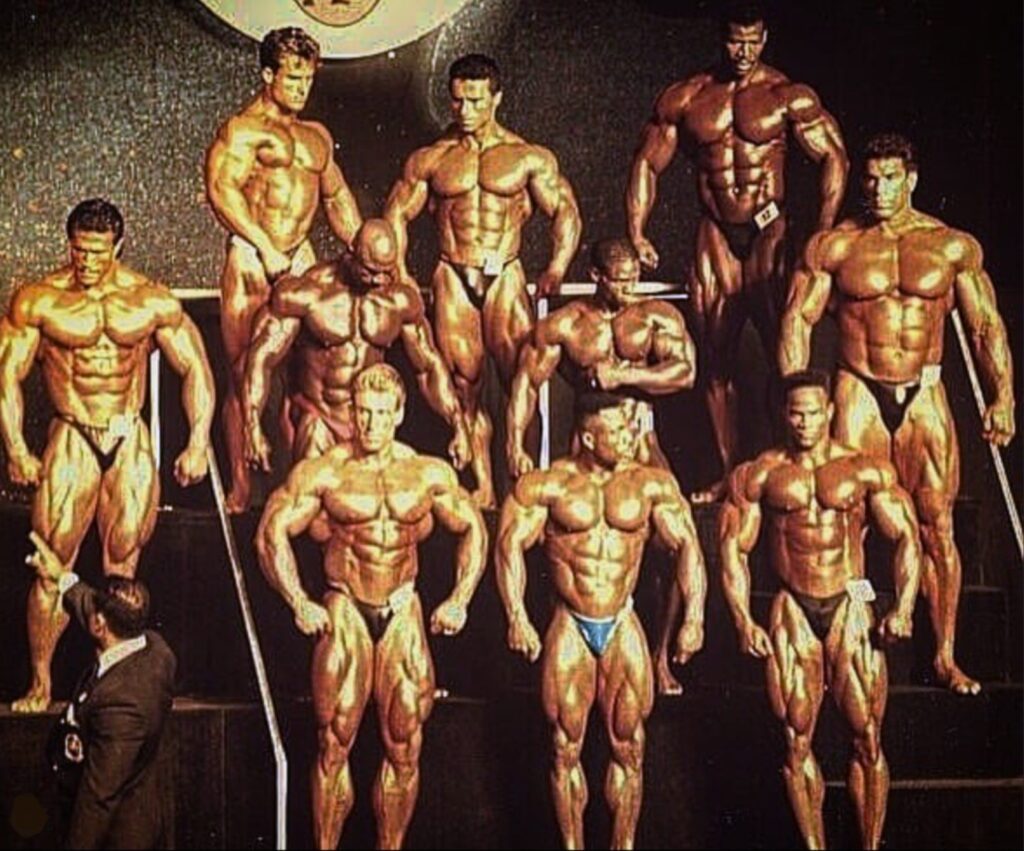
The 1992 Mr. Olympia caught bodybuilding at a crossroads. The Lee Haney era had ended. A new era would begin. Once Haney retired, Dorian Yates, runner-up in the Olympia before, was the favorite. 1992’s Arnold winner, Vince Taylor, was his presumptive challenger. Rookie Kevin Levrone, coming off big wins, was making his Olympia debut. So was unheralded rookie Ronnie Coleman. But in the muscle press, the big story was the comeback, after 17 years away, of Lou Ferrigno. So we looked to the past again even as this contest was all about the future. It was a year of generational change. Johnny Carson retired, Bill Clinton won, the Golden Girls left, Nirvana arrived. Your turn, bodybuilding. It’s September 12, 1992. Let’s journey to Helsinki, Finland, for the 28th Mr. Olympia.
1992 MR. OLYMPIA: THE FUTURE & THE PAST
RONNIE COLEMAN
Usually all the drama of a Mr. Olympia is contained in the posedown, traditionally the top six places. 1992 was an exception. Of the 16 bodybuilders who failed to crack the top six, half of them were making their Olympia debuts. The best of these was Kentucky fireman Porter Cottrell, who, while only 5’6″ and around 200 pounds, was in the midst of a rookie campaign in which he, like Kevin Levrone, won two pro shows. Cottrell landed in eighth.
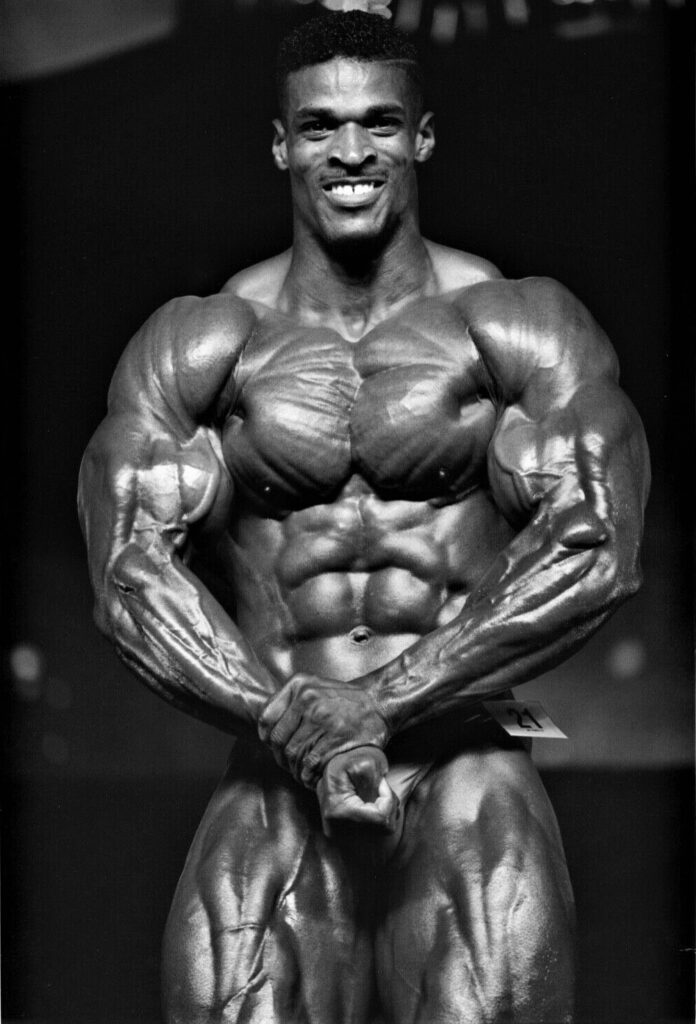
Meanwhile, another American rookie failed to crack the top 15 in Finland, earning the dreaded DNP (Did Not Place). His name is Ronnie Coleman and, though he was destined to win a record-tying eight Mr. Olympias (1998-2005), he had yet to fill out his 5’11” frame and appeared rangy but ripped. As we explored here, Ronnie passed two drug tests the year before, and was likely still a natural bodybuilder. So, it was Levrone who rightly garnered all the “next big thing” buzz, while Coleman, an Arlington, Texas policeman, seemed destined for obscurity.
LOU FERRIGNO
Lou Ferrigno was a bodybuilding phenom, winning the 1973 Mr. America and Mr. Universe at 22 and finishing behind only Arnold Schwarzenegger in the 1974 Mr. Olympia at 23. The bodybuilding world had seen nothing like the 6’5″ sensation, and even a half-century later, he remains the greatest very tall bodybuilder of all time. When Arnold retired after winning the 1975 Mr. Olympia, immortalized in Pumping Iron, Ferrigno, who had been third that year (after a shortened prep because he had planned to sit it out), seemed like a surefire future Mr. O. If he continued to muscle-up his large frame (back especially), he might have won for the rest of the ’70s and well into the ’80s. It’s not hard to imagine him with a record eight Mr. Olympia trophies when Lee Haney was (maybe) big enough to (maybe) battle him in 1984, assuming Lou hadn’t tired of winning by then. It’s one of bodybuilding’s greatest What If‘s.
But there wasn’t much money in bodybuilding in the ’70s. The total prize money for the 1976 Mr. Olympia was $5000. So, Lou Ferrigno sought brighter pastures. In 1976, he tried out for the Toronto Argonauts in the Canadian Football League and competed in the inaugural World’s Strongest Man. Then came the Hollywood green. For five seasons (1977-82), he flexed on TV’s The Incredible Hulk, followed by a decade of acting in mostly straight-to-video dreck. Finally, in 1992, 17 years after he last competed and when he was 41, Lou Ferrigno would make his comeback. The year before, the buzz was all about Vince McMahon’s new, pro bodybuilding organization, the WBF. McMahon had reportedly offered $500,000 for Ferrigno to sign on, and Lou’s WBF comeback was prematurely hyped twice on covers of McMahon’s bodybuilding magazine. But contract negotiations stalled, and Ferrigno signed with Weider. It was Weider’s turn to hype. Ferrigno promptly appeared on two covers of Weider’s FLEX magazine as the potential next Mr. Olympia.
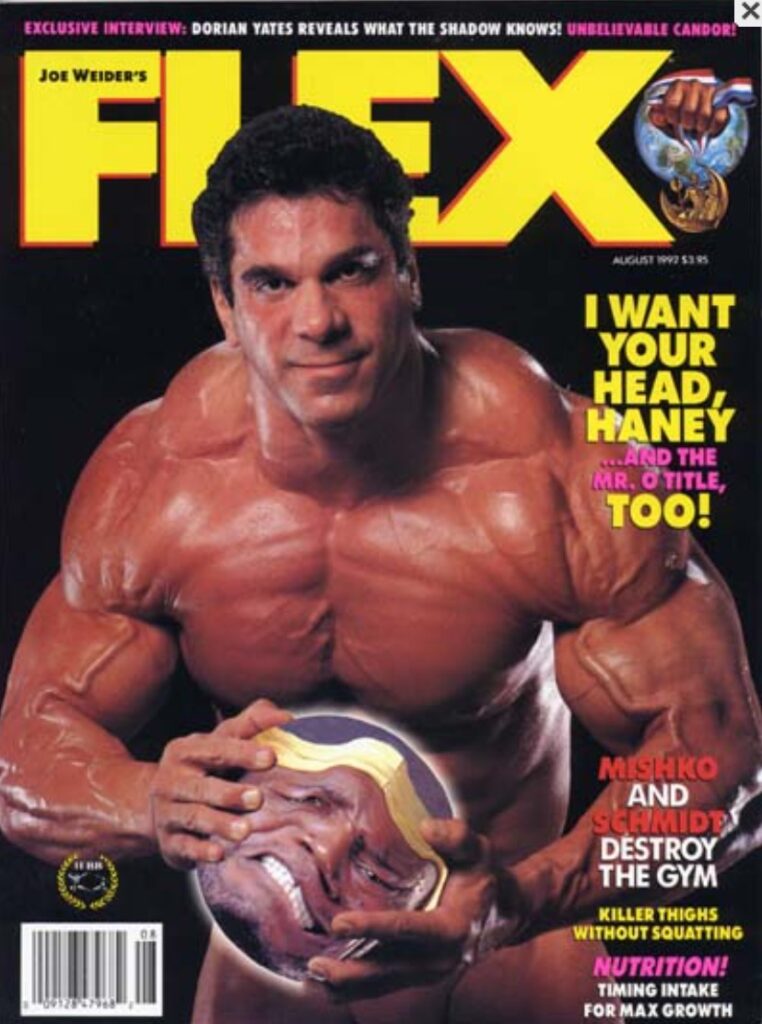
Lou Ferrigno trained much as he had in the past, but incorporated a modern bodybuilding diet and drug protocol. On the day of the contest in Helsinki, he weighed around 290 pounds, his highest ever contest weight, and he showcased career-best detailing. But he was also flat, he appeared relaxed in the lineup while others remained tensed, and his (unnecessary) calf implants were noticeable and deserving of a markdown on scoresheets. You could see in Lou how the size and definition standards of bodybuilding had progressed since he last competed. Most glaringly, his long legs would’ve been big enough for a ’70s Olympia winner, but by ’90s standards they were lacking, especially from the side. Though his signature most muscular—famous from Hulking out on TV—was superb and a huge crowd pleaser, other poses failed to wow.
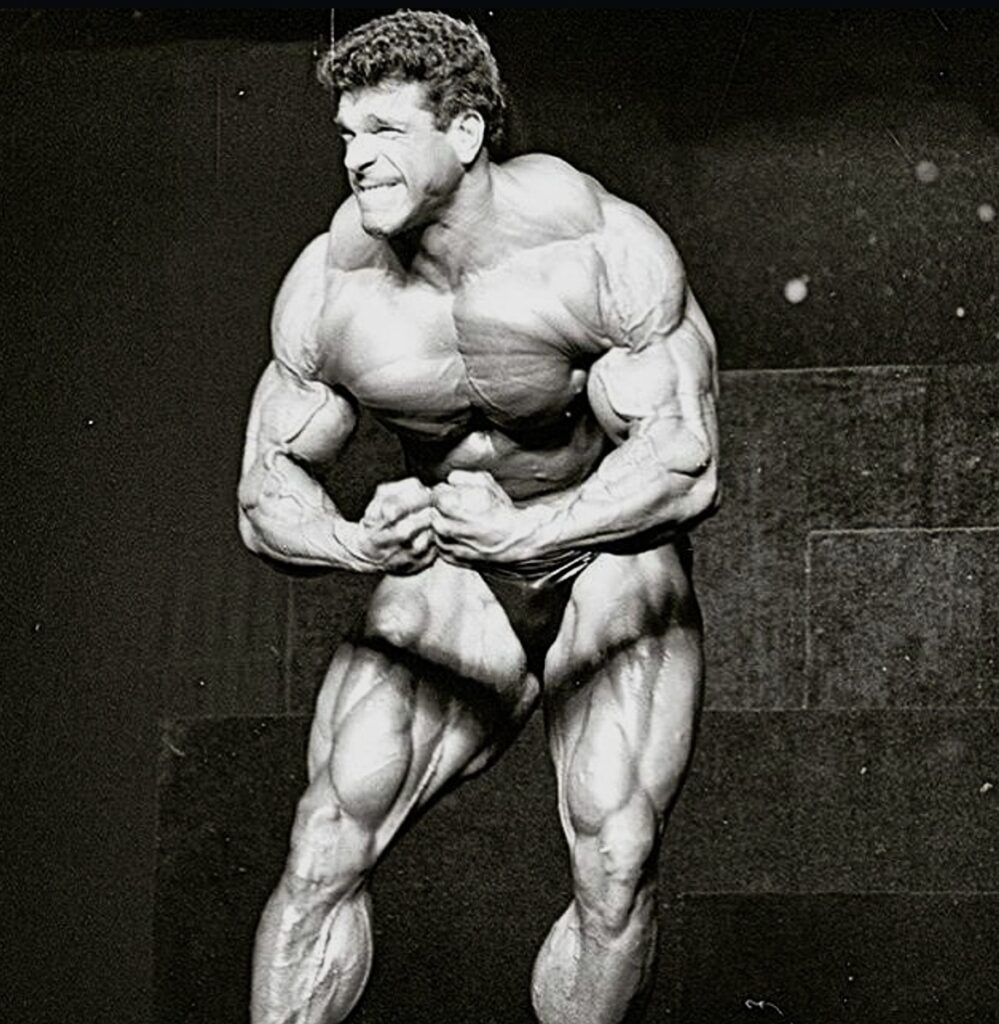
Ferrigno confessed he mistimed his peak and sacrificed too much size in the final weeks. Contest prep had changed dramatically over the record 17 years between his Olympia appearances. “It was a learning experience after so many years away from the stage,” he later said of the 1992 Mr. Olympia in which he finished tied for 11th. “Well, if I could do it all over again, I would probably do a few posing exhibitions before the contest to learn how to peak out properly. There was a greater amount of muscularity [than in the 1970s]. [Olympia competitors in 1992] were bigger and much more superior in their leg development and in the back.” Lou Ferrigno would try again in 1992.
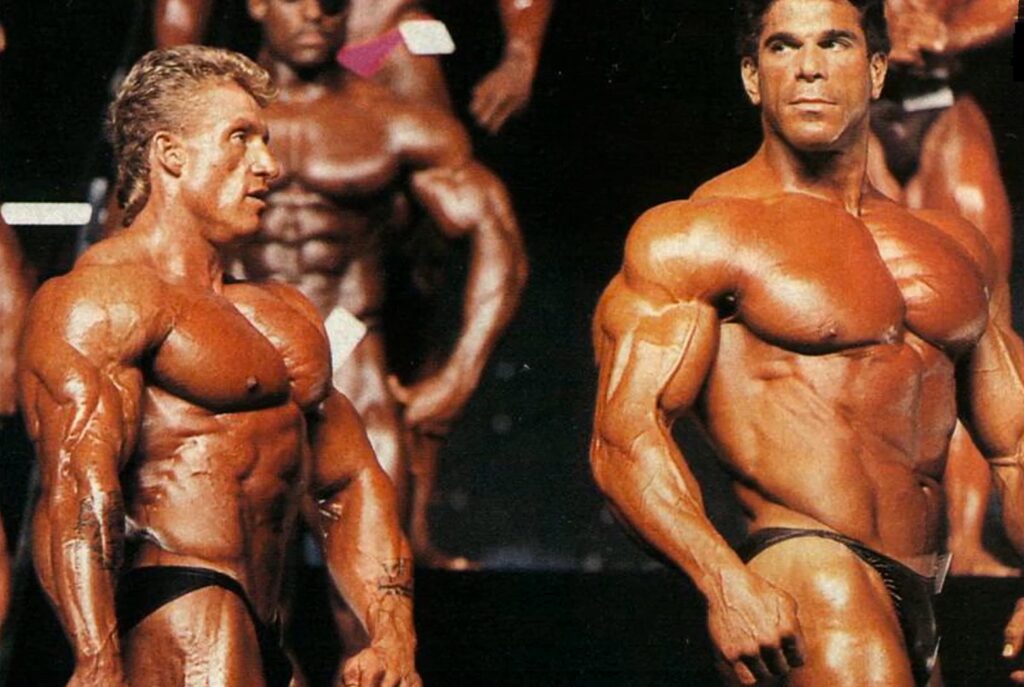
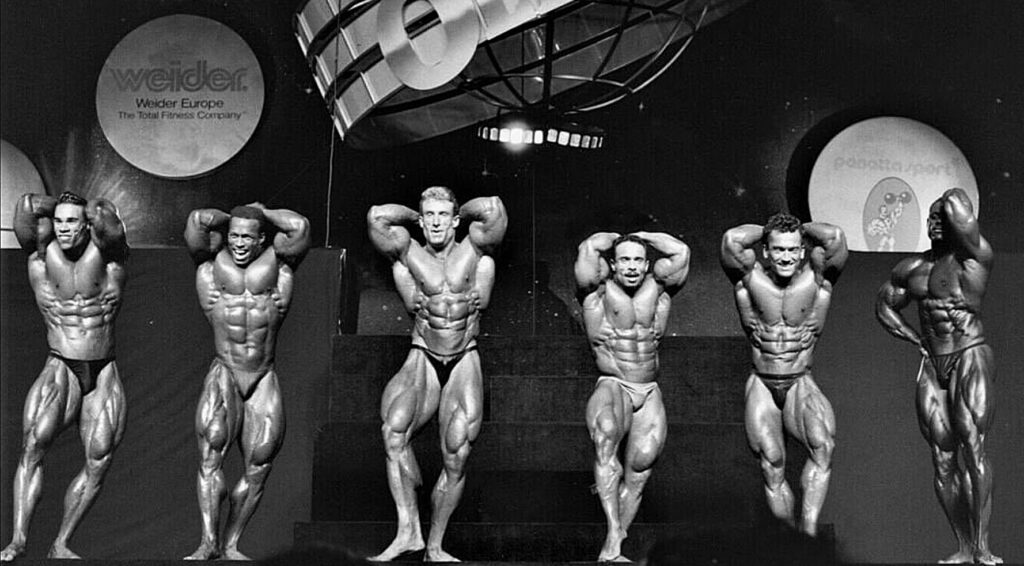
1992 MR. OLYMPIA: TOP SIX
VINCE TAYLOR
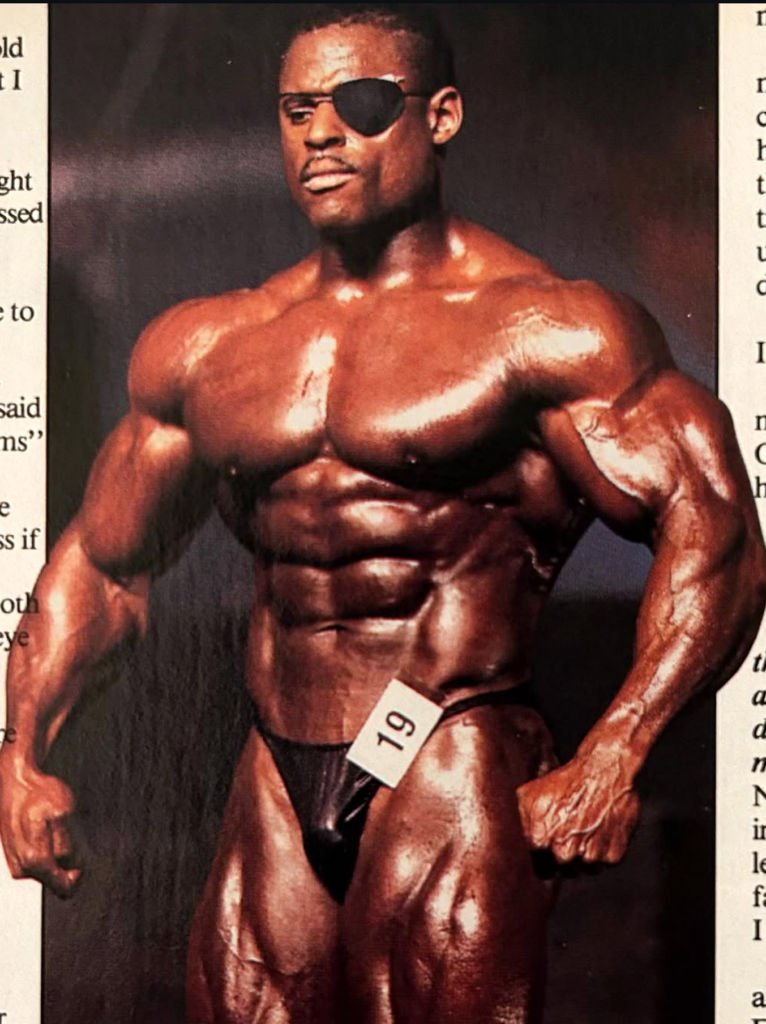
Vince Taylor came into this Olympia as a favorite for the Sandow trophy. Having finished third in his previous two Olympias (1989 and 1991) and swept all three contests he’d already entered in 1992, including the prestigious Arnold Classic, he had nearly as much buzz as Dorian Yates. The American Taylor felt the contest would be between him and the English Yates, and most prognosticators agreed. However, on the bus from the Helsinki airport to the hotel, a freakish eye injury from his gym bag’s strap and the resulting infection led to doctor visits, pain injections, and sleepless nights, derailing his final prep. Wearing an eye patch onstage, Taylor was smoother than usual, and, though his robotic posing routine was a highlight, he later confessed he felt lucky to make the posedown.
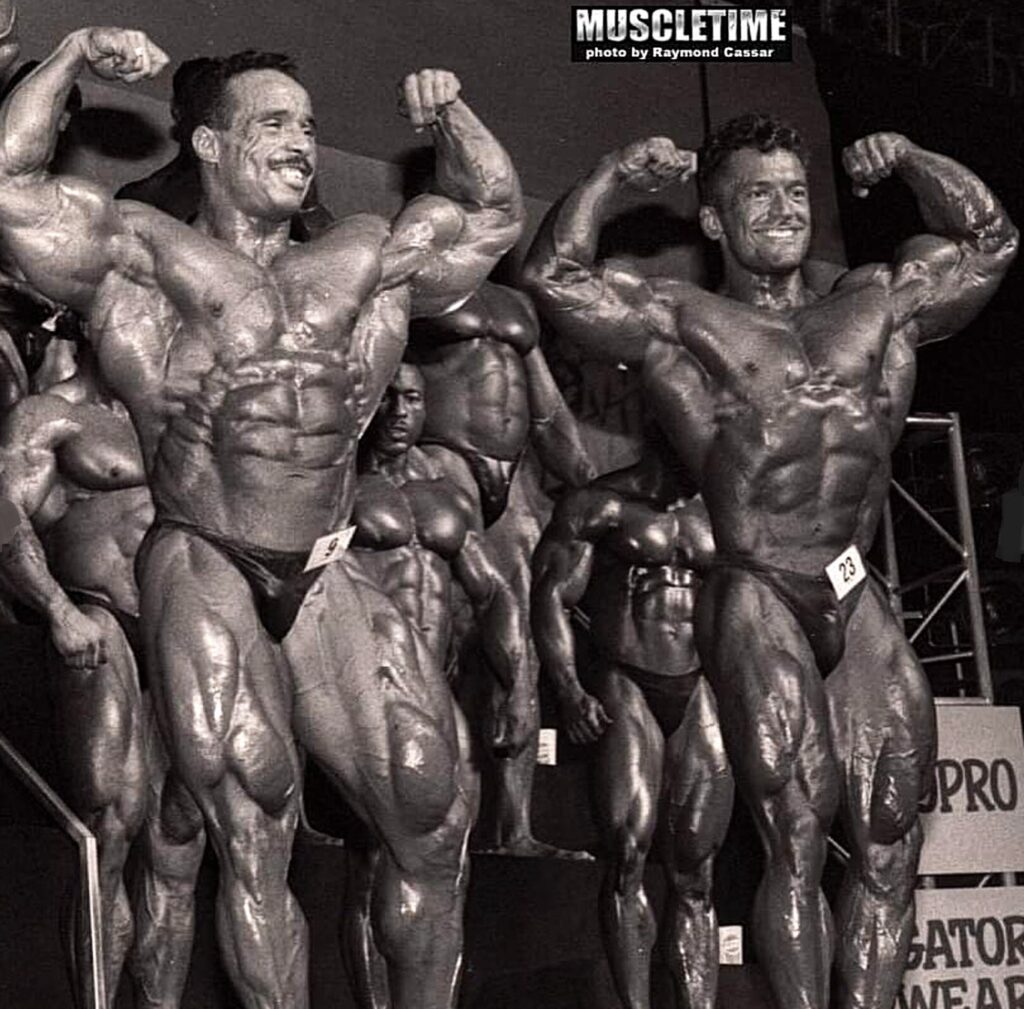
MOHAMMED BENAZIZA
Tragically, this was the final Mr. Olympia for Mohammed Benaziza. The densely built, 33-year-old Algerian died 22 days later on the night he won the Dutch Grand Prix due to dehydration caused by diuretic use. The 5’3″ Momo, who won nine pro shows over his five-year career, is remembered as one of the best short bodybuilders of all time.
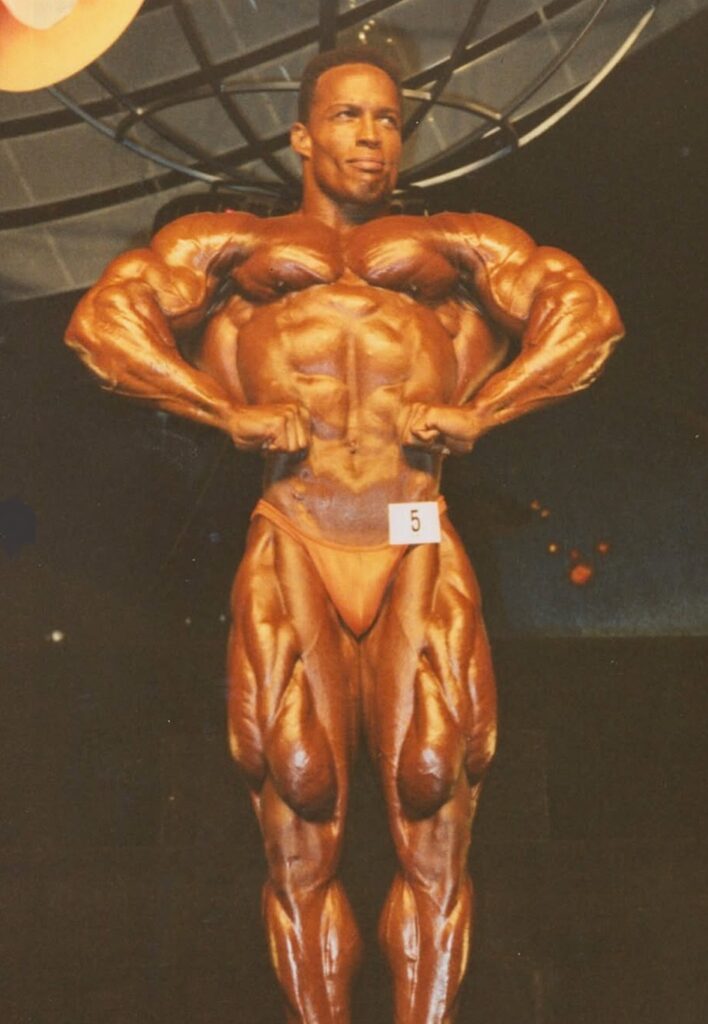
SHAWN RAY
Shawn Ray was in the midst of one of the Olympia’s greatest strings of consistent excellency. From 1990 to 2001, he competed in the Mr. O annually and never placed lower than fifth. There’s not much you couldn’t say about Ray’s physique in 1992 that you couldn’t also say about it in 1997 or 2001. He always brought the classical proportions, crisp conditioning, and flawless posing. His only “weakness” was that at 5’6″ and not much over 200 pounds, he couldn’t outmuscle the behemoths—first Lee Haney, then Dorian Yates, and finally Ronnie Coleman—for bodybuilding’s ultimate title.
LEE LABRADA
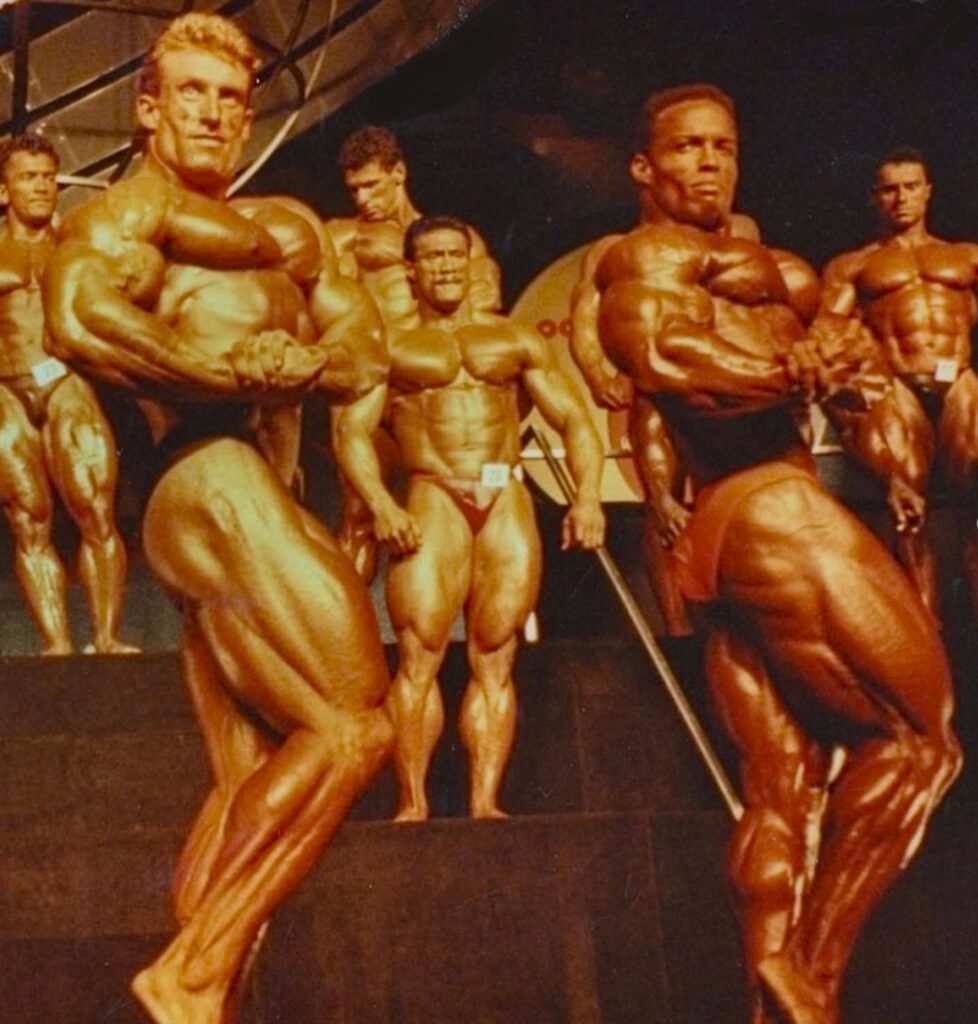
Lee Labrada and fellow classicist Shawn Ray were in a tight battle for the third spot. The Texan Labrada had been second behind only Lee Haney in the 1989 and 1990 Olympias, but at 5’6″ and no more than 185 pounds, the expanding size standards of the 1990s were starting to overwhelm him. This was his next-to-last Olympia before retiring from the stage at 33. Doing Ray one better, Labrada’s worst Olympia placing was fourth. He too always showcased classical proportions and consistently high-def detailing.
KEVIN LEVRONE
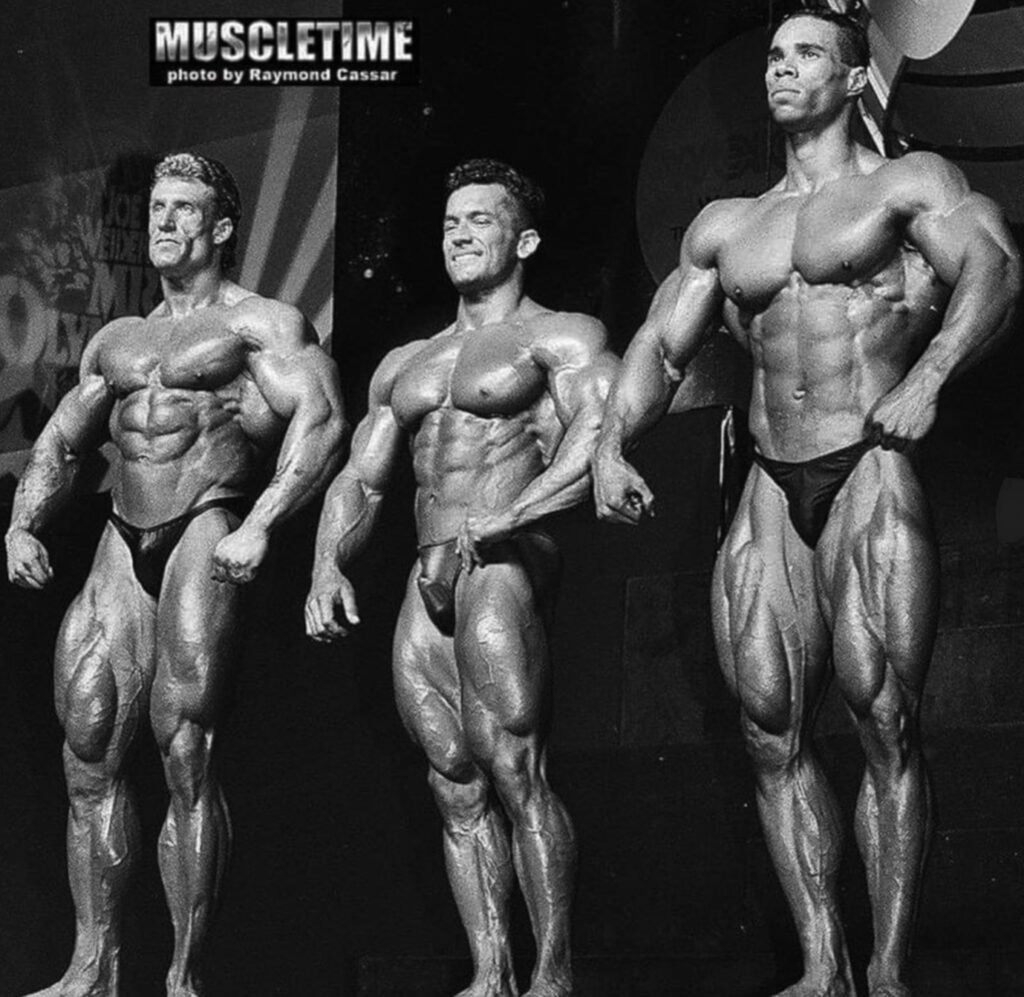
Here he was—this year’s Olympia phenom. The 27-year-old Maryland Muscle Machine had steamrolled to a pro card at the ultra-loaded NPC Nationals (Wheeler! Demayo! Coleman! Mendenhall! Cormier!) a year prior and his rookie season was just as spectacular, as he leapt ahead of the expected top contenders in Helsinki to earn comparisons with Dorian Yates, the previous year’s Olympia phenom. (Setting a pattern that couldn’t last, the next year, Flex Wheeler would be the third straight competitor to place second in his Olympia debut. The ’90s were getting stacked with fresh talent.)
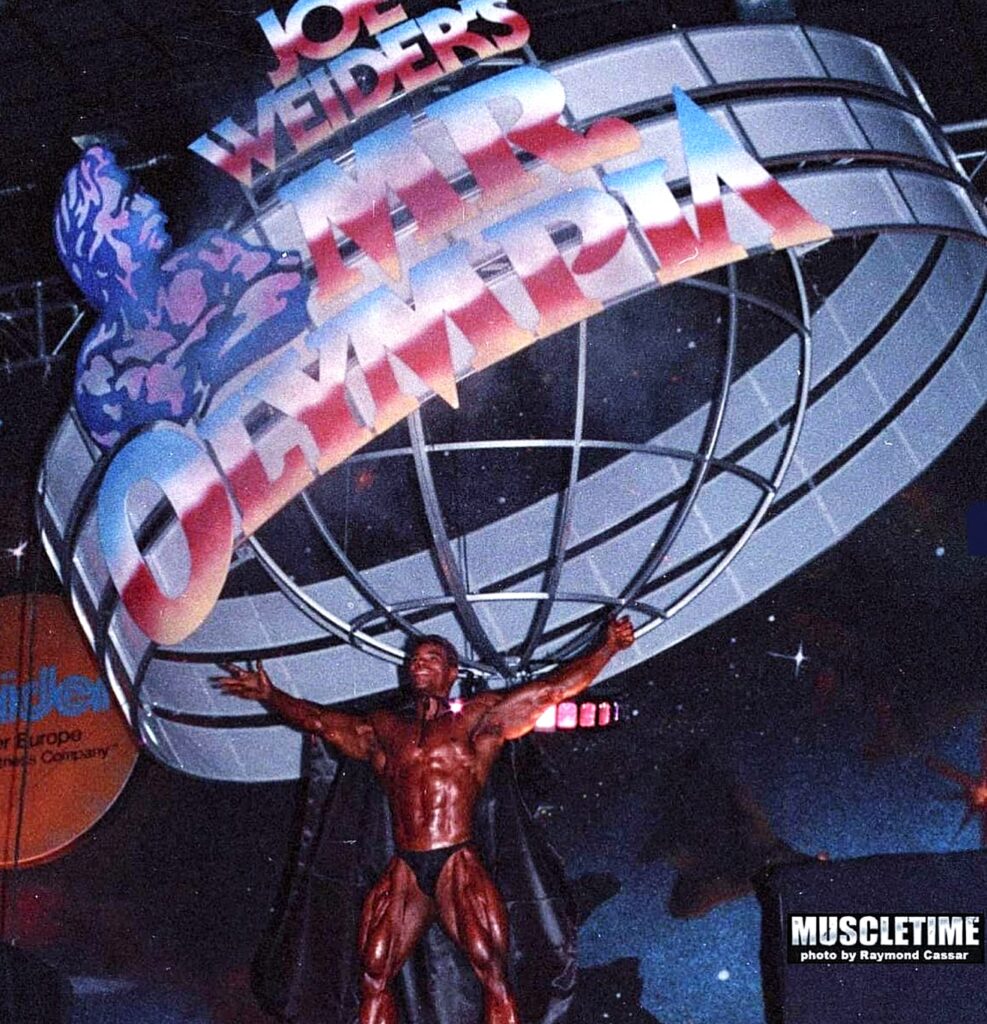
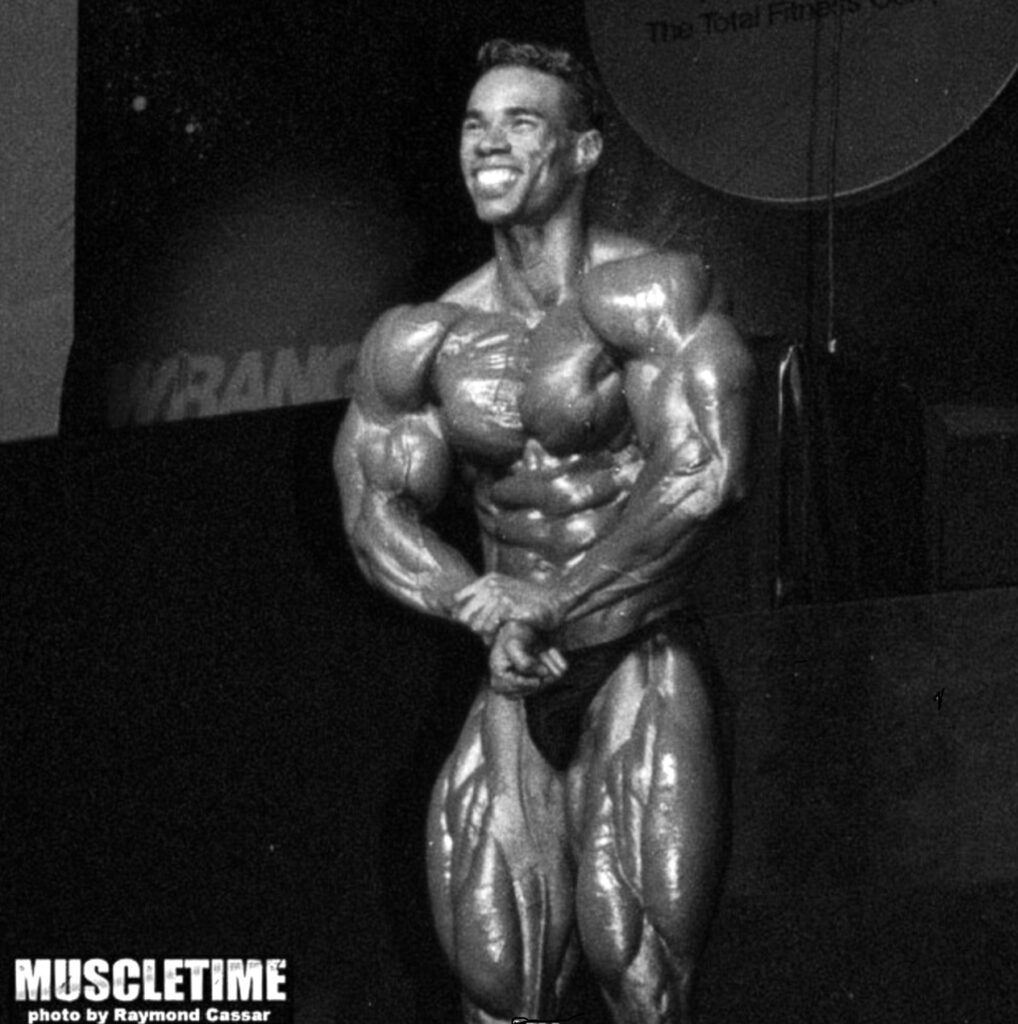
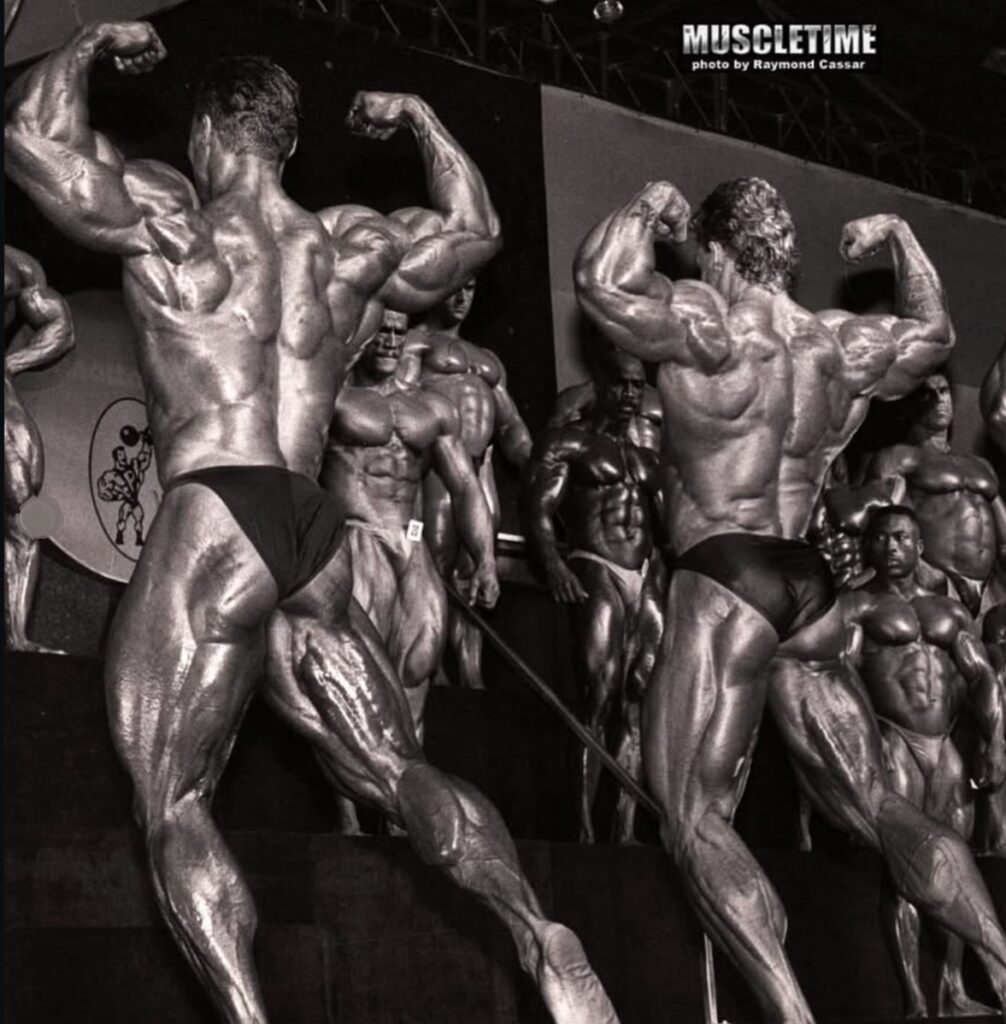
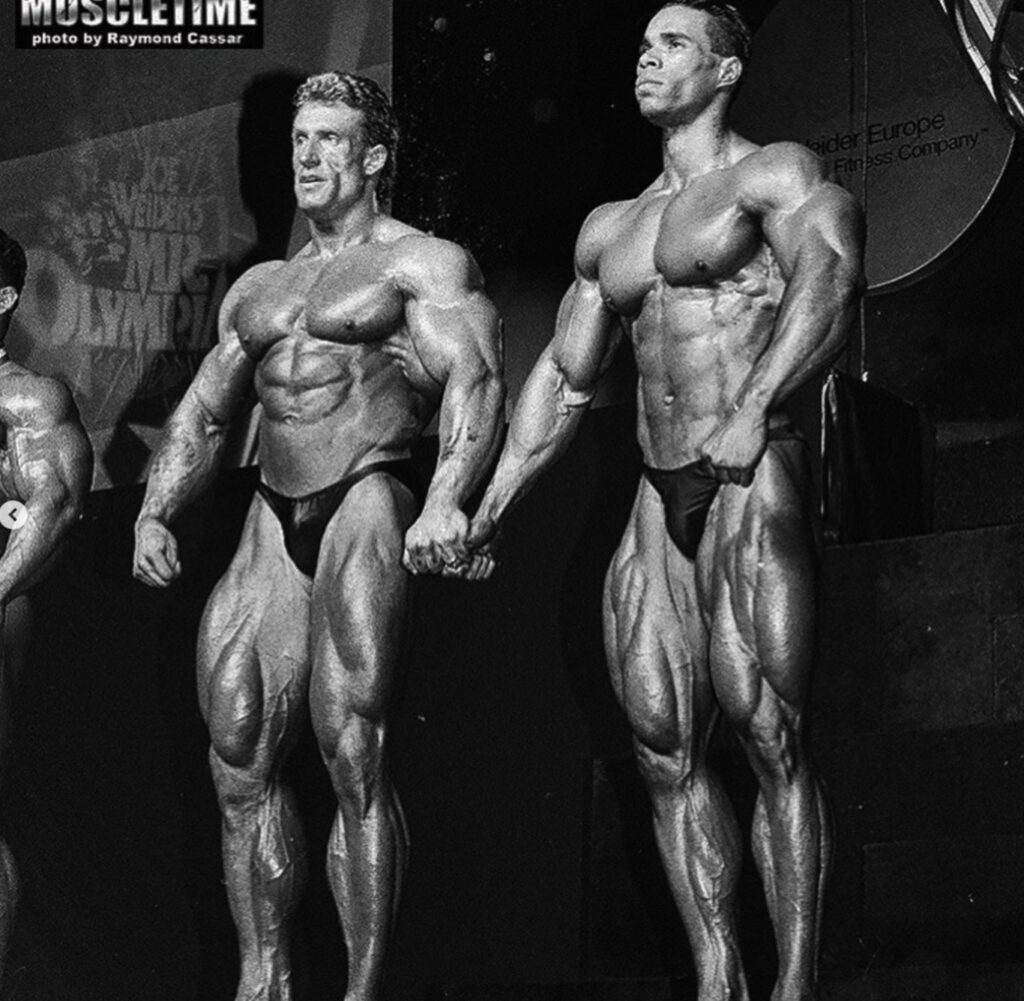
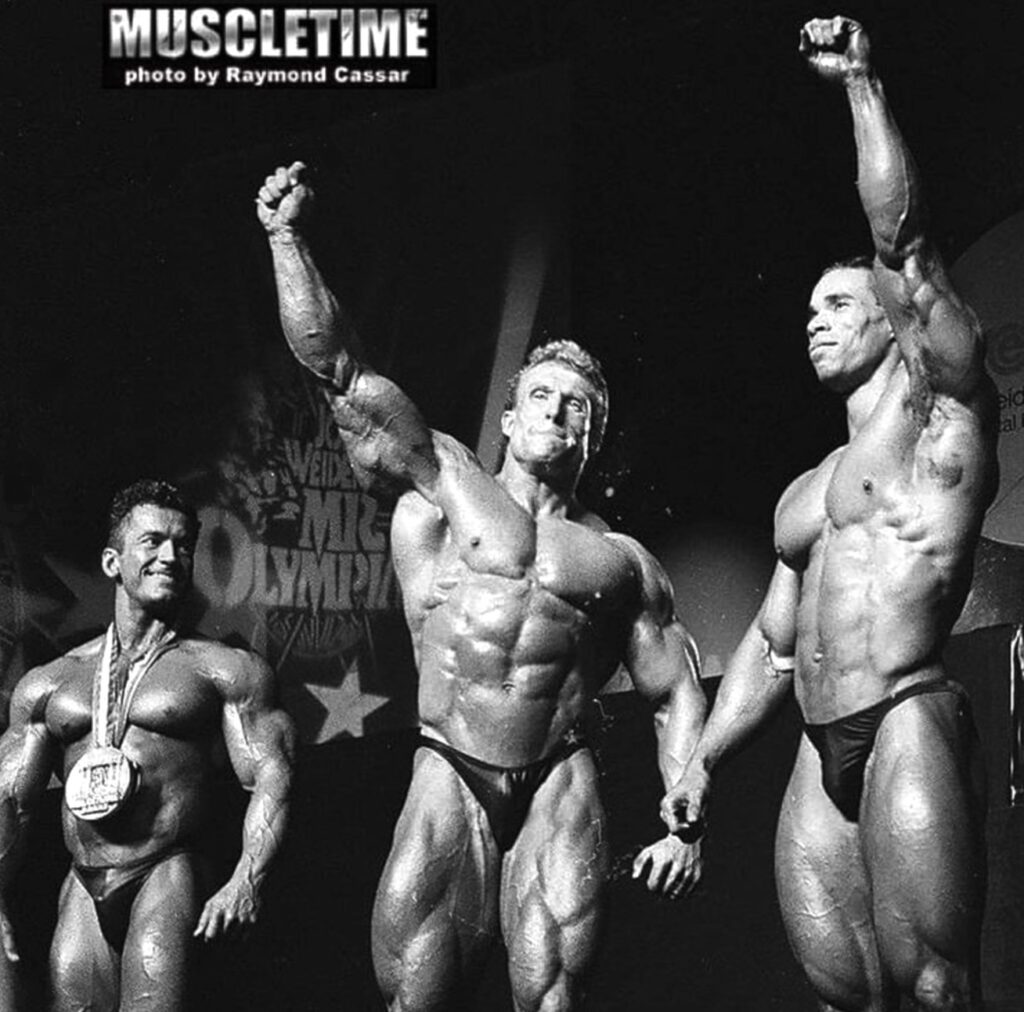
Steve Weinberger, who is now the Olympia head judge, was in attendance and he remembers: “When everyone stepped on stage, the one who first came out and I thought, Oh my god, he might win this, was Kevin Levrone. Kevin looked amazing. He really did. And then as the show went on, Dorian got even better and Kevin just sort of faded away.” At around 225 pounds, Levrone had round muscle bellies. His quads were a strength, fuller and deeper separated than Yates’ wheels. He bested Yates when it came to arms, as well. But Yates destroyed him in the two back mandatory poses. It ultimately wasn’t much of a contest for No. 1, but it wasn’t much of a contest for No. 2 either. Despite getting edged out by both Shawn Ray and Lee Labrada in the posing round, Kevin Levrone was firmly in the runner-up spot and announced himself as a top Olympia contender moving forward. (He never won, but was second three more times.)
1992 MR. OLYMPIA: WINNER
The next year Dorian Yates transformed himself into Dozier 3.0, the Holy Sh*t! 257-pound mass monster who took size standards to the next level. In 1992, he was still the 2.0 version that had dueled the similarly sized, eight-time champ Lee Haney to a three-point defeat the year prior. Of Haney’s retirement, Yates said, “Now the title was open, so I guess I was going in as the favorite, which was very strange, because my whole life I’d been an underdog. And I used that aggression of the underdog to push myself through.”
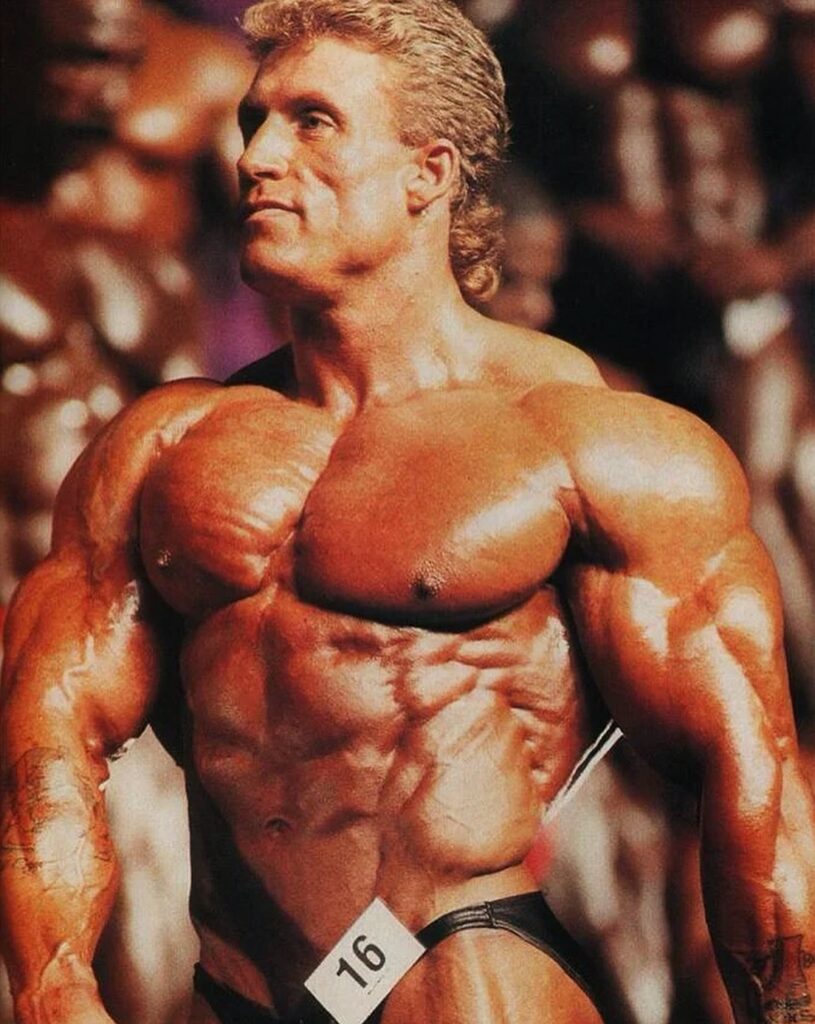
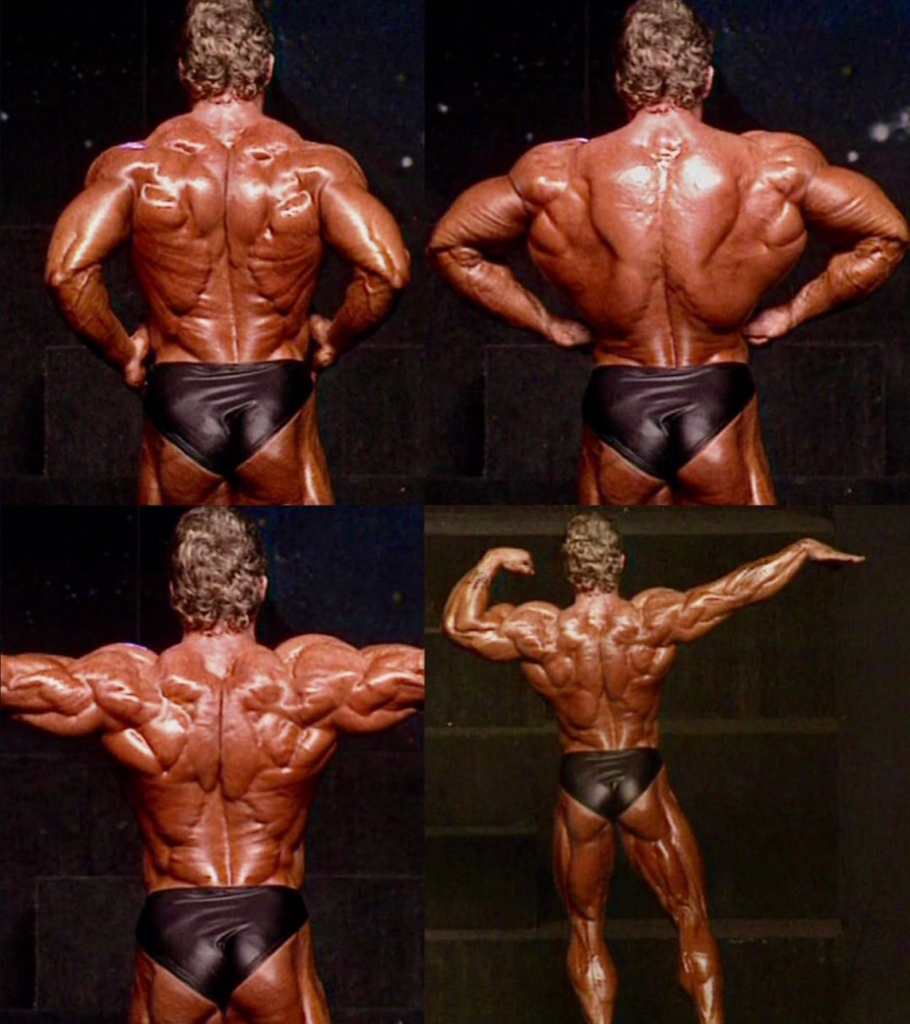
Once he knew that summer that fellow behemoth Haney wasn’t returning, Yates surmised that his likely challengers in Finland would be significantly smaller but potentially leaner than him. So, he came in at 242 pounds (about the same as the year prior) but ripped, determined to negate the possible advantages of others. He later said, “Kevin [Levrone] was good, but his back and upper body were not as good as mine. Balance wasn’t as good. And Shawn [Ray] and Lee [Labrada] were just too small. I actually purposely sacrificed some muscle size to come in like super shredded. So, I wanted to be the biggest guy and the most shredded as well.” The Englishman succeeded, convincingly becoming the first new bodybuilding king since 1984.
In 2023, Dorian Yates wrote:
The 1992 Mr. Olympia was held in Helsinki and was in an ice hockey stadium. When I was backstage, I was thinking to myself, “It’s bloody cold here, not ideal for pumping up!” My confidence grew as the show got nearer and nearer, and I knew I was in great shape. A few weeks before, I was questioning myself if I could really be the best in the world. It’s a heavy thought. The answer was: Why not? Nobody worked harder than me; nobody dedicated themself as much as me.
The stage was set and flooring for the competition was only temporary as an ice hockey game had to be played between the prejudging and the actual night show! So after prejudging, it all had to be reconstructed and obviously not very well because when Lou Ferrigno made his way up the large steps back of the stage, one [step] actually collapsed and all 300 pounds of big Louie came crashing down about 20 feet, causing him to have a nasty gash on his hamstring. Also, it seems a rat made an appearance, scurrying across stage during my routine! Guess you could say, “Not many gym rats make it to the Olympia stage!”
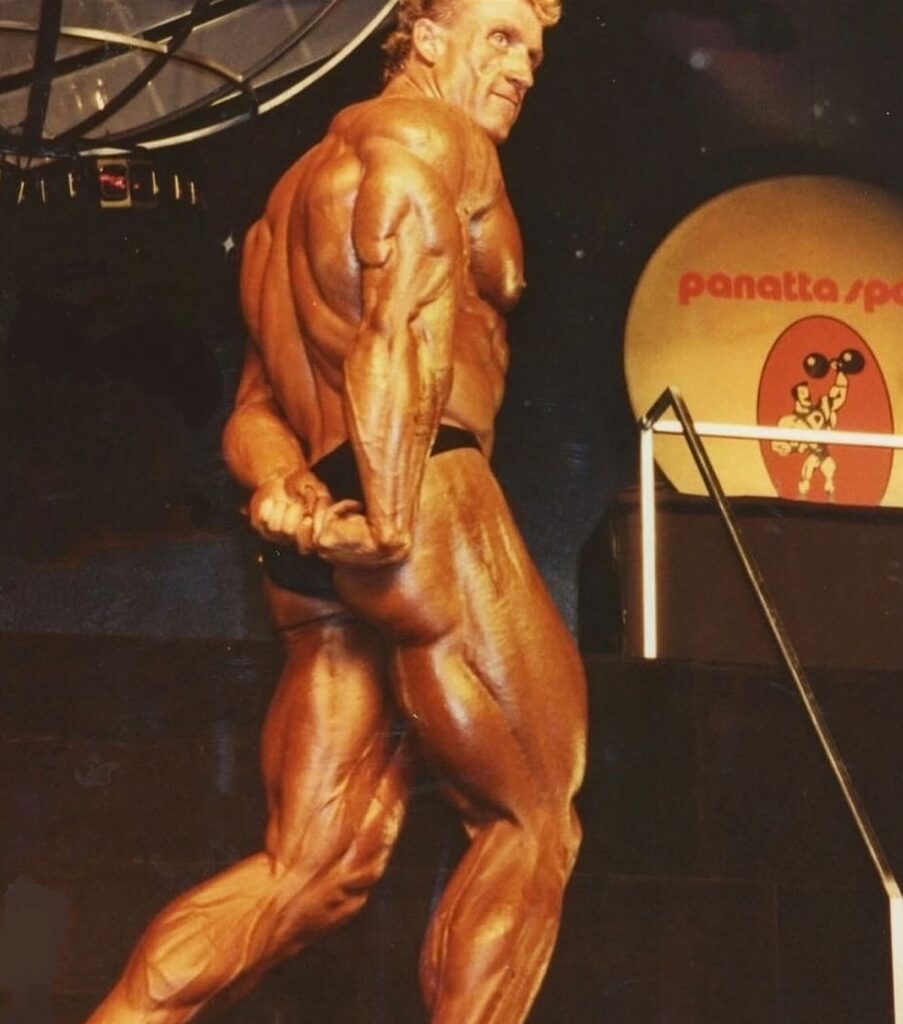
When asked in his 2019 documentary, which of his six Olympia wins was his favorite, Dorian Yates answered: 1992. “That was my first win which was incredible, but still I didn’t show any emotion. Of course, that first Olympia win will always be my favorite. Earning my place at the grandest stage and working my way up through the ranks to become the first Brit to win an Olympia title, it’s gotta be my pick.” A rat, an icy stage in Finland, the return of the Incredible Hulk, the tragedy of Momo, the freakish injury of Taylor, the contrasting debuts of Levrone and Coleman, and the first of six straight Sandows for Yates: the 1992 Mr. Olympia—the last held outside the USA—was one of the most eventful bodybuilding contests of all time. The ’80s were truly over, and the ’90s had truly begun.
1992 MR. OLYMPIA
September 12, 1992 / Helsinki Ice Hall / Helsinki, Finland
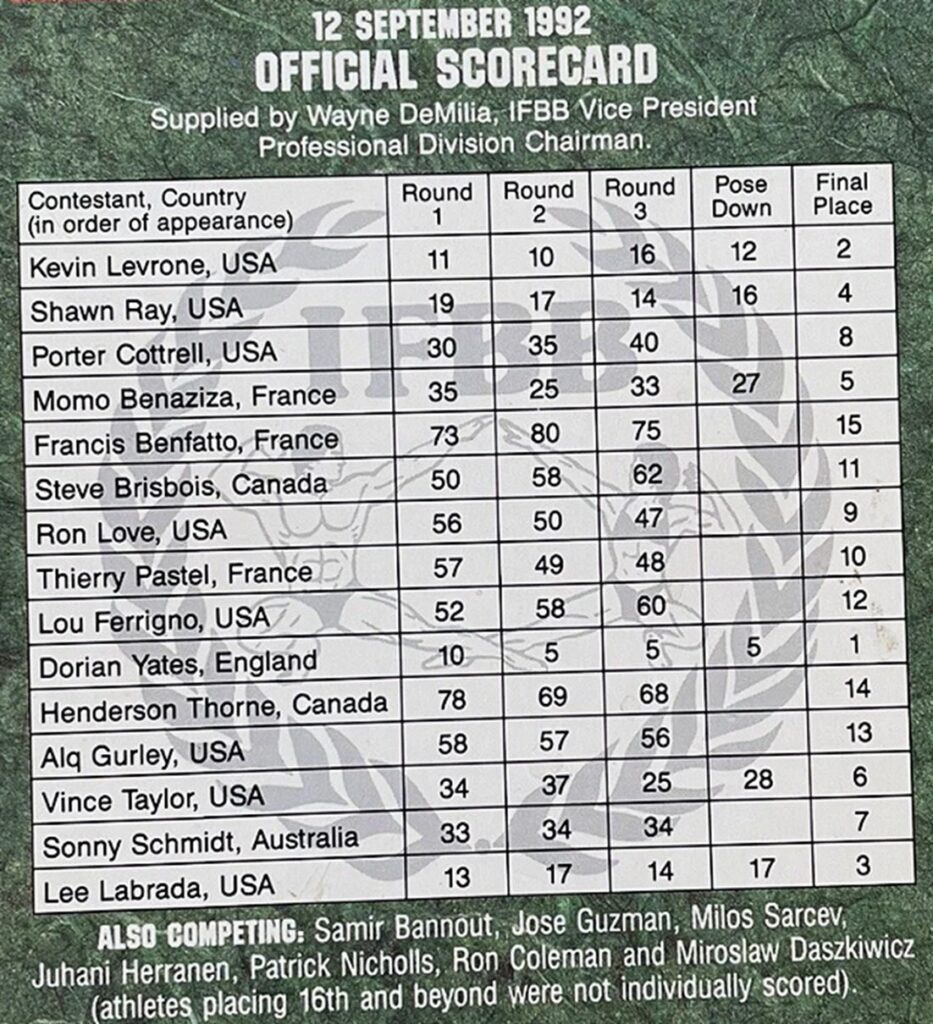
Final scores are listed for the top 15. The top six made the posedown, so only their scores include points for that round. Lou Ferrigno and Steve Brisbois had the same point totals, so we’ve listed them here as tied. The scorecard seen below has Ferrigno 12th and Brisbois 11th (as do other sources, using the scorecard), but we suspect this was merely an alphabetical “tie-break.” It also has Yates with 10 points (all seconds) in round 1, but it should be 5 (all firsts).
1. Dorian Yates [20] ($100,000)
2. Kevin Levrone [49] ($50,000)
3. Lee Labrada [61] ($30,000)
4. Shawn Ray [66] ($25,000)
5. Mohammed Benaziza [120] ($15,000)
6. Vince Taylor [124] ($12,000)
7. Sonny Schmidt [101] ($8000)
8. Porter Cottrell [105] ($7000)
9. Ron Love [153] ($6000)
10. Thierry Pastel [154] ($5000)
11. Steve Brisbois [170]
11. Lou Ferrigno [170]
13. Alq Gurley [171]
14. Henderson Thorne [215]
15. Francis Benfatto [228]
The following competitors did not place and are listed here alphabetically.
Samir Bannout
Ronnie Coleman
Mirosław Daszkiewicz
Jose Guzman
Juhani Herranen
Patrick Nicholls
Milos Sarcev
1992 MR. OLYMPIA SCORECARD