













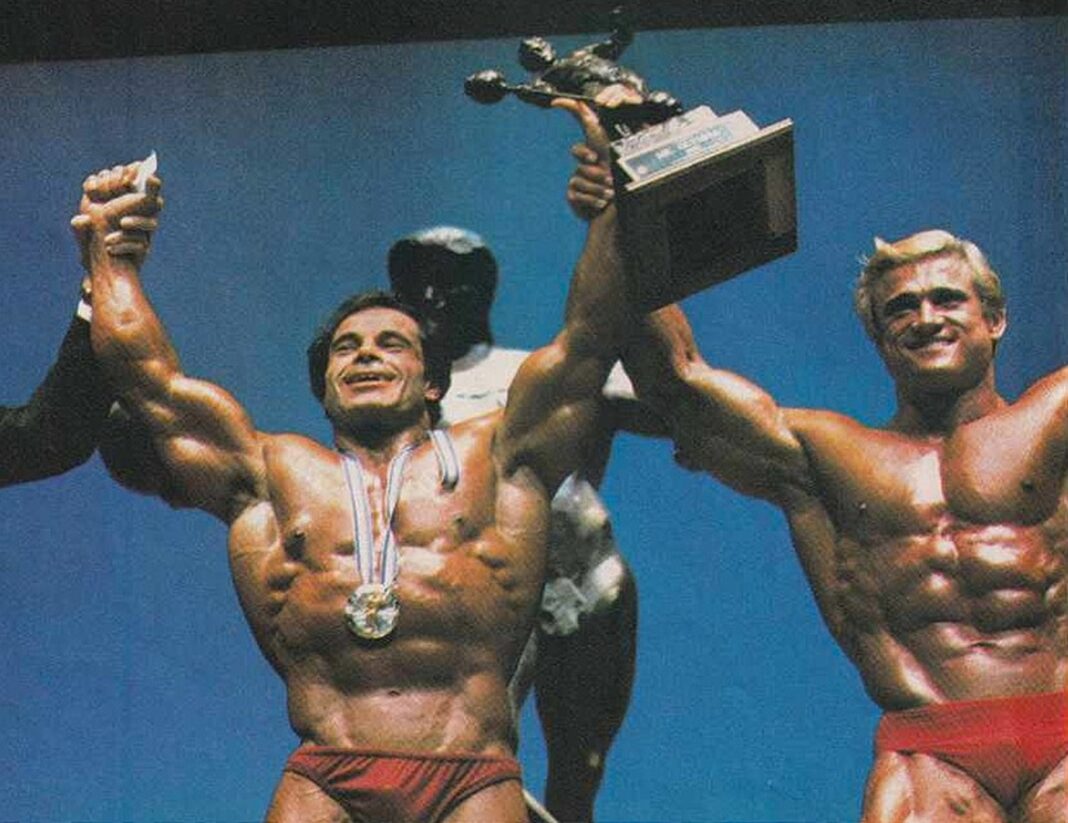
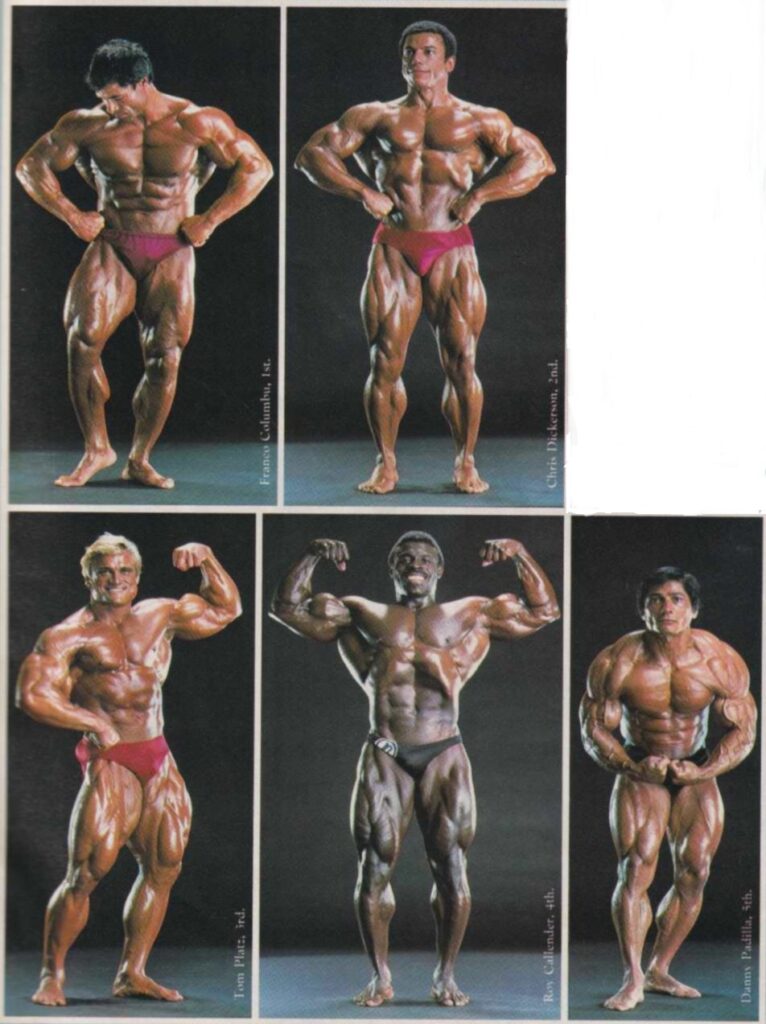
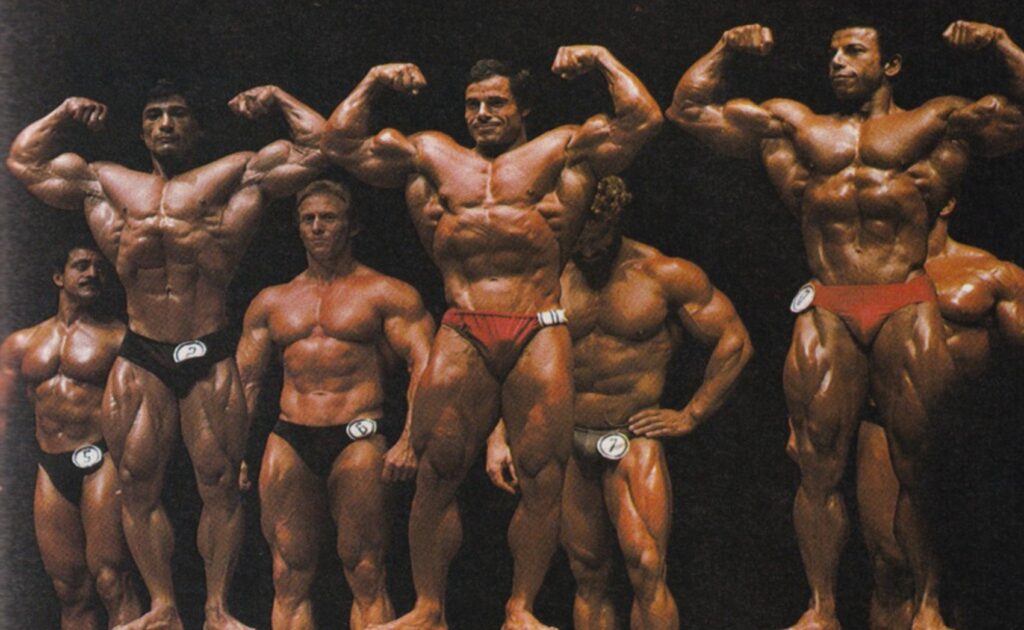
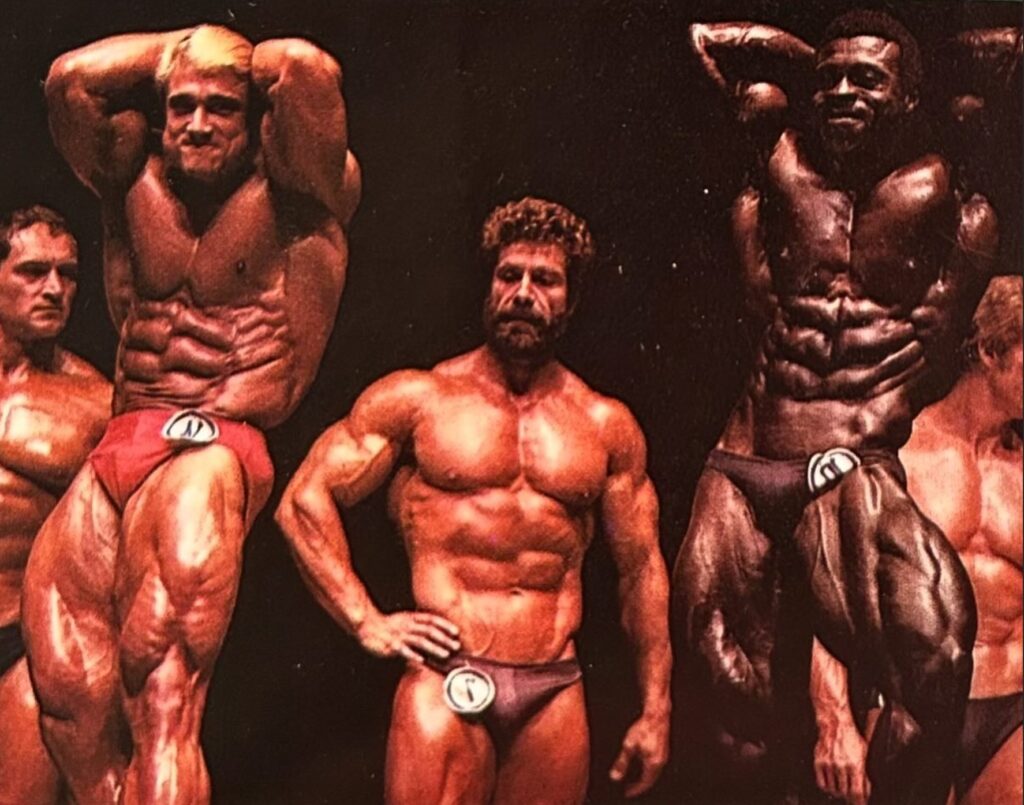
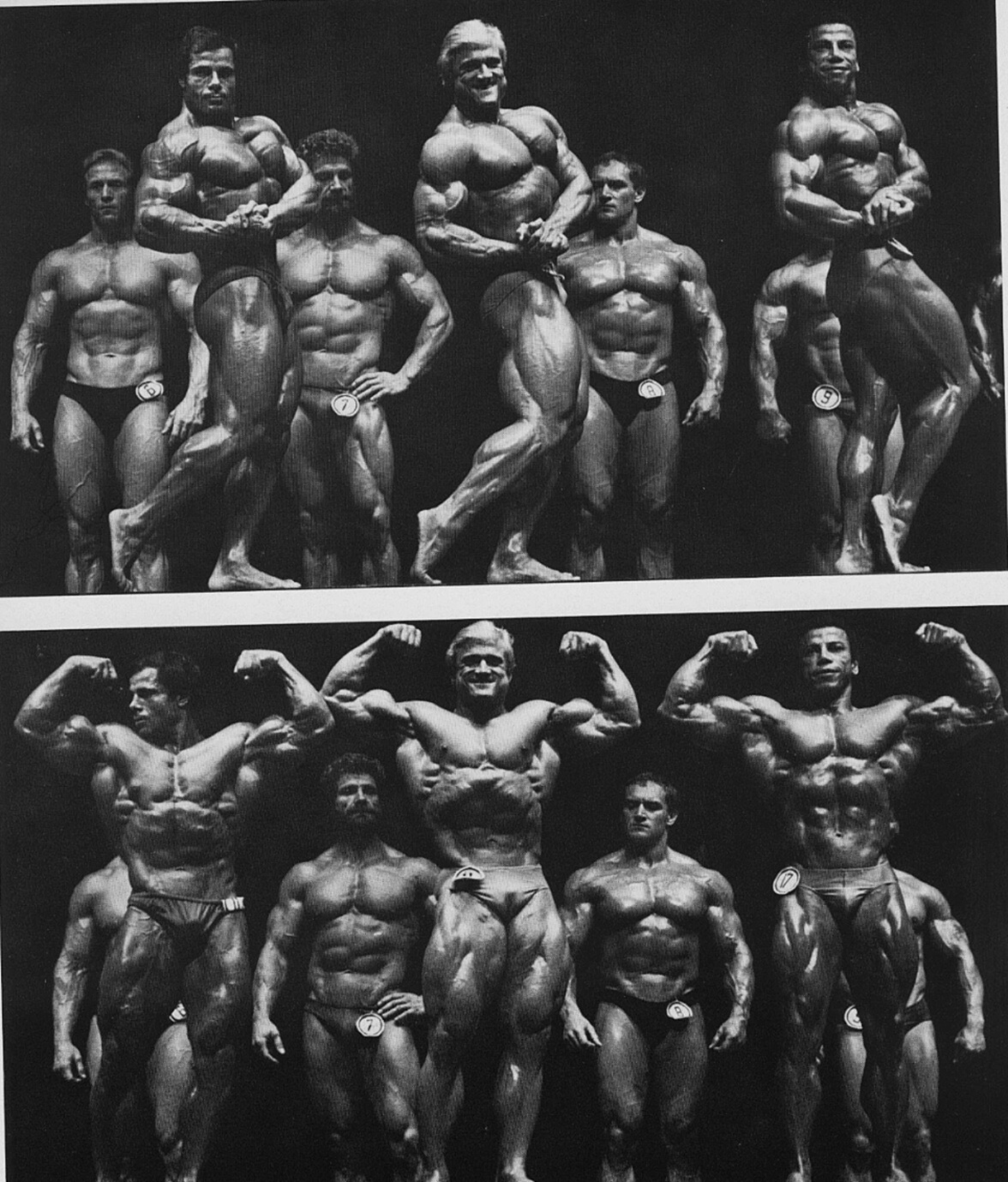
The 1981 Mr. Olympia was arguably the most controversial Olympia of all time. It wasn’t just that most fans felt the winner shouldn’t have won. It’s that they (and the judges) couldn’t agree on which of five men should have won. It was a five-way contest without a definitive best. And so debates raged then and they still do today. Franco Columbu? Chris Dickerson? Tom Platz? Roy Callender? Danny Padilla? All five were scored first by at least one of the seven judges! Who deserved the title, and how did it sort out the way it did, pleasing nearly no one. Let’s journey to the venerable Veterans Memorial Auditorium in Columbus, Ohio, in the year that birthed MTV, Donkey Kong, and Raiders of the Lost Ark for the 17nd Mr. Olympia.
WHO WASN’T THERE
You can’t talk about the 1981 Olympia without mentioning the 1980 Olympia, because that very controversial contest greatly affected who was at this one. In a surprise move, after a five-year retirement, Arnold Schwarzenegger entered at the last moment and, despite being much lighter than usual, won his seventh Olympia title to a chorus of boos. Mike Mentzer was a confounding fifth. Disillusioned with the politics of bodybuilding, Mentzer, then 28 and seemingly a future Mr. O, never competed again. Boyer Coe (fourth in 1980) joined Mentzer in boycotting the 1980 Pro Mr. Universe and 1981 Mr. Olympia because both were co-promoted by Arnold. And 1977-79 Mr. Olympia Frank Zane (third in 1980) announced he was taking a year away from competition, though he claimed to not be boycotting. That meant the only member of the previous Olympia’s top five returning in ’81 was second-place finisher Chris Dickerson.
Also not at the 1981 Mr. Olympia was Robby Robinson, touted as a future Mr. O just a couple years prior. In ’81, he posed in European organizations, rivals of the IFBB. In fact, he was third in a European pro contest around the time of the Olympia behind 1967-69 Mr. O Sergio Oliva and another legend, Serge Nubret. That show also featured the previously highly touted 29-year-old Kal Szkalak (fifth in the 1978 Mr. Olympia, his only IFBB pro contest). All four men were competing elsewhere because they had issues with the IFBB, Olympia, and Weider brothers.
Imagine how the 1981 Mr. Olympia could’ve been different if some of the bodybuilders who weren’t there were. All of them could’ve shook up the top placings, and, at their best, four—Mentzer, Zane, Robinson, and Oliva—could’ve won. Alas, politics was really rocking bodybuilding at this time.
1981 MR. OLYMPIA: OUTSIDE THE TOP FIVE
This was a contest, unlike any other, focused on the top five finishers, any one of whom could’ve been the top one. But before we get there, let’s first highlight some notables among the other 12 competitors.
Some legends were leaving, some were far from finished. In addition to Franco Columbu, it was the final bodybuilding contest for two other Pumping Iron stars, rivals in that classic documentary: Ken Waller and Mike Katz. At one point during prejudging, a fan shouted, “Hey, Waller, when you gonna give Katz his shirt back?” to much knowing laughter. Another Pumping Iron icon, Ed Corney, at 48, was only in the middle of his ironman career; improbably, he competed for another 17 years. In contrast, it was the next-to-last show for both Roger Walker (10th place) and, in his best-ever-shape, Dennis Tinerino (7th place).
Buried in ninth place was Samir Bannout, who would leap to fourth the next year and first the year after that. Here, he was still suffering from the water retention that frequently smoothed over his aesthetic shape.
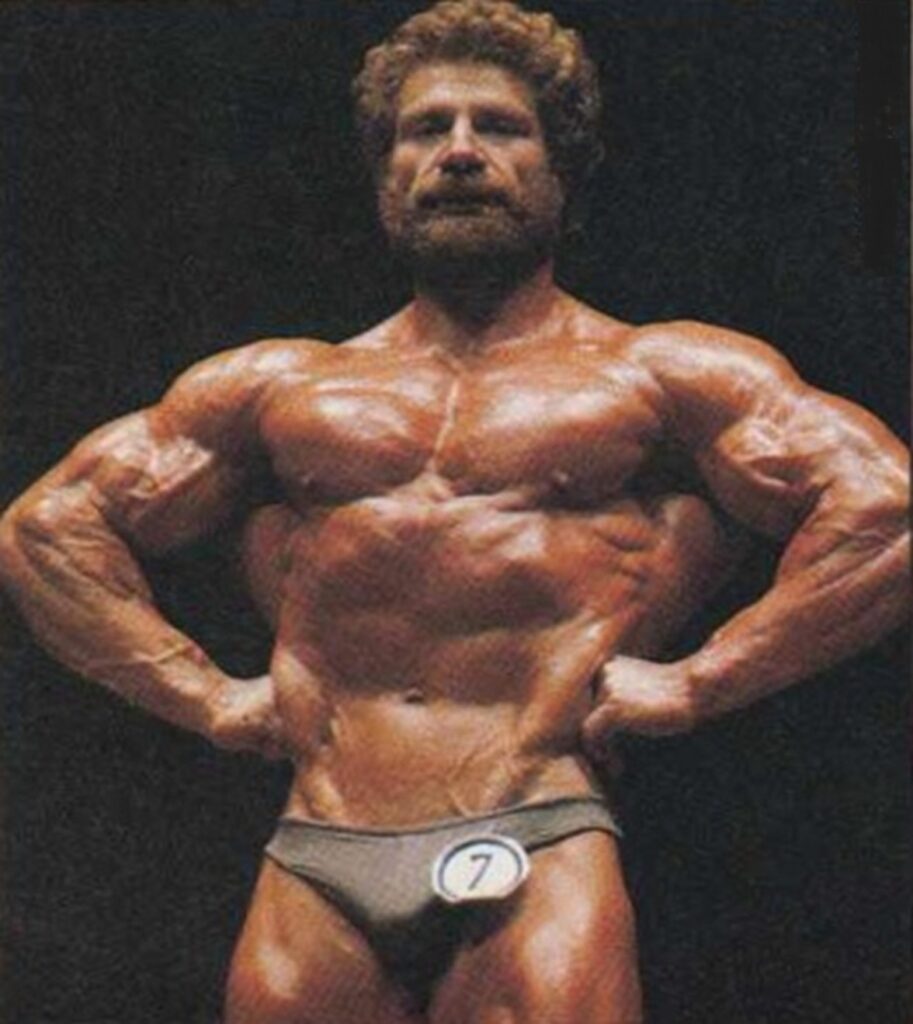
Making his Olympia debut was the German Jusup Wilkosz, who had, the year before, won the aforementioned Pro Mr. Universe (precursor to the Arnold Classic), also co-promoted by Arnold in that same Columbus auditorium. At 6′, Wilkosz towered over the five men ahead of him (each standing from 5’2″ to 5’8″) and presented a classical physique, replete with beard. His was an impressive, uncontroversial debut, drowned out by the uproar regarding the top quintet.
1981 MR. OLYMPIA: TOP FIVE
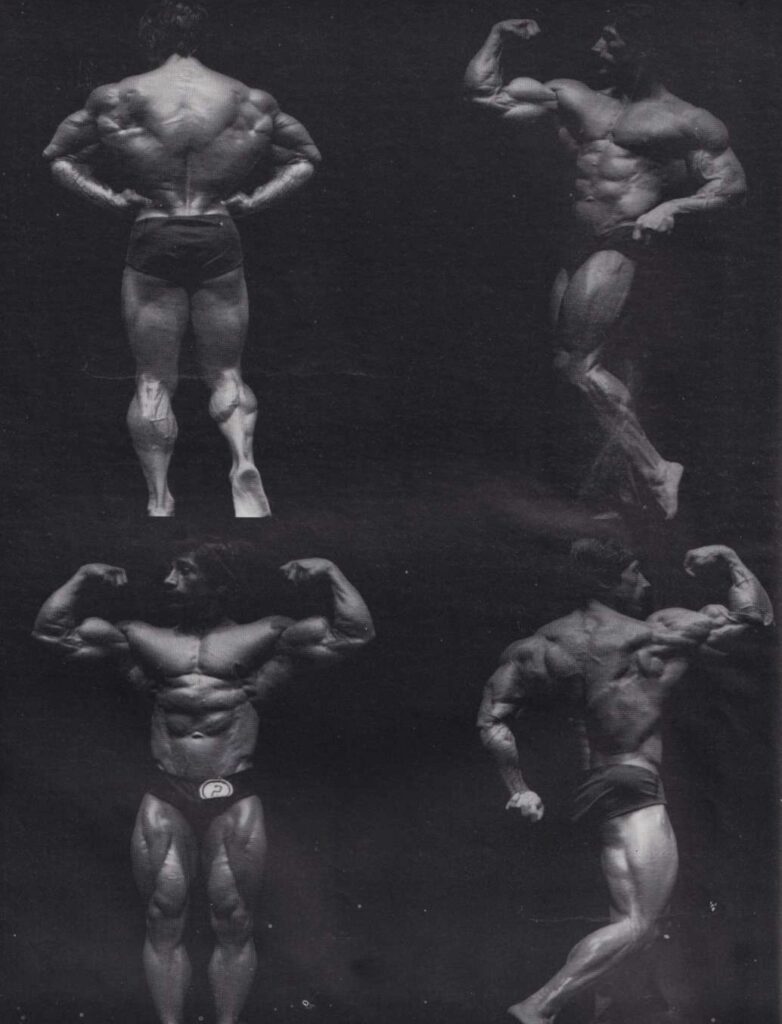
Danny Padilla
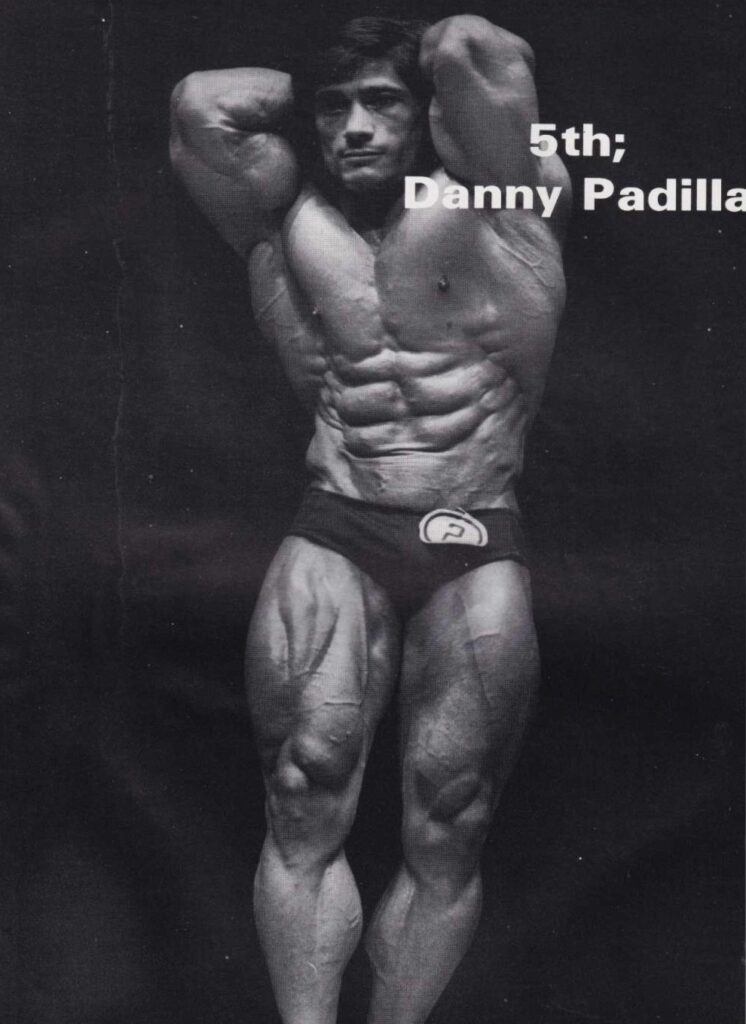
The Giant Killer, 5’2″, 30-year-old Danny Padilla never won a pro show (he was second thrice) and, with the exception of this time, never did much in bodybuilding’s ultimate contest (he was a nonfactor 10th in the 1980 Mr. Olympia). And yet many believed then and many still contend today that the upstate New Yorker deserved to win on this unusually warm October day in Columbus, Ohio. Padilla’s proportions were superb, but he frequently struggled with conditioning. Not this time! He was peeled like never before or after, though he’d sacrificed size to get there. He was never a great poser, and at times he appeared timid, as if the Giant Killer couldn’t believe he could jump from nowhere all the way to the top of the bodybuilding world.
Rick Wayne wrote an epic 1981 Olympia report that stretched over four issues of Muscle & Fitness magazine (excerpts are color-highlighted throughout the rest of this article):
This Danny had the face of an ailing rodent. So lean that it seemed his skull was barely covered. A look, you may be sure, that spoke of torture in the months preceding the Olympia. Danny’s symmetry, of course, was perfect. This time, however, he was ripped at 150 pounds, a good 30 pounds lighter than his normal competition bodyweight. Finally, he had fulfilled the popular ambition; he had come in cut to shreds while retaining his usual muscular denseness. Small wonder that from the moment he appeared onstage Danny was declared a favorite to win the Olympia—at long last!
Roy Callender
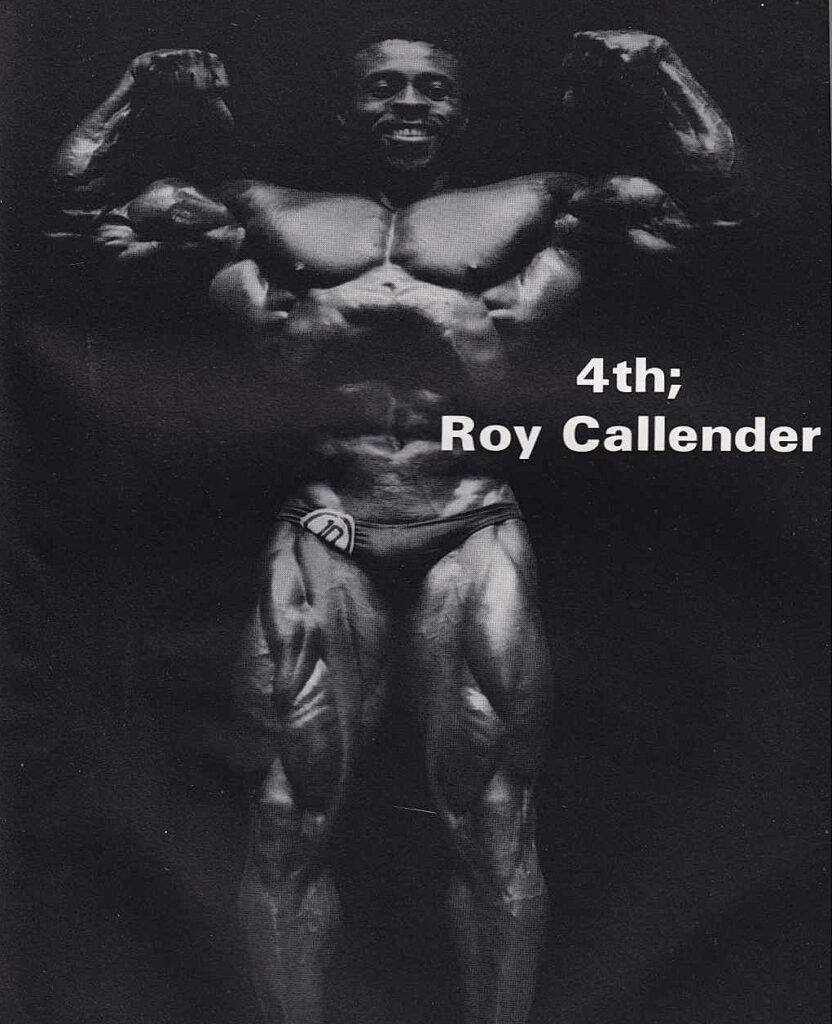
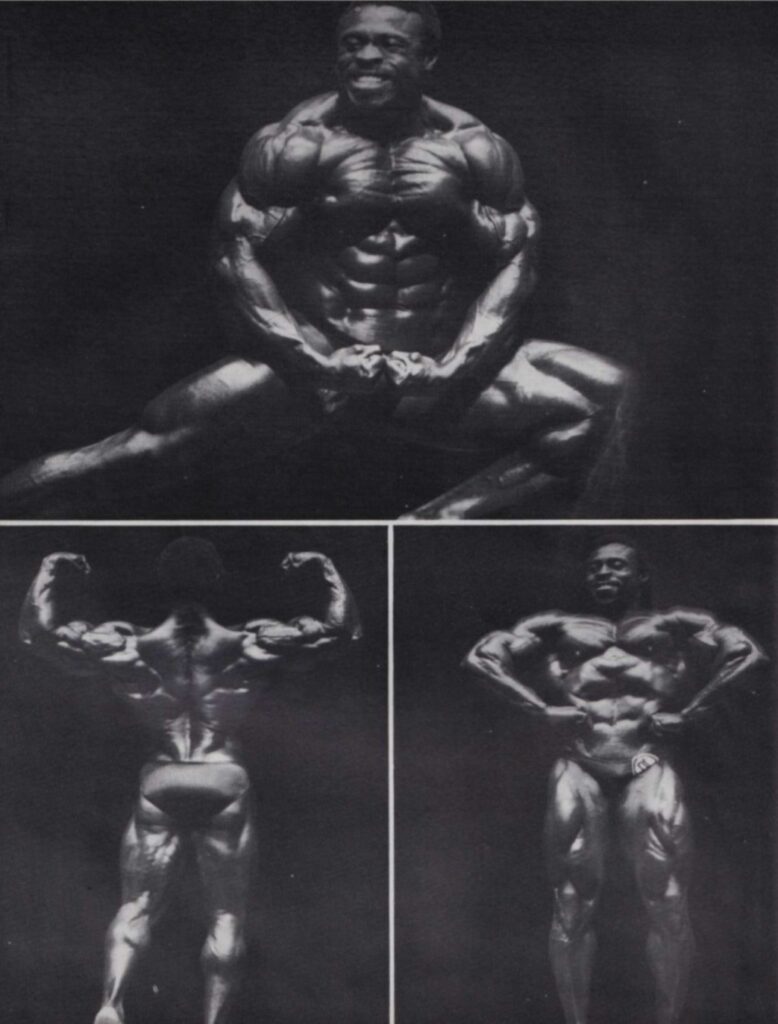
Roy Callender and Franco Columbu shared a history that went back to Mr. Universes in the 1960s. Here, they stood next to each other in the lineup, and the former took it to the latter from the get-go, as if to say, “I got you today.” This Barbados-born Canadian may be the best bodybuilder most fans today have never heard of. He was third in the 1978 Mr. Olympia and had won three pro contests before this one. As for the structural flaws that Rick Wayne mentions below, two-time Mr. O Franco Columbu was also bowlegged; and though calves were of greater importance to judges then, they’ve, unfortunately, been of little consequence this century (Dexter Jackson, Brandon Curry, and Big Ramy all won Mr. Olympia titles with weaker calves, proportionally, than Callender). By the standards of 1981, the 5’8″, 36-year-old Callender was densely built and crisply conditioned, an obvious contender for the crown.
Callender’s flaws originated in the mold. To the best of my knowledge, no courses have been formulated that can straighten bowlegs. And no amount of stretching will ever lengthen Callender’s calves. They begin and end somewhere behind the big fella’s knee joints and me-thinks that’s exactly where you’ll find them Judgement Day. But having got that out of the way, let us say now that in those areas of his physique responsible to torturous exercise, Roy was unbeatable on Olympia Day. He displayed tremendous arms, amazing thighs, a tight waist, neatly separated abdominals, and clearly carved intercostals. And it’s a tossup between him and Platz who had the better back in Columbus. The fires of self-confidence burned in Roy’s eyes, hot enough to fry eggs.
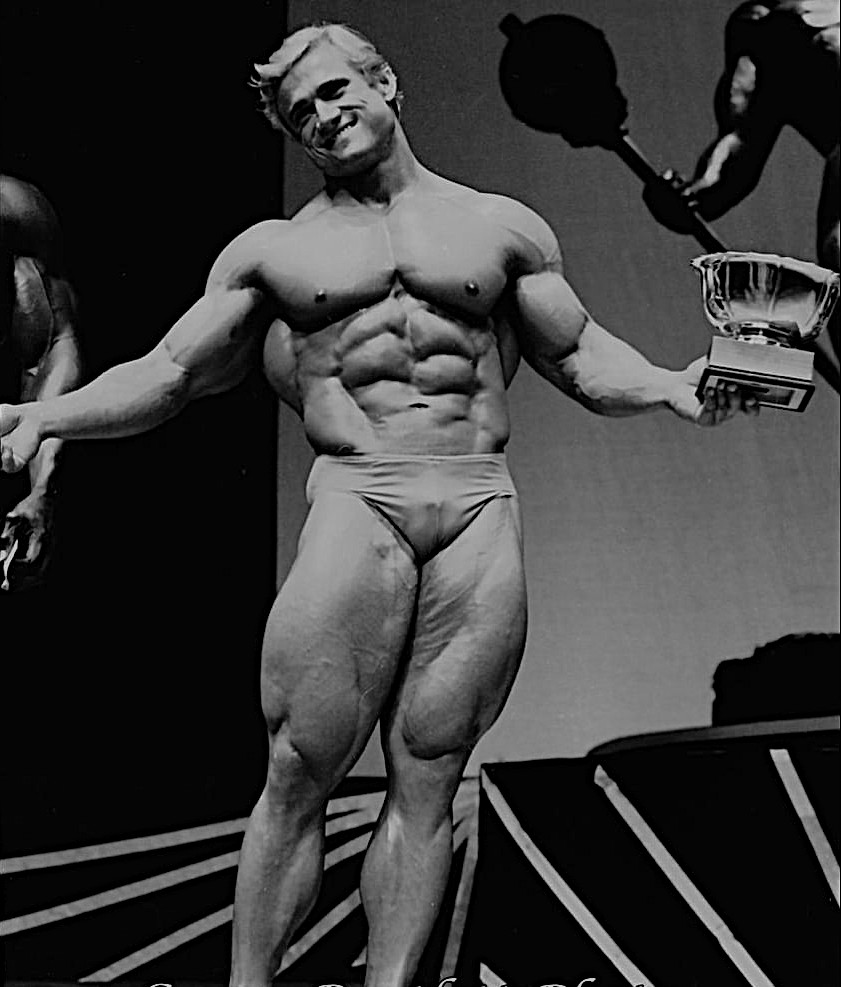
Tom Platz
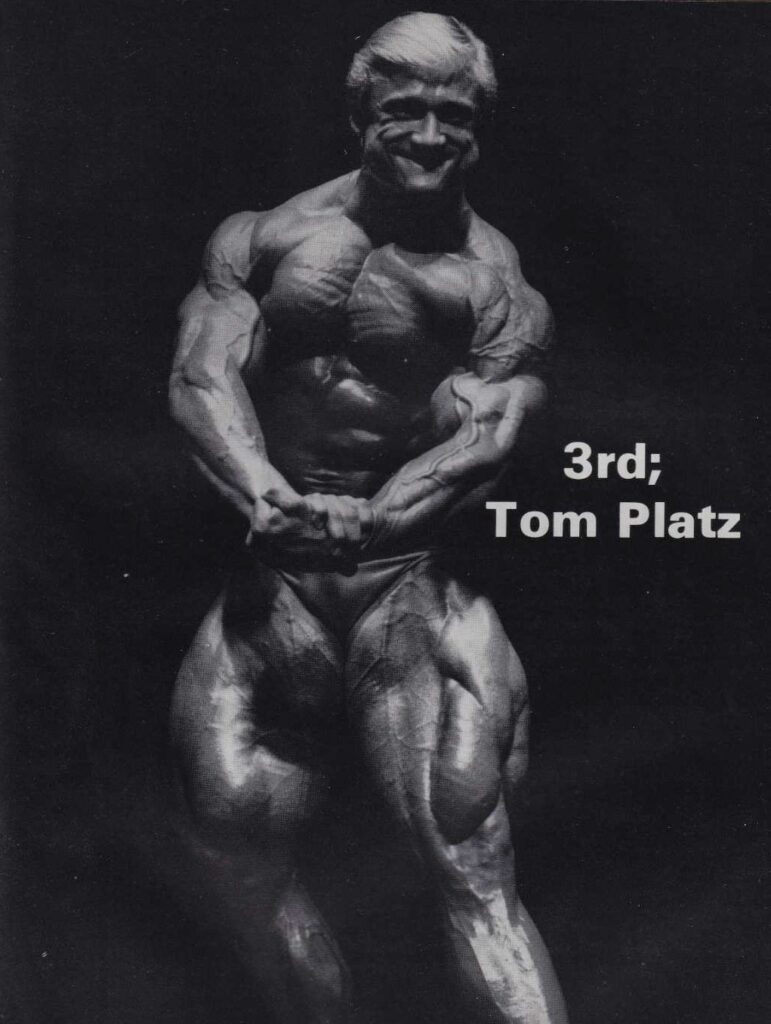
Before October 10, 1981, Tom Platz was just another guy rounding out the bottom of lineups like this one. He’d finished so far out of the running in his first two Olympias, it was easy to ignore him. Sure his legs were great, but they weren’t mind-bogglingly stupendous, and the rest of him wasn’t even particularly good. His arms were bad. He seemed like a guy who just didn’t have it. And yet what he did have was an unconquerable will to push every set of every workout far beyond failure. After the 1980 Olympia, he just kept going and going, growing and growing.
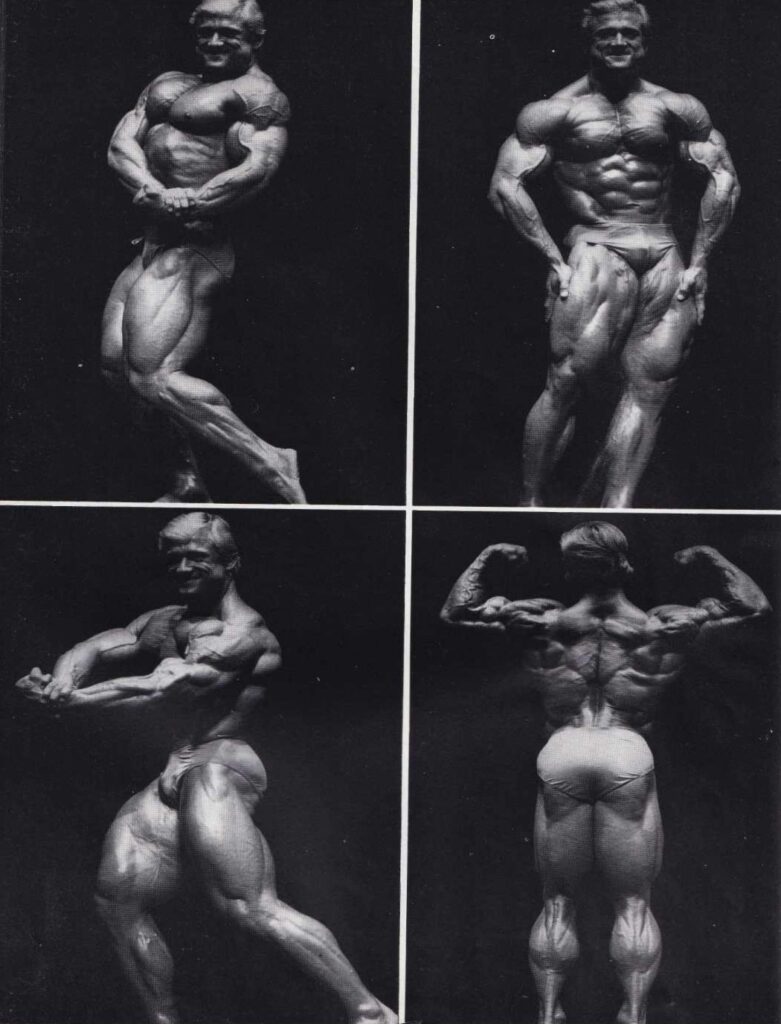
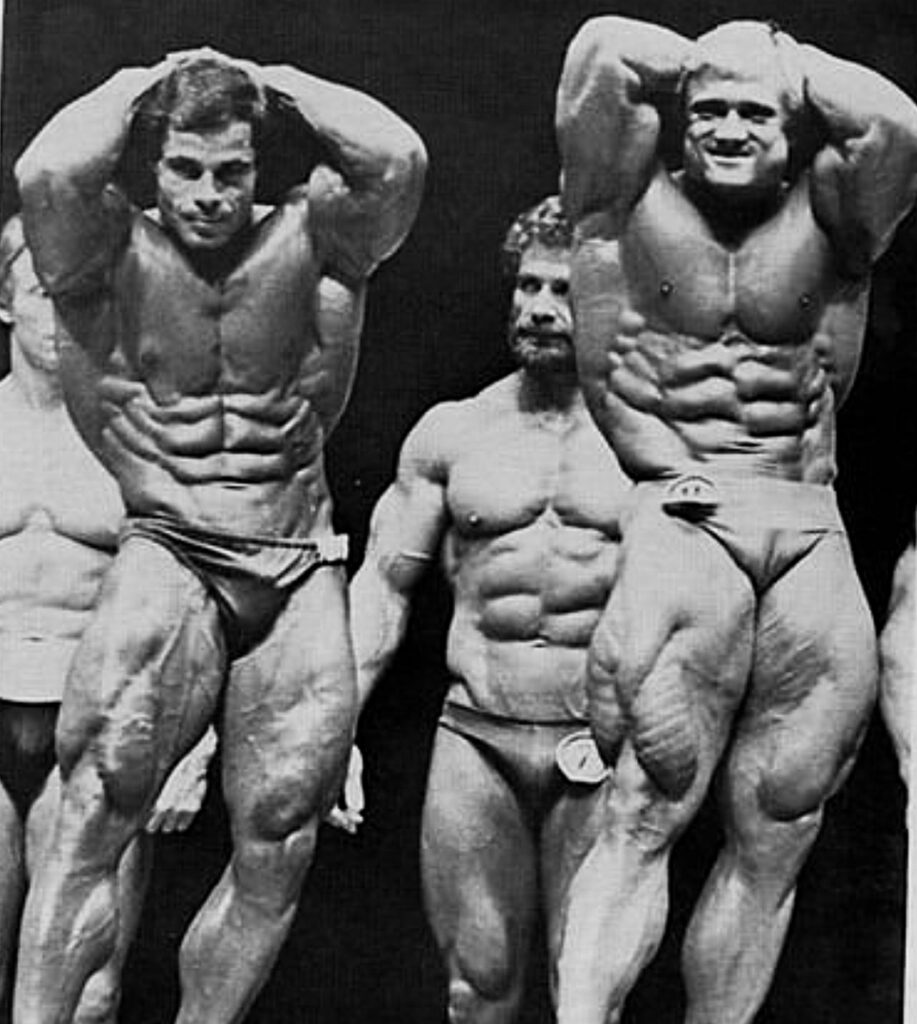
The results Platz showcased in 1981 still mark the most dramatic one-year transformation of a physique in the long history of professional bodybuilding—30 pounds heavier and leaner. His legs had traveled into some new realm. His thighs were seemingly as wide as tall, like two beach balls; and, when tensed, his quads separated into horizontal lines, feathering, and his hams into distinct lanes, like vertical blinds. The rest of him, well, it couldn’t keep up with those monster truck wheels, but it too had been rebuilt, with new lumps everywhere. And details, too, pecs and delts like spaghetti, for he’d nailed his conditioning. No, Platz at 5’7″ and 225 pounds wasn’t symmetrical. How could he be with legs so phenomenal? But in pose after pose—side triceps, hands-on-thighs most muscular, rear double biceps—his upper half could hang with anyone in Columbus, without even factoring in those legs, far and away the best ever seen until at least the ’90s and maybe—factoring in size, shape, and striations—to this very day. The crowd went bonkers. This is why they bought their tickets. Not for an art show. For a freak show.
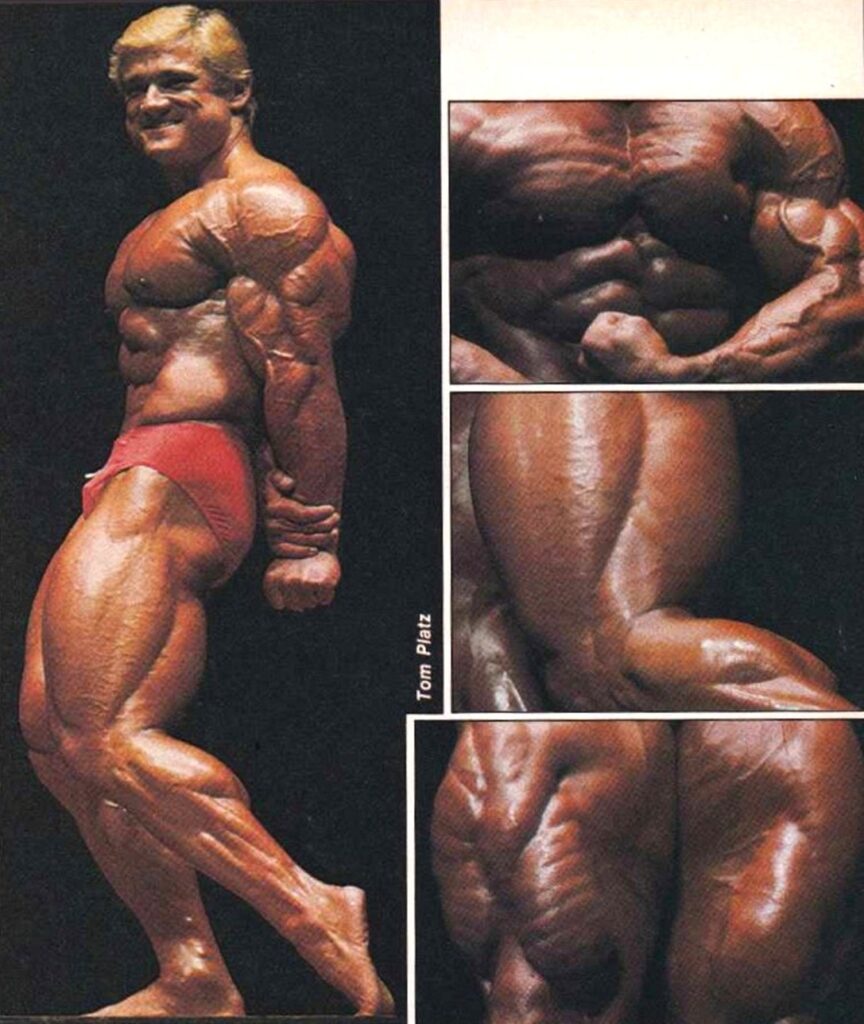
I had been warned to expect a surprise from Platz, so I should have been ready for what he brought to Columbus. I was not. Oh, his thighs were still beyond adequate description by me, and his calves were, as usual, good enough to challenge the world’s best. No surprises there. But this new Platz had now acquired more muscle in his arms, chest, and shoulders and had changed into something a scream away from unworldly. Precisely, it seems, the look that Olympia fans most appreciate.
Yes, the Olympia had never been home to ballet stars. It was the contest that could be won only by men with elephantine proportions. Men like Scott and Oliva and Schwarzenegger—and Ferrigno, had not The Incredible Hulk ripped out his bodybuilding guts and turned him into an impersonator. True, Columbu had once been Mr. Olympia, but by then the gargantuas had disappeared, like dinosaurs from the scene. Zane? Yes, he too had been Mr. Olympia, three times, while the giants slept. In the absence of cats, mice had ruled. It didn’t matter that Platz was still not the most symmetrically built champion in the world. Something in the way the fans reacted to his every movement onstage was clear warning that they fully expected Tom to win.
Chris Dickerson
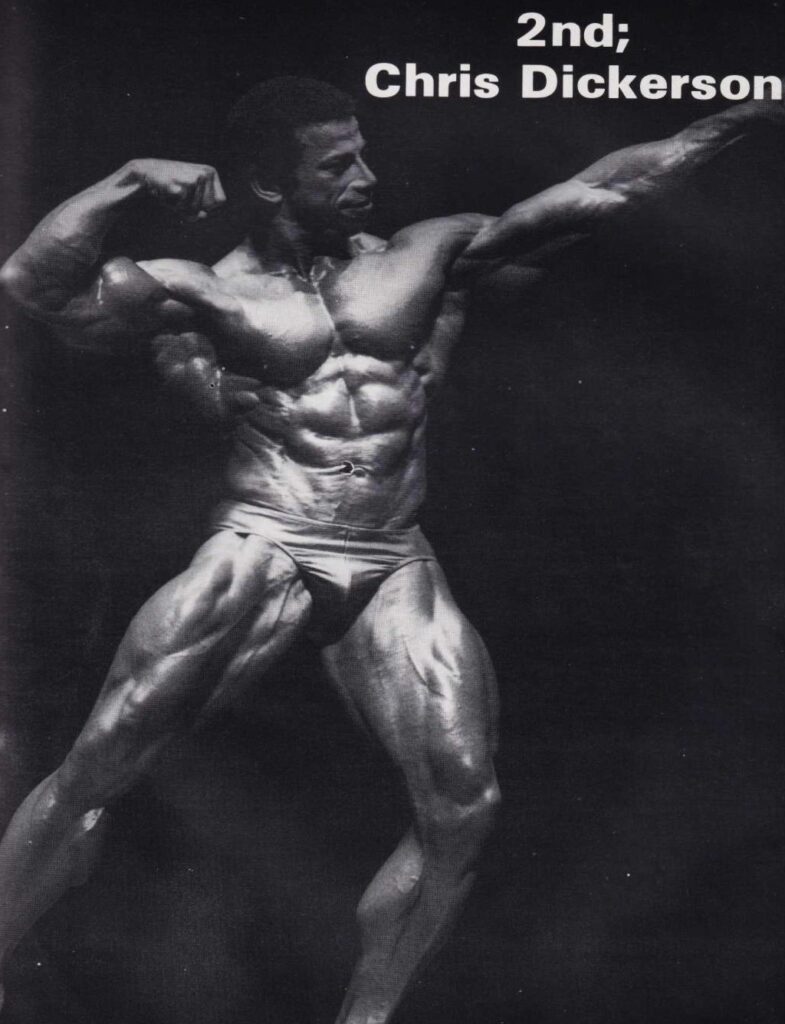
Coming off his second in the previous Mr. Olympia, Chris Dickerson was, on paper, the favorite this year. But nobody got too excited about his 5’6″, 190-pound physique. He seemed to win or nearly win merely because there was no one bigger and better around to dwarf him as there had been in the past and would be in the future. Dickerson, 42, didn’t make his IFBB pro debut until the year he turned 40, but, remarkably, in 19 pro shows from 1979-82, he won 11 and was second seven times! He just was never off, always ripped, and he displayed his aesthetic physique artfully, owing to his background in ballet and gymnastics.
Dickerson was as good as his best form. He did not participate in any of the onstage shenanigans that Callender had started with Columbu. Chris comported himself as if he truly believed dignity would be a deciding factor in this Neanderthal war.
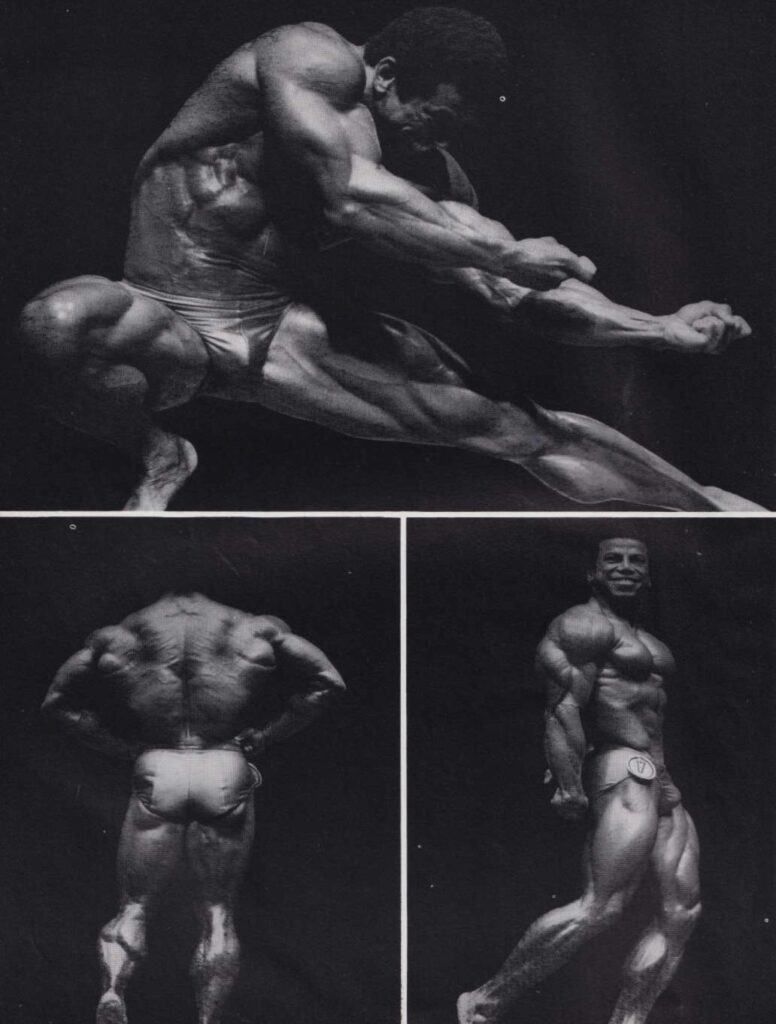
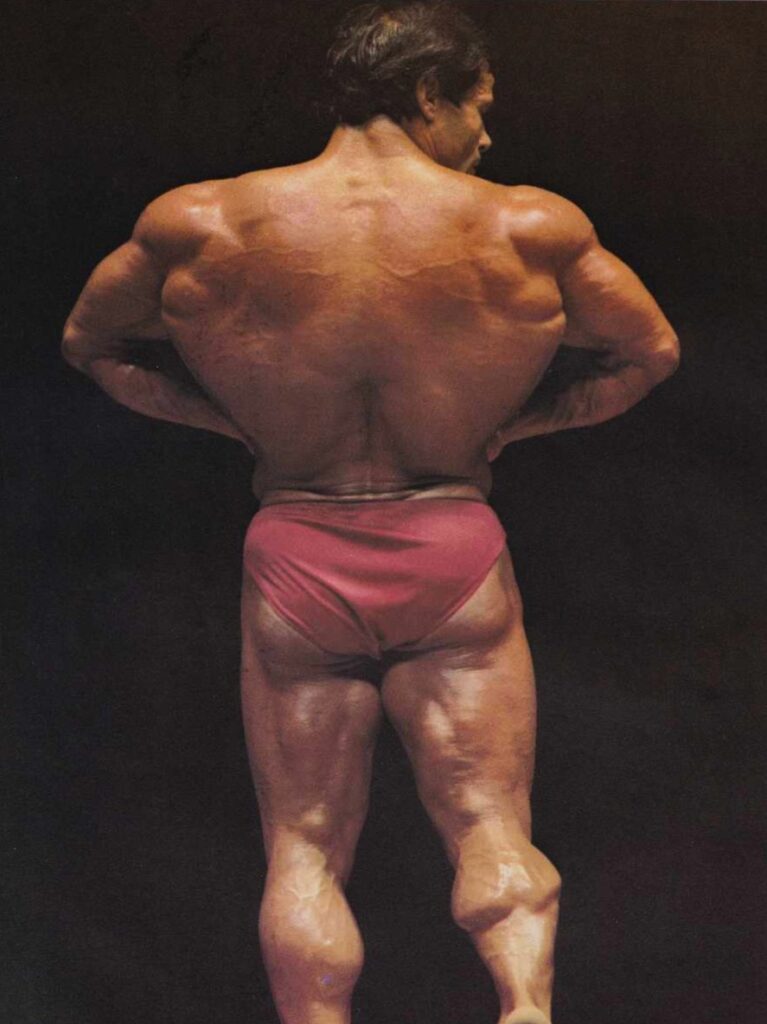
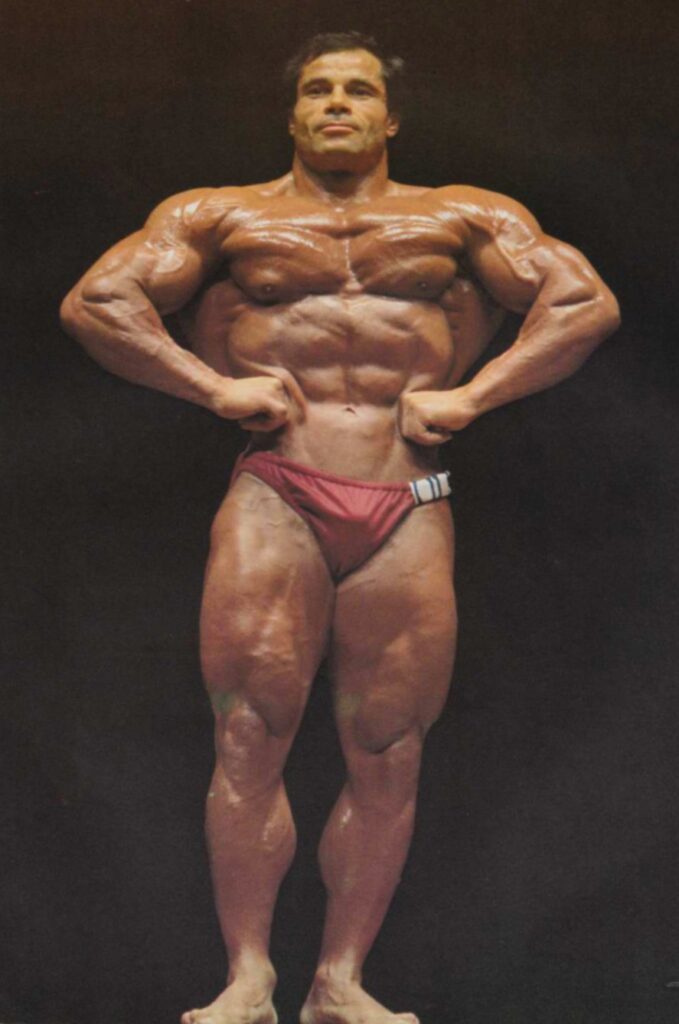
Franco Columbu
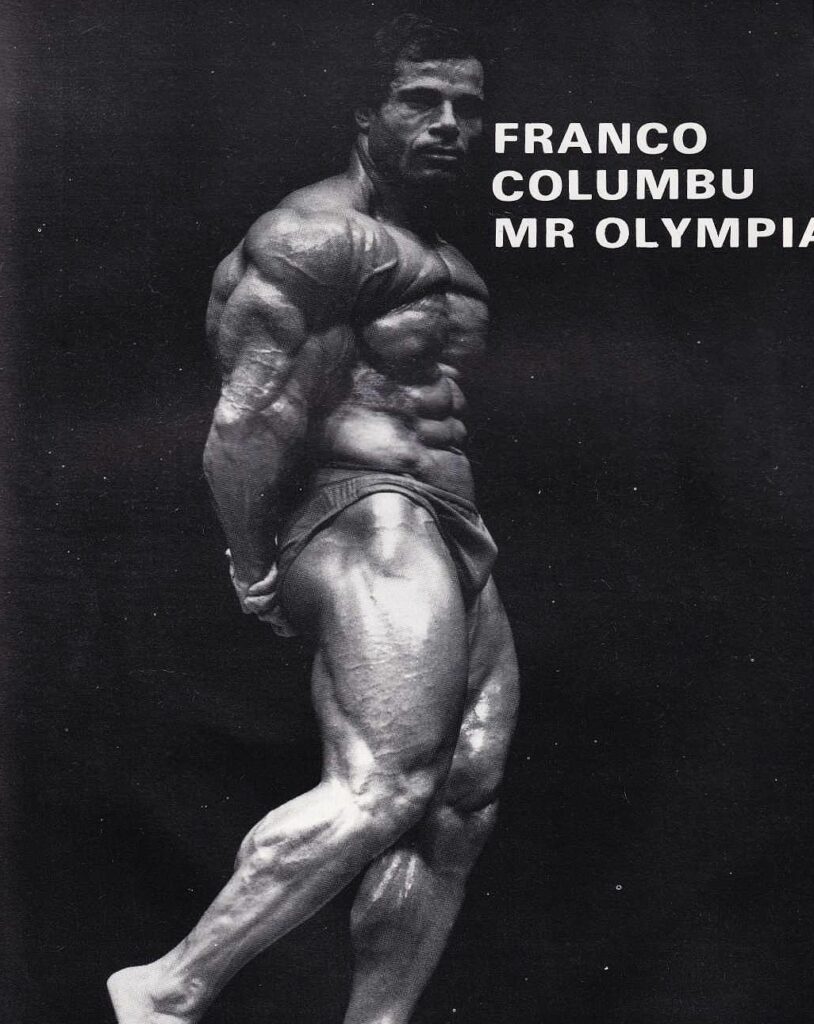
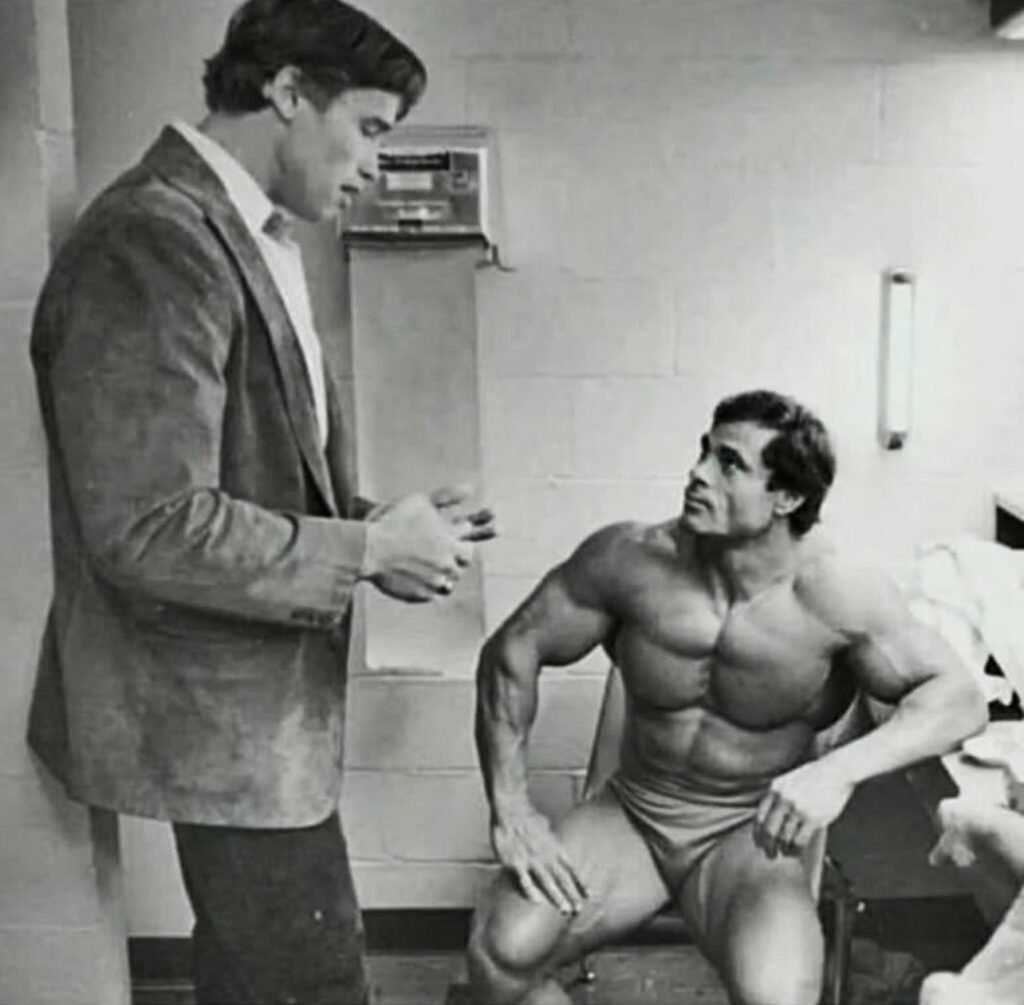
The rumor started soon after Arnold’s controversial win in the 1980 Mr. Olympia that Franco would follow his best friend and enter the same contest in 1981, after his own five-year absence from the stage. Columbu had claimed “I am retiring now” after winning the 1976 Mr. Olympia (by one point) at 35. It may have been a rash statement, easily reversed, but it seemed to be made permanent in July 1977 when, while competing in the inaugural World’s Strongest Man, he dislocated his left knee racing with a refrigerator on his back. In the ensuing years, Columbu focused on his new career as a chiropractor. But as 1981 progressed, it became more and more clear to those witnessing his workouts that he was serious about a comeback.
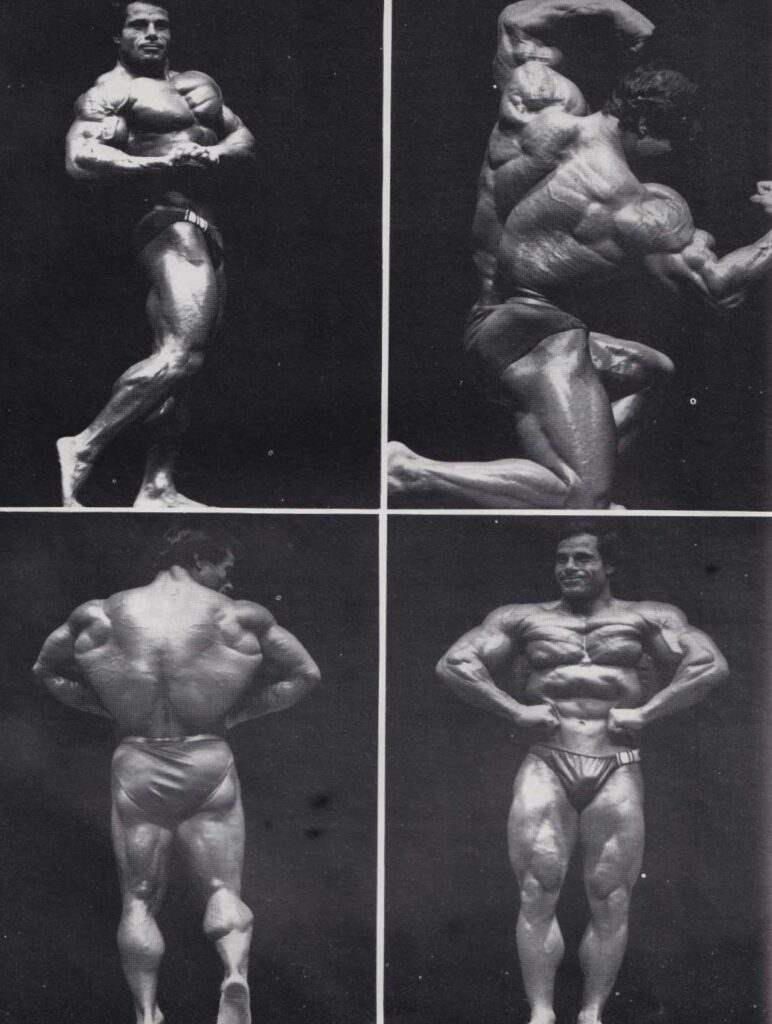
Arnold didn’t think his best friend could win. He was surprised by how much Franco’s upper body had regained previous size, but he felt legs—never a strength—were now a liability. It wasn’t that they were significantly smaller than five years before, but they lacked cuts. And, in Ohio, he wasn’t just losing leg shots to Platz, like everyone. The other three in the top five also had superior quads, in keeping with the changing standards of bodybuilding. This ain’t the ’70s anymore. Columbu could wow with his pecs, delts, lats, and abs, all good enough to win this Mr. Olympia (if you ignore the gynecomastia around his right nipple), but his legs looked like they belonged to a different, far-inferior bodybuilder.
Then there was Columbu, good as he had been in ’76, yes, maybe better, save in the area of his thighs….Franco hit all the poses that had made him famous. Still, the temptation was to concentrate on his thighs, which were smooth.
1981 MR. OLYMPIA: EVENING SHOW
The evening show included the amateur Mr. International finals, two routines by master poser Russ Testo, another by female bodybuilding pioneer Lynn Conkwright at a time when flexing women were still a curiosity, a slide presentation of the upcoming Arnold movie Conan the Barbarian, and a speech by Arnold in which, after a year of villain vibes, he won back fans in Columbus, claiming “We can make our sport great. But only if we stick together!” The crowd of 4000 also witnessed posing routines by all 17 competitors (round three of judging).
After Roy Callender’s music track failed, followed by much booing, he went through his poses to only the sound of thunderous applause and many declarations from fans that he should win. Next, up was Columbu.
What an act for Franco Columbu to follow. Give him an A for trying. His reception is lukewarm. But he’s a true grit champion. He perseveres. Franco is great, but you insist on placing psychological blinders over your eyes. You can’t see him pulling it off tonight. Not after Australia [1980 Mr. Olympia]. What am I saying? Franco didn’t compete in Sydney. No, it was Arnold.
Two competitors later, it was Tom Platz’s turn.
Good god, we’ve been hit by a hurricane—Hurricane Thomas. Platz’s thighs seem even larger now….The audience has turned the auditorium into a zoo. It’s a night for animal behavior. But Tom is cool. He shoves one leg forward, tenses, and, good grief, what’s that? Sounds like the roof just caved in.
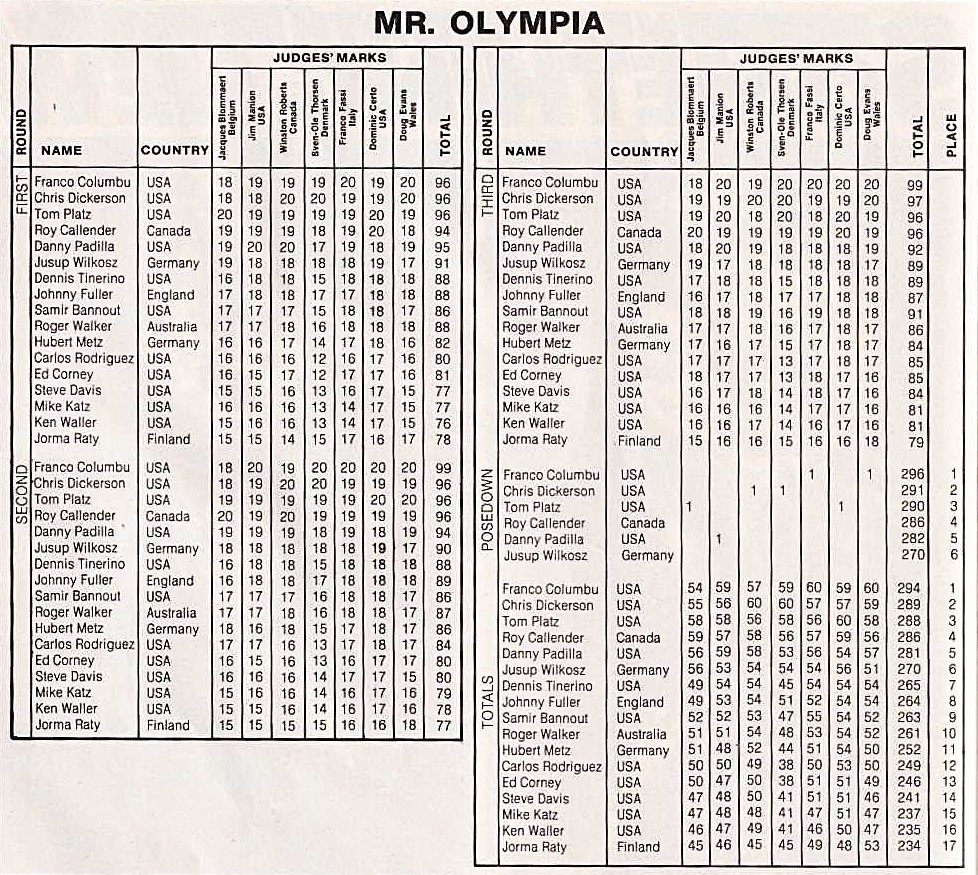
After Chris Dickerson completed his elegant display, it was posedown time, which was then just a free-for-all, with only one point per judge awarded (see the scorecard below). The seven judges awarded four different men: Columbu, Dickerson, and Platz each received two votes, Padilla one. The judges just couldn’t agree on who should win. Emcee Len Boslin called out the placings for the top six, beginning with Jusup Wilcosz. The booing started with Padilla in fifth, increased for Callender in fourth, and went ballistic for Platz in third. Those were the three fan favorites. Then, the jeering quieted into stunned, head-shaking outrage. No, this can’t be. They can’t do it again.
“In second place,” Boslin said, shakily, dreading the coming response, “we have…Chris Dickerson.” “No! No! No!” The Vet was rocked by an eruption of unbridled anger. “They’ve done it again!” “Yeah, that son-of-a-bitch Schwarzenegger’s shafted us!” Booing, cussing, open allegations of “Fix! Fix! Fix!” The monster had paid its second visit in two years.
Over the pandemonium, it’s unlikely anyone heard the emcee declare Franco Columbu Mr. Olympia 1981.
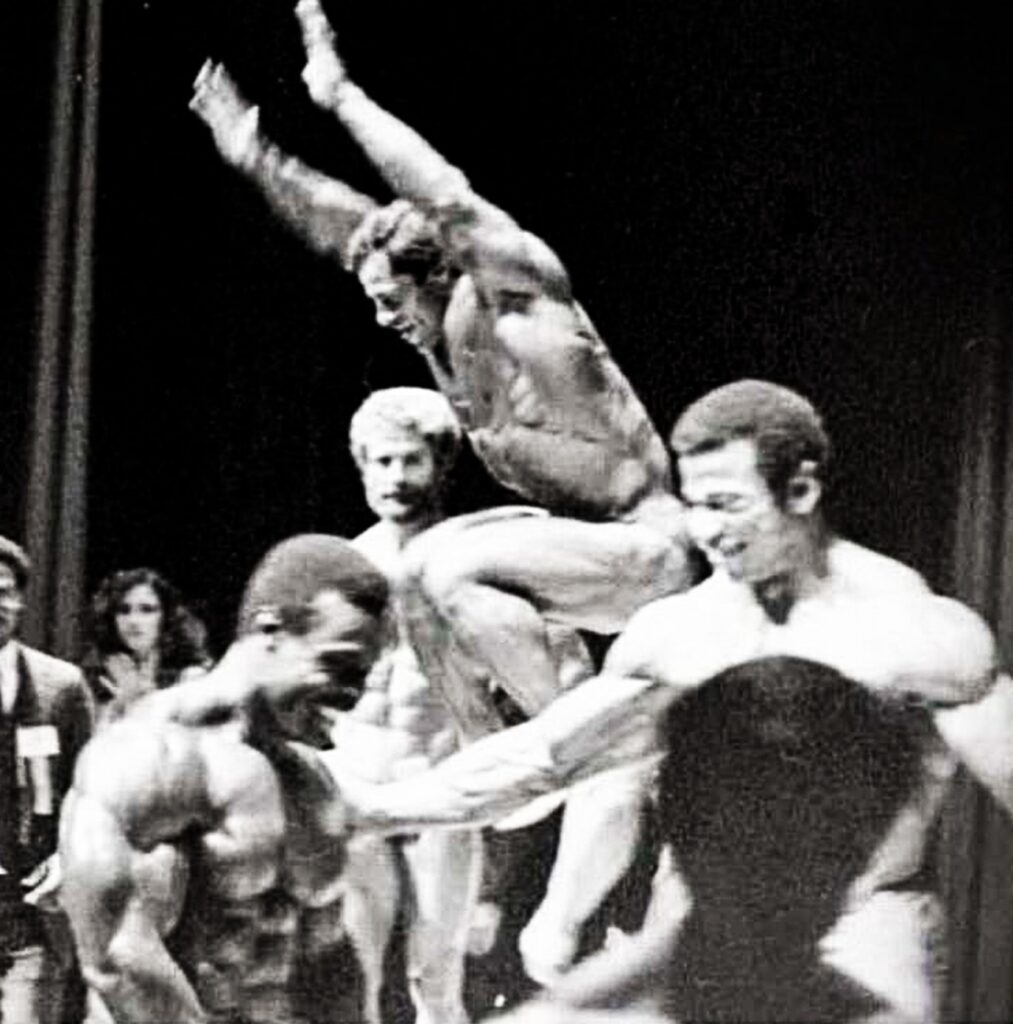
Since the first Mr. Olympia in 1965, the contest’s creator Joe Weider had always held up the arm of the victor. This time he left his front row center seat at the Vet as Columbu leapt in victory and the boos rained, but he never appeared onstage. Joe Weider didn’t want to to be associated with the results. He later said he thought Roy Callender deserved the win.
1981 MR. OLYMPIA: REACTION
DANNY PADILLA: “Well, I wouldn’t have minded so much if they’d fixed the show and I’d at least been given a reasonable placing, but this thing was outrageous. The guy who won has one leg. Tom Platz had a very disproportionate body; he’s all thighs. And Dickerson was flat. After what happened last year, I figured the IFBB would have done its best to run an honest Olympia in 1981. It didn’t.” That was Padilla’s immediate reaction. A few days later, he changed his tuned. The contest hadn’t been fixed and Columbu, his bodybuilding hero, was impressive except for his “somewhat smooth” legs. [Padilla competed in two more Mr. Olympias but was a nonfactor: 12th in the 1982, 16th in 1985.]
ROY CALLENDER: “Right now Boyer Coe and Mike Mentzer must be laughing their asses off. I’ve always maintained I couldn’t be fooled twice, but I was proved wrong tonight. I can be fooled more than once.” [Callender competed in only one more Mr. Olympia, placing fifth in 1984.]
TOM PLATZ: “Franco and Arnold are the reason I’m here today. These guys opened all sorts of doors for us. But I felt, and the audience felt that way, too, that someone other than Franco should have won tonight.” Later, Platz was even more diplomatic: “I wanted to win, but I’m very happy for Franco. I know how hard he trained, and he was in great shape. And I don’t think anything funny happened either. It was just a contest. I didn’t win, but I’ll be back trying again next year. That’s all there is to that.” [Platz was only 26. In the immediate aftermath, he was the people’s champ, hyped relentlessly in the muscle magazines. If he could do that in one year, what could he do in two? He was the favorite going into 1982 Mr. Olympia, but he severely tore his right biceps, which relegated him to sixth. Tom Platz was never a contender for the Olympia again.]
CHRIS DICKERSON: The repeat runner-up was disgusted. He claimed his victory might have legitimized the Olympia again. The contest had lost a lot in 1980, and this repetition would only solidify the public’s distrust. How to explain two disasters in a row? “Let ’em keep their damn title,” he said just afterwards. [Dickerson returned and won the Mr. Olympia in 1982, without controversy, at 43.]
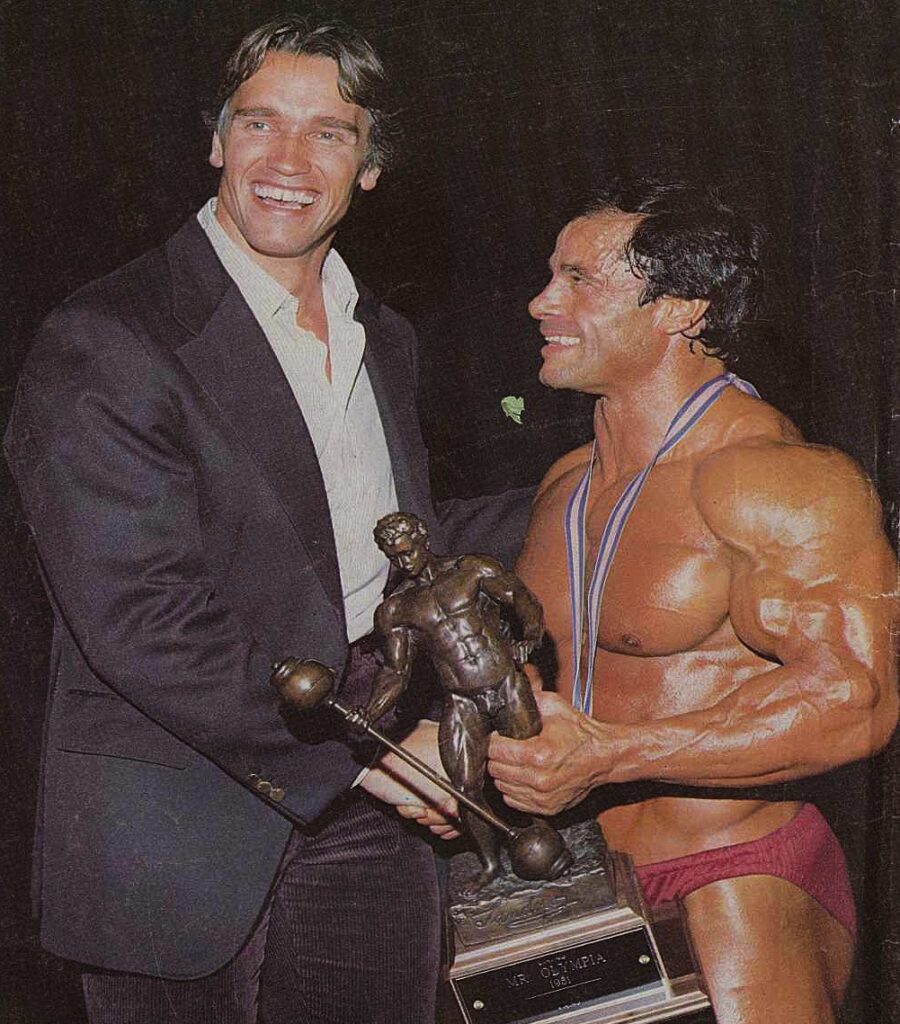
FRANCO COLUMBU: The new champ was, of course, very happy. He said, with Zane and Mentzer absent, he had underestimated the competition, and he was relieved that it was over. [This was the final contest of his storied career. Franco Columbu is one of only four bodybuilders to permanently retire as Mr. Olympia.]
ARNOLD SCHWARZENEGGER: The seven-time Mr. Olympia and co-promoter (with Jim Lorimer) of the 1981 contest, dismissed claims that he fixed the results for his best friend. He said, per new IFBB rules, he had nothing to do with selecting judges. What’s more, he felt Tom Platz should’ve won. “Did you look at that guy’s thighs?” he asked. “All I can think about when I see him is how much I tried to develop thighs like he’s got. I never got them. Jesus Christ!” As for the booing, Arnold said: “The fans come to the shows rooting for their favorites. When the title goes to, say, [Casey] Viator, naturally the [Mike] Mentzer fans will boo and the fans of the other guys, too. So you end up with a lot of booing. That’s how I see it anyway. But it’s nothing to get upset about. We hear booing at all kinds of shows, from football to rock. Even at the movies sometimes.”
1981 MR. OLYMPIA: REFLECTION
It’s unfortunate that the controversial winner was the best friend of the promoter, because it made it look like the 1981 Mr. Olympia was fixed. It wasn’t. The unpopular results were the result of a five-way race, a confusing judging system, and some poor judging. After the controversy of the 1980 Mr. Olympia, in which several of the judges were close friends of the winner, the IFBB mandated that its officials and not contest promoters choose judges. Unfortunately, what didn’t change was the points system, in which each competitor was awarded a maximum of 20 points by each judge in each of the three rounds. (The system was meant to align with Olympic judging, as the IFBB was then on a doomed quest to get bodybuilding in the Olympics.) Alas, each judge scored the contest via their own point-range. One scored the 17 competitors from 12 to 20. Another went only from 16 to 20. Others were somewhere in-between. On top of this, only one point was awarded by each judge for their choice of posedown winner, which was the best indication of who each thought deserved the title.
Although Arnold claimed he didn’t choose the judges, the worst of them (the one with the 12-to-20 range) was his friend and fellow actor Sven-Ole Thorsen, who, in the worst of several head-scratchers, had last-place (and fellow Scandinavian) Jorma Raty tied with seventh-place Dennis Tinerino. He did, however, place Dickerson first and Columbu second, so his friendship with Arnold didn’t extend to crowning Columbu. Another judge, an Italian, was a friend of Columbu’s and placed Columbu first. But it was hard to avoid such conflicts then when pro judges were mostly an assortment of international contest promoters. The international part was important to the IFBB (Olympic dreams again): eight judges (including an alternate) were from seven different countries. Of less importance was proven competency. Of the seven judges in 1981, Jacques Blommaert was the only carryover from 1980 (where he placed Arnold the lowest—tied for sixth) and he, Jim Manion, and Winston Roberts were the only three judges this time who went on to judge the Olympia repeatedly. Crucially, none of those three had Columbu winning (Blommaert had him sixth).
Winston Roberts wrote an article for Ironman magazine responding to published criticism of the judging, stating, “It is easy for a writer to say three or four people should have won, but each judge must make a choice of his winner. He does not have the luxury of such fence-sitting by offering a few winners to the public.” This is true, at least in the posedown. But the posedown only awarded single points. The preceding three rounds decided the contest. One of the problems with the point system was a judge could’ve awarded each member of the top five 20 points per round. None did, but they all awarded multiple bodybuilders the same scores in rounds, including 20s (worst example: one judge gave eight of the 17 bodybuilders an 18 in the posing round). Where’s the judging? Were they all precisely equal? The point system was awful. Thankfully, it was later scraped for a ranking system with each judge placing each competitor from first to last.
The 1981 Mr. Olympia was both a difficult contest to judge and a poorly judged contest, owing to the system but also the incompetency of some of the judges. I would’ve been pleased with either Tom Platz or Roy Callender as champ. But Roberts is right. I have to choose. Here’s how I have it: 1. Tom Platz, 2. Roy Callender, 3. Danny Padilla, 4. Chris Dickerson, 5. Franco Columbu. Boo if you must. Let the debate rage on.
1981 MR. OLYMPIA RESULTS
October 10, 1981 / Veterans Memorial Auditorium / Columbus, Ohio
1. Franco Columbu [294] ($25,000)
2. Chris Dickerson [291] ($10,000)
3. Tom Platz [290] ($6000)
4. Roy Callender [288] ($4000)
5. Danny Padilla [286] ($3000)
6. Jusup Wilkosz [270] ($2000)
7. Dennis Tinerino [265]
8. Johnny Fuller [264]
9. Samir Bannout [263]
10. Roger Walker [261]
11. Hubert Metz [252]
12. Carlos Rodriguez [249]
13. Ed Corney [246]
14. Steve Davis [241]
15. Mike Katz [237]
16. Ken Waller [235]
17. Jorma Raty [234]
1981 MR. OLYMPIA SCORECARD
Three rounds (symmetry, muscularity, posing) were scored with a maximum of 20 points awarded to each competitor by each of seven judges. The highest and lowest scores were discarded, so a maximum score is 100 per round. Then, the top six competitors made the posedown, where each judge awarded a point to the one deemed the best. In the scorecard below we get a rare view at how each judge scored it. They were all over the place! Two had Franco Columbu first, two had Chris Dickerson first, one (current NPC & IFBB Pro League president Jim Manion) had Danny Padilla first, one had Tom Platz first, and one had Tom Platz and Roy Callender tied for first. One had Columbu sixth and another had him fourth, but because the other five had him either first or second he won by five points.